


Pelvic floor muscle training in women with stress urinary incontinence causes hypertrophy of the urethral sphincters and reduces bladder neck mobility during coughing
- PMID: 23861324
- PMCID: PMC4894819
- DOI: 10.1002/nau.22343
Pelvic floor muscle training in women with stress urinary incontinence causes hypertrophy of the urethral sphincters and reduces bladder neck mobility during coughing
Abstract
Aims: The purpose of this study was to determine the effect of a 12-week pelvic floor muscle (PFM) training program on urethral morphology and mobility in women with stress urinary incontinence (SUI).
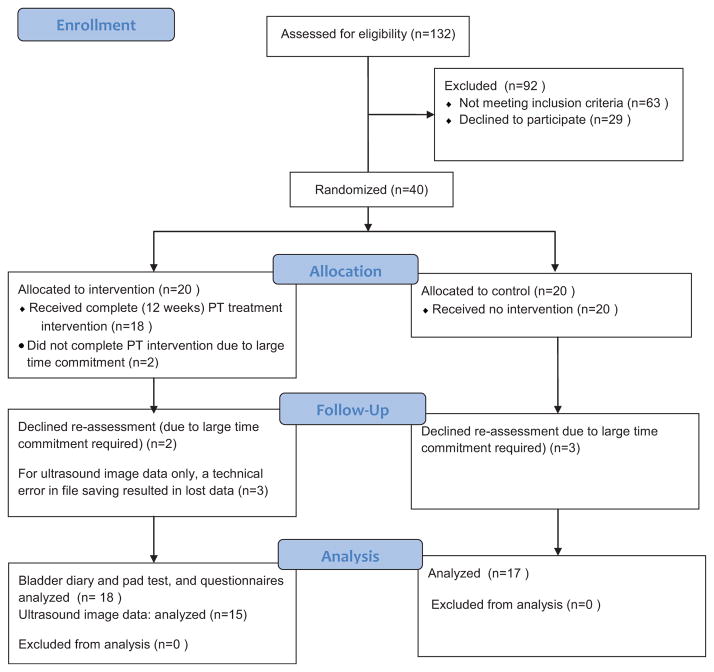
Methods: Forty women with SUI were randomly assigned to one of two groups: the treatment group received 12 weekly physiotherapy sessions during which they learned how to properly contract their pelvic floor muscles (PFMs) and a home exercise program was prescribed, reviewed, and progressed; the control group received no treatment. Before and after the 12-week study period, ultrasound imaging was used to evaluate bladder neck position and mobility during coughing and Valsalva maneuver in supine and in standing, as well as urethral morphology. Secondary outcome measures included a 3-day bladder diary, 30-min pad test, the Incontinence Impact Questionnaire (IIQ-7) and the Urogenital Distress Inventory (UDI-6).
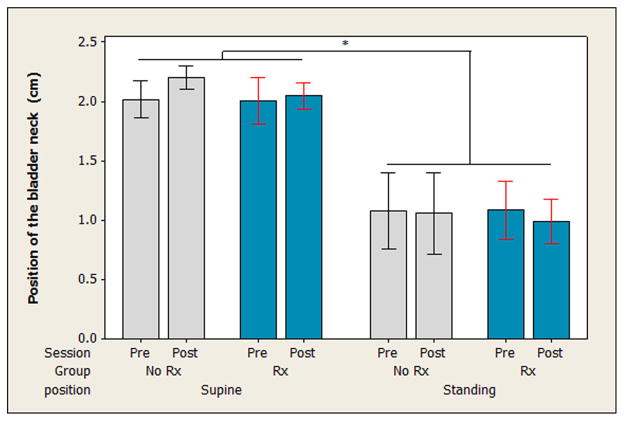
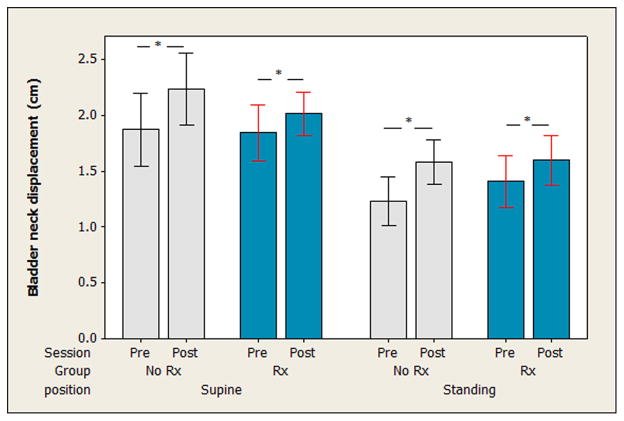
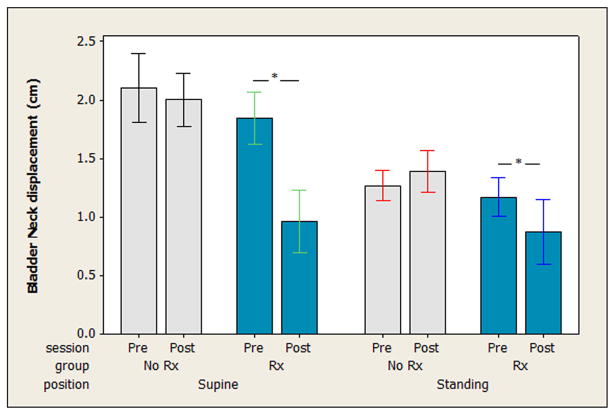
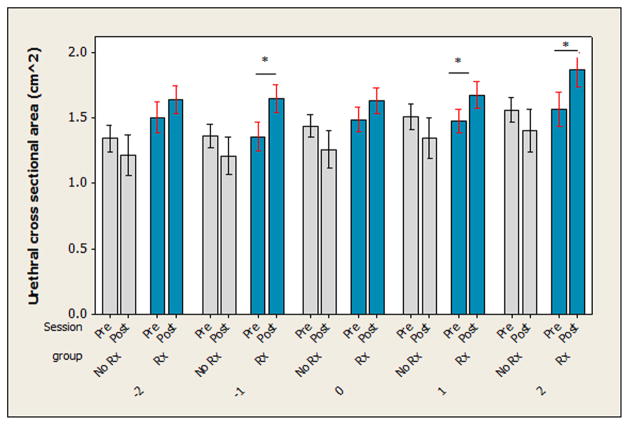
Results: The women in the treatment group demonstrated reduced bladder neck mobility during coughing and increased cross-sectional area of their urethra after as compared to before the training. These changes were not evident in the control group. No differences in the resting position of the bladder neck or in bladder neck excursion during Valsalva maneuver were noted in either group. Concomitantly the women in the treatment group demonstrated significant improvements in the 3-day bladder diary and IIQ-7 after the PFM training and improved significantly more than the control group.
Conclusion: Physiotherapist-supervised PFM training reduces bladder neck motion during coughing, and results in hypertrophy of the urethral sphincter in women who present with SUI.
Keywords: exercise; pelvic floor; physiotherapy; stress urinary incontinence; ultrasound; urethra.
© 2013 Wiley Periodicals, Inc.
Conflict of interest statement
Conflict of interest: none.
Figures
References
-
- Digesu GA, Robinson D, Cardozo L, et al. Three-dimensional ultrasound of the urethral sphincter predicts continence surgery outcome. Neurourol Urodyn. 2009;28:90–4. - PubMed
-
- Abrams P, Andersson KE, Birder L, et al., editors. Fourth international consultation on incontinence recommendations of the international scientific committee: Evaluation and treatment of urinary incontinence, pelvic organ prolapse, and fecal incontinence. Neurourol Urodyn. 2010;29:213–40. - PubMed
-
- Motswin J, Bourcier A, Habb F, et al. Pathophysiology of urinary incontinence: Fecal incontinence and pelvic organ prolapse. In: Abrams P, Cardozo L, Khoury S, Wein A, editors. Incontinence: 3rd International Consultation on Incontinence. West Caldwell: Health Publications Ltd; 2005.
-
- DeLancey JOL, Gossling J, Creed K, et al. Gross anatomy and cell biology of the lower urinary tract. In: Abrams P, Cardozo L, Khoury S, Wein A, editors. Incontinence: 2nd International Consultation on Incontinence. Paris: Health Publications Ltd; 2002. pp. 17–82.
-
- Snooks SJ, Swash M, Henry MM, et al. Risk factors in childbirth causing damage to the pelvic floor innervation. Int J Colorectal Dis. 1986;1:20–4. - PubMed
Publication types
MeSH terms
Grants and funding
LinkOut - more resources
Full Text Sources
Other Literature Sources
Medical
