A novel experimental strategy to assess the metabolic effects of selective activation of a G(q)-coupled receptor in hepatocytes in vivo
- PMID: 23861369
- PMCID: PMC3776870
- DOI: 10.1210/en.2012-2127
A novel experimental strategy to assess the metabolic effects of selective activation of a G(q)-coupled receptor in hepatocytes in vivo
Abstract
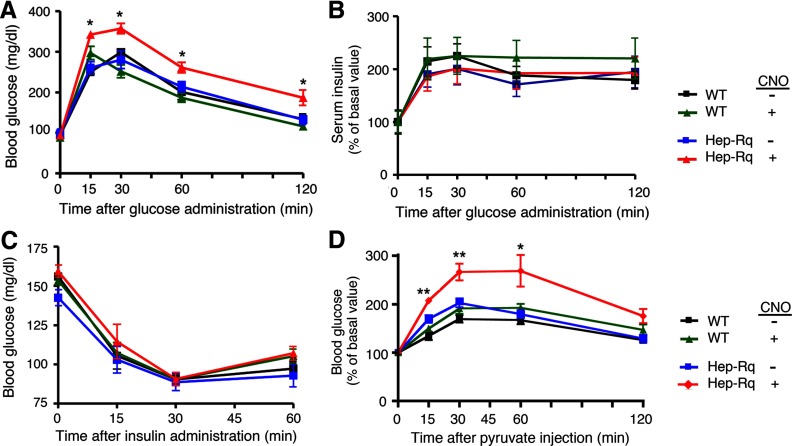
Increased hepatic glucose production is a key pathophysiological feature of type 2 diabetes. Like all other cell types, hepatocytes express many G protein-coupled receptors (GPCRs) that are linked to different functional classes of heterotrimeric G proteins. The important physiological functions mediated by G(s)-coupled hepatic glucagon receptors are well-documented. In contrast, little is known about the in vivo physiological roles of hepatocyte GPCRs that are linked to G proteins of the G(q) family. To address this issue, we established a transgenic mouse line (Hep-Rq mice) that expressed a G(q)-linked designer receptor (Rq) in a hepatocyte-selective fashion. Importantly, Rq could no longer bind endogenous ligands but could be selectively activated by a synthetic drug, clozapine-N-oxide. Clozapine-N-oxide treatment of Hep-Rq mice enabled us to determine the metabolic consequences caused by selective activation of a G(q)-coupled GPCR in hepatocytes in vivo. We found that acute Rq activation in vivo led to pronounced increases in blood glucose levels, resulting from increased rates of glycogen breakdown and gluconeogenesis. We also demonstrated that the expression of the V(1b) vasopressin receptor, a G(q)-coupled receptor expressed by hepatocytes, was drastically increased in livers of ob/ob mice, a mouse model of diabetes. Strikingly, treatment of ob/ob mice with a selective V(1b) receptor antagonist led to reduced glucose excursions in a pyruvate challenge test. Taken together, these findings underscore the importance of G(q)-coupled receptors in regulating hepatic glucose fluxes and suggest novel receptor targets for the treatment of type 2 diabetes.
Figures




Comment in
-
Regulation of hepatic glucose production by Gq-coupled receptors: potential new targets for treatment of type 2 diabetes.Endocrinology. 2013 Oct;154(10):3495-7. doi: 10.1210/en.2013-1713. Endocrinology. 2013. PMID: 24058155 No abstract available.
References
-
- Taylor SI. Deconstructing type 2 diabetes. Cell. 1999;97:9–12 - PubMed
-
- Postic C, Dentin R, Girard J. Role of the liver in the control of carbohydrate and lipid homeostasis. Diabetes Metab. 2004;30:398–408 - PubMed
-
- Jiang G, Zhang BB. Glucagon and regulation of glucose metabolism. Am J Physiol Endocrinol Metab. 2003;284:E671–E678 - PubMed
Publication types
MeSH terms
Substances
Grants and funding
LinkOut - more resources
Full Text Sources
Other Literature Sources
Medical
Molecular Biology Databases
Miscellaneous