. 2013:2013:251098.
doi: 10.1155/2013/251098. Epub 2013 Jun 5.

Long noncoding RNA HOTAIR is associated with motility, invasion, and metastatic potential of metastatic melanoma

Affiliations

Long noncoding RNA HOTAIR is associated with motility, invasion, and metastatic potential of metastatic melanoma

Lihua Tang et al. Biomed Res Int. 2013.

Abstract

Metastatic melanoma, the primary cause of skin cancer-related death, warrants new therapeutic approaches that target the regulatory machinery at molecular level. While long noncoding RNAs (lncRNAs) are dysregulated in a number of cancer types, limited data are available on the expression and function of lncRNAs in melanoma metastasis. The primary objective of this study was to investigate the role of 6 metastasis-related lncRNAs in pairs of primary melanoma and matched lymph node metastatic tissues. Among the tested lncRNAs, HOTAIR was the most highly expressed in lymph node metastasis. The role of HOTAIR in melanoma cell motility and invasion was further evaluated by knocking down HOTAIR with siRNAs. Knockdown of HOTAIR resulted in the reduction of motility and invasion of human melanoma cell line A375, as assessed by wound healing assay and Matrigel-based invasion assay. siHOTAIR also suppressed the degradation of gelatin matrix, suggesting that HOTAIR promotes gelatinase activity. Together, our study shows that HOTAIR is overexpressed in metastatic tissue, which is associated with the ability of HOTAIR to promote melanoma cell motility and invasion. These data indicate that lncRNAs may be involved in the metastasis of melanoma and provide support for further evaluation of lncRNAs in melanoma.


Figures
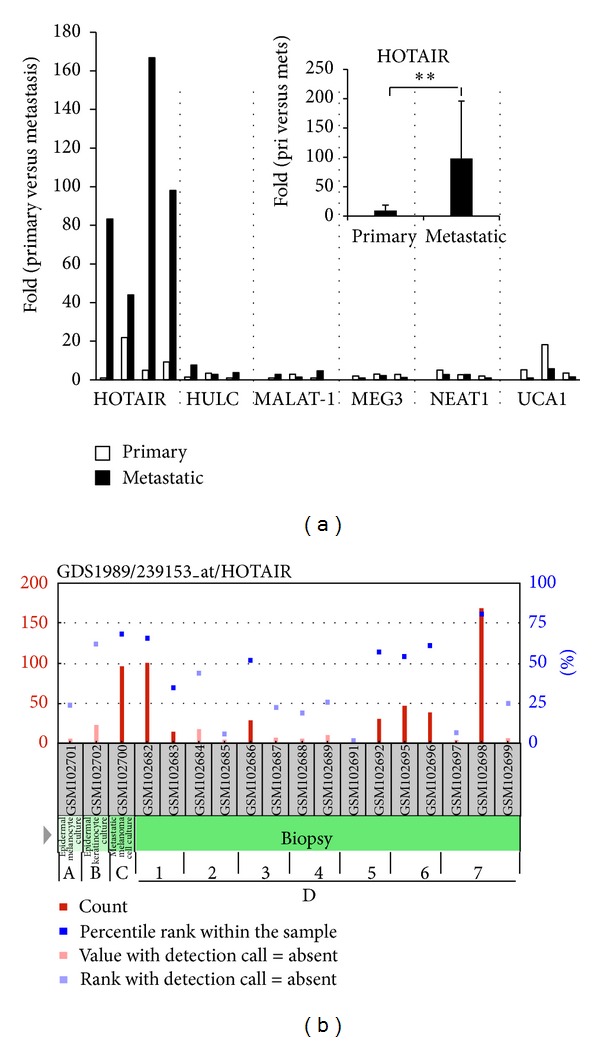
Figure 1
Figure 1
HOTAIR is upregulated in lymph node metastasis of melanoma. (a) Expression profiles of lncRNAs in melanoma and matched lymph node metastatic tissues. Quantitative RT-PCR was performed on 6 lncRNAs in melanoma and their matched metastatic tissue samples. HOTAIR expression was summarized in the insert. **P < 0.01. (b) GEO analysis of HOTAIR in 4 types of specimens and several disease states related to melanoma. The image was adapted from the GEO website. (A) Epidermal melanocyte culture; (B) epidermal keratinocyte culture; (C) metastatic melanoma cell culture; (D) biopsy. (1) Normal; (2) benign nevus; (3) atypical nevus; (4) melanoma in situ; (5) vertical growth phase melanoma; (6) metastatic growth phase melanoma; (7) lymph node metastasis.
Figure 2
Figure 2
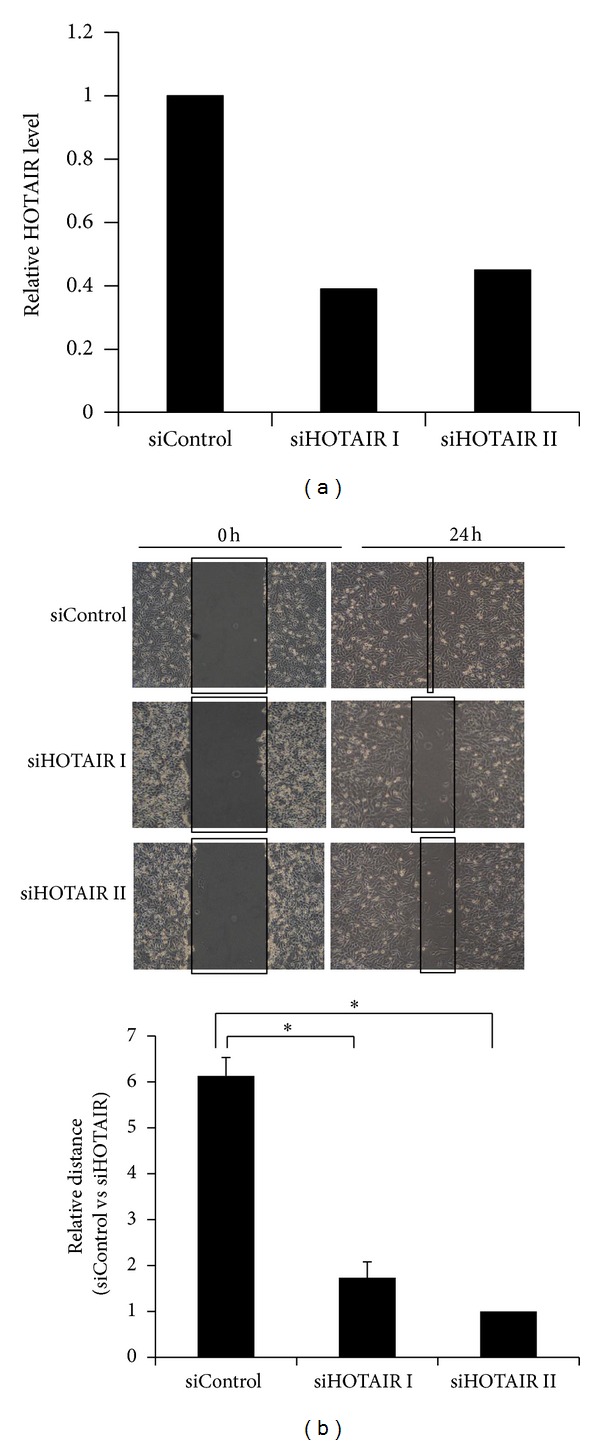
Knockdown of HOTAIR decreases melanoma A375 cell motility. (a) qRT-PCR analysis was performed to examine HOTAIR RNA levels in A375 cells transfected with siControl, siHOTAIR I, or siHOTAIR II. (b) Wounds were introduced by scratching confluent monolayers of A375 cells transfected with siControl, siHOTAIR I, or siHOTAIR II. Migration was monitored by light microscopy at 0 hours and 24 hours (upper panel). The widths of the gaps from 3 experiments were measured and the results are presented in a bar graph (lower panel). *P < 0.05.
Figure 3
Figure 3
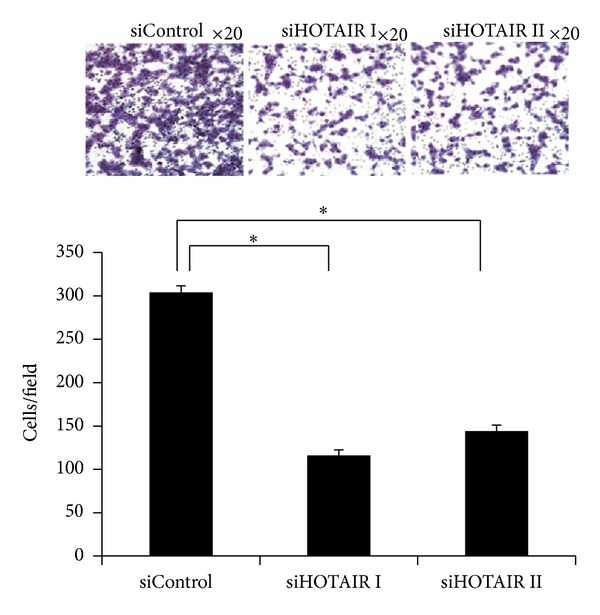
Knockdown of HOTAIR inhibits the invasion of melanoma A375 cells. Matrigel-based invasion assay was performed using modified Boyden chambers with 10% FBS as a chemoattractant. Representative images were presented. The cell numbers per field were counted and the results are summarized in a bar graph. *P < 0.05.
Figure 4
Figure 4
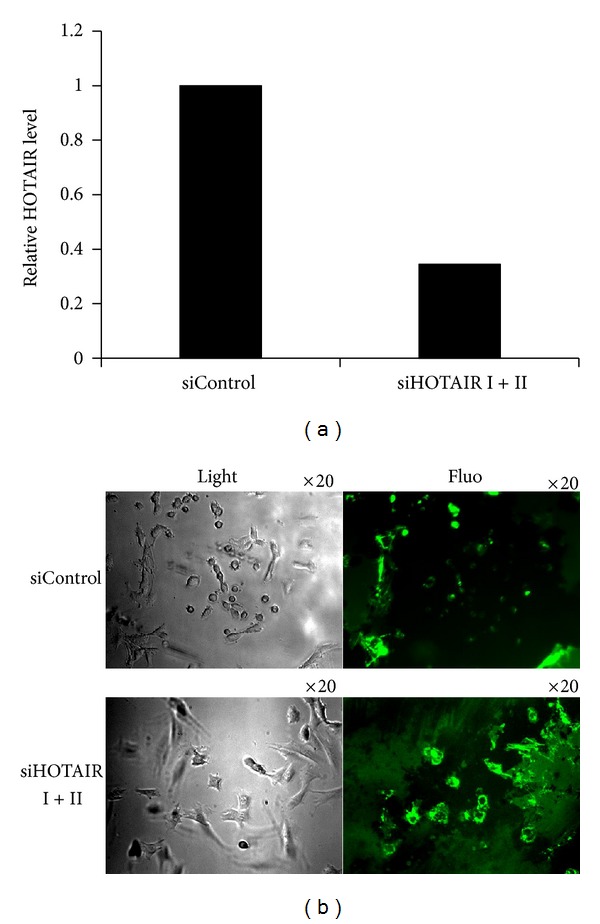
Degradation of matrix in situ is suppressed by knockdown of HOTAIR. (a) qRT-PCR analysis was performed to examine HOTAIR RNA levels in A375 cells transfected with siControl or siHOTAIR (I and II). (b) A375 cells were transfected with siControl or siHOTAIR (I and II) for 24 hours. In situ zymography was performed with Oregon green 488-conjugated gelatin. Cells were plated on gelatin matrix and incubated for 24 hours. The slides were observed by phase-contrast microscopy (left column), and gelatin degradation was visualized by fluorescence microscopy (right column).

References

    1. Little EG, Eide MJ. Update on the current state of melanoma incidence. Dermatologic Clinics. 2012;30:355–361. - PubMed
    1. Malone CD, Hannon GJ. Small RNAs as guardians of the genome. Cell. 2009;136(4):656–668. - PMC - PubMed
    1. Moazed D. Small RNAs in transcriptional gene silencing and genome defence. Nature. 2009;457(7228):413–420. - PMC - PubMed
    1. Brosnan CA, Voinnet O. The long and the short of noncoding RNAs. Current Opinion in Cell Biology. 2009;21(3):416–425. - PubMed
    1. Mattick JS. Non-coding RNAs: the architects of eukaryotic complexity. EMBO Reports. 2001;2(11):986–991. - PMC - PubMed

Publication types

Substances

LinkOut - more resources