


Acute biomarkers of traumatic brain injury: relationship between plasma levels of ubiquitin C-terminal hydrolase-L1 and glial fibrillary acidic protein
- PMID: 23865516
- PMCID: PMC3880090
- DOI: 10.1089/neu.2013.3040
Acute biomarkers of traumatic brain injury: relationship between plasma levels of ubiquitin C-terminal hydrolase-L1 and glial fibrillary acidic protein
Abstract
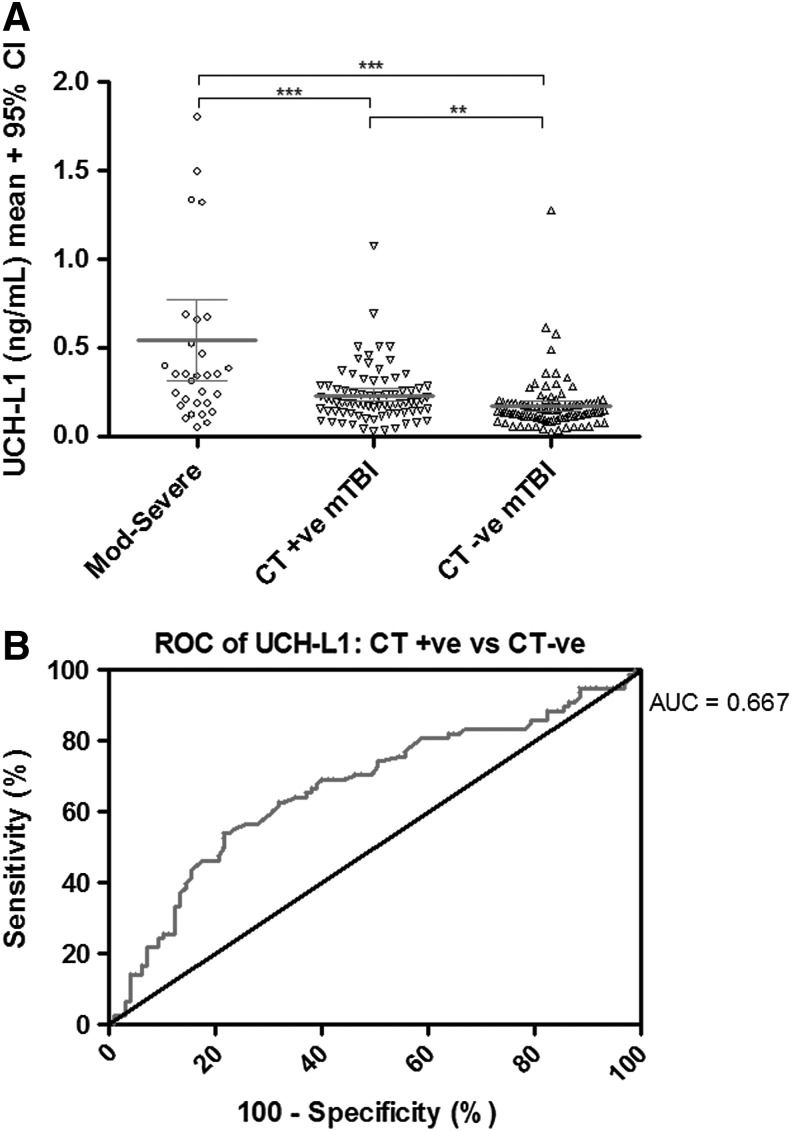
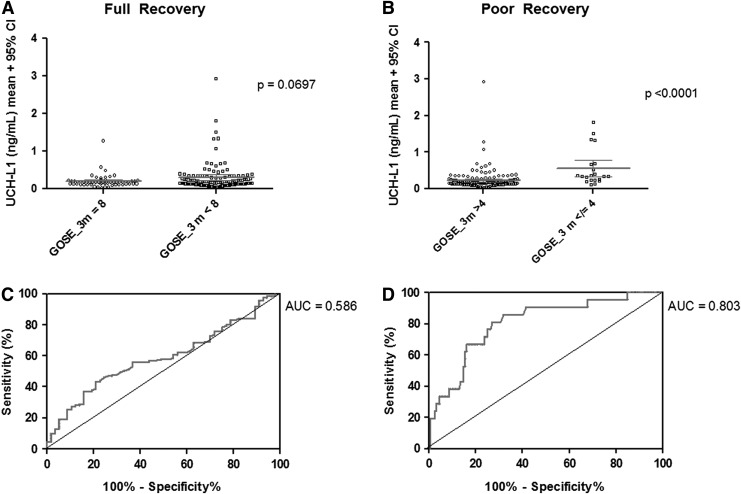
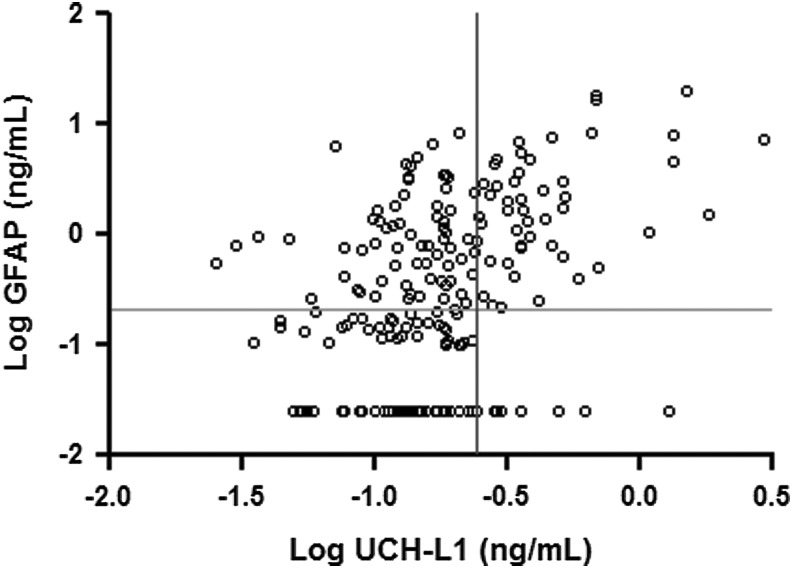
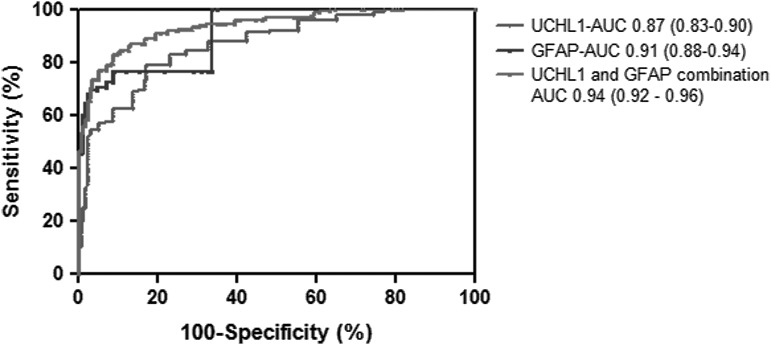
Biomarkers are important for accurate diagnosis of complex disorders such as traumatic brain injury (TBI). For a complex and multifaceted condition such as TBI, it is likely that a single biomarker will not reflect the full spectrum of the response of brain tissue to injury. Ubiquitin C-terminal hydrolase L1 (UCH-L1) and glial fibrillary acidic protein (GFAP) are among of the most widely studied biomarkers for TBI. Because UCH-L1 and GFAP measure distinct molecular events, we hypothesized that analysis of both biomarkers would be superior to analysis of each alone for the diagnosis and prognosis of TBI. Serum levels of UCH-L1 and GFAP were measured in a cohort of 206 patients with TBI enrolled in a multicenter observational study (Transforming Research and Clinical Knowledge in Traumatic Brain Injury [TRACK-TBI]). Levels of the two biomarkers were weakly correlated to each other (r=0.364). Each biomarker in isolation had good sensitivity and sensitivity for discriminating between TBI patients and healthy controls (area under the curve [AUC] 0.87 and 0.91 for UCH-L1 and GFAP, respectively). When biomarkers were combined, superior sensitivity and specificity for diagnosing TBI was obtained (AUC 0.94). Both biomarkers discriminated between TBI patients with intracranial lesions on CT scan and those without such lesions, but GFAP measures were significantly more sensitive and specific (AUC 0.88 vs. 0.71 for UCH-L1). For association with outcome 3 months after injury, neither biomarker had adequate sensitivity and specificity (AUC 0.65-0.74, for GFAP, and 0.59-0.80 for UCH-L1, depending upon Glasgow Outcome Scale Extended [GOS-E] threshold used). Our results support a role for multiple biomarker measurements in TBI research. ( ClinicalTrials.gov Identifier NCT01565551).
Figures
References
-
- Stein S.C. (1996). Classification of head injury, in: Neurotrauma. Narayan R.K., Povlishock J.T., and Wilberger J.E. (eds.). McGraw Hill: New York, pps. 31–42
-
- Thurman D.J., Coronado V., and Selassie A. (2007). The epidemiology of TBI: implications for public health, in: Brain Injury Medicine: Principles and Practice. Zasler N.D., Katz D.I., and Zafonte R.D. (eds.). Demos: New York, NY, pps. 45–55
-
- National Center for Injury Prevention and Control Report to Congress on Mild Traumatic Brain Injury in the United States: Steps to Prevent a Serious Public Health Problem. Atlanta, GH: Centers for Disease Control and Prevention, 2003
-
- Bazarian J.J., McClung J., Shah M.N., Cheng Y.T., Flesher W., and Kraus J. (2005). Mild traumatic brain injury in the United States, 1998–2000. Brain Inj. 19, 85–91 - PubMed
Publication types
MeSH terms
Substances
Associated data
Grants and funding
LinkOut - more resources
Full Text Sources
Other Literature Sources
Medical
Miscellaneous
