


Comparative survey of entomophagy and entomotherapeutic practices in six tribes of eastern Arunachal Pradesh (India)
- PMID: 23866996
- PMCID: PMC3750809
- DOI: 10.1186/1746-4269-9-50
Comparative survey of entomophagy and entomotherapeutic practices in six tribes of eastern Arunachal Pradesh (India)
Abstract
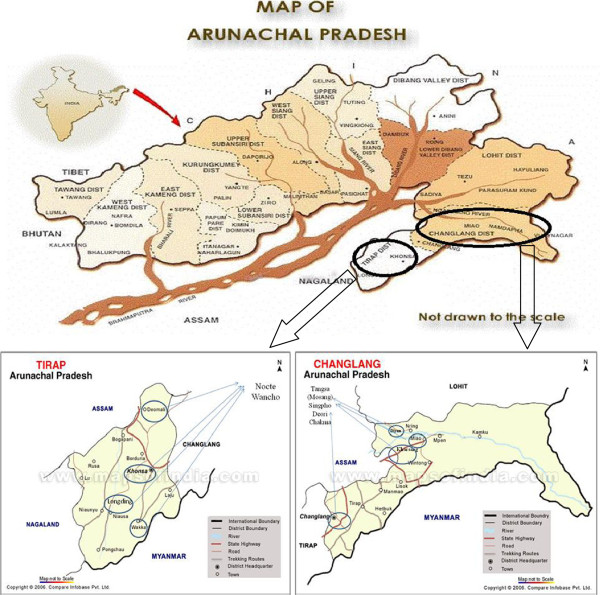
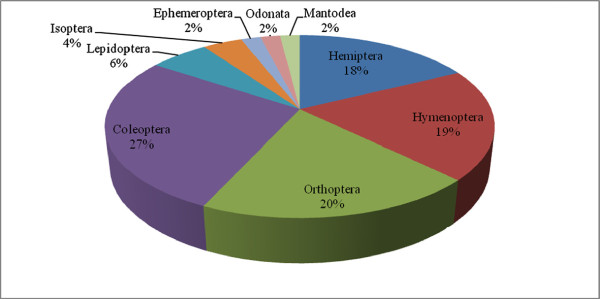
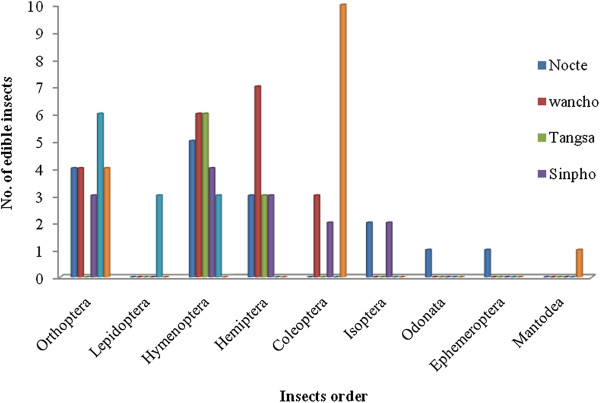
A consolidated list of edible insects used in the eastern part of Arunachal Pradesh (N.E. India) by Wangcho (Wancho) and Nocte tribes of the Tirap District and the Shingpo, Tangsa, Deori and Chakma of the Changlang District has been prepared. The list is based on thorough, semi-structured field-interviews with 20 informants of each tribal group. At least 51 insect species, belonging to 9 orders were considered edible. The largest number of the edible species belonged to the Coleoptera (14), followed by 10 each of the Orthoptera and Hymenoptera, 9 of the Hemiptera, 3 Lepidoptera, 2 Isoptera and one each of Ephemeroptera, Odonata and Mantodea. As far as therapeutic uses of insects are concerned, 4 species (Hemiptera) were mentioned by the Wangcho (Wancho). Food insects are chosen by members of the various tribes according to traditional beliefs, taste, regional and seasonal availability of the insects. Depending on the species, only certain, but sometimes all, developmental stages are consumed. Preparation of the food insects for consumption involves mainly roasting or boiling. With the degradation of natural resources, habitat loss, rapid population growth, and increasing 'westernization' , the traditional wisdom of North-East Indian tribals related to insect uses is at risk of being lost.
Figures
References
-
- Mitsuhashi J. Sekai konchu shoko taizen. Tokyo: Yasaka Shobo; 2008.
-
- Meyer-Rochow VB, Chakravorty J. Notes on entomophagy and entomotherapy generally and information on the situation in India in particular. Appl Entomol Zool. 2013;48:105–112. doi: 10.1007/s13355-013-0171-9. - DOI
-
- Meyer-Rochow VB, Changkija S. Uses of insects as human food in Papua New Guinea, Australia, and north-east India: cross-cultural considerations and cautious conclusions. Ecol Food Nutr. 1997;36:159–187. doi: 10.1080/03670244.1997.9991513. - DOI
-
- Meyer-Rochow VB. In: Ecological implications of minilivestock: Rodents, frogs, snails, and insects for sustainable development. Paoletti MP, editor. Enfield, USA: Science Publ; 2004. Traditional food insects and spider in several ethnic groups of north east India, Papua New Guinea, Australia and New Zealand; pp. 385–409.
Publication types
MeSH terms
LinkOut - more resources
Full Text Sources
Other Literature Sources
Research Materials
