Prevalence of apparent treatment-resistant hypertension among individuals with CKD
- PMID: 23868902
- PMCID: PMC3805064
- DOI: 10.2215/CJN.00550113
Prevalence of apparent treatment-resistant hypertension among individuals with CKD
Abstract
Background and objectives: Apparent treatment-resistant hypertension is defined as systolic/diastolic BP ≥ 140/90 mmHg with concurrent use of three or more antihypertensive medication classes or use of four or more antihypertensive medication classes regardless of BP level.
Design, setting, participants, & measurements: The prevalence of apparent treatment-resistant hypertension among Reasons for Geographic and Racial Differences in Stroke study participants treated for hypertension (n=10,700) was determined by level of estimated GFR and albumin-to-creatinine ratio, and correlates of apparent treatment-resistant hypertension among those participants with CKD were evaluated. CKD was defined as an albumin-to-creatinine ratio ≥ 30 mg/g or estimated GFR<60 ml/min per 1.73 m(2).
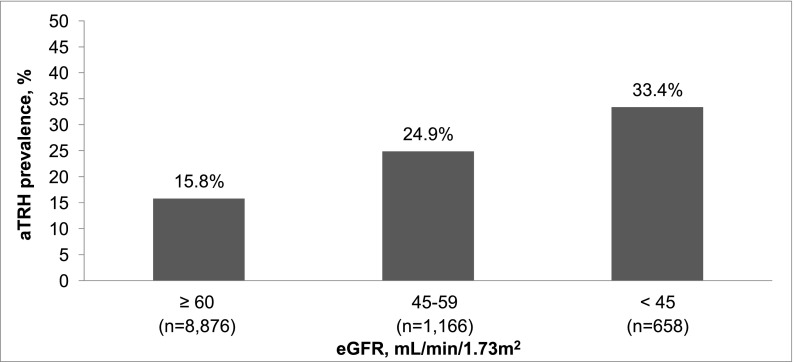
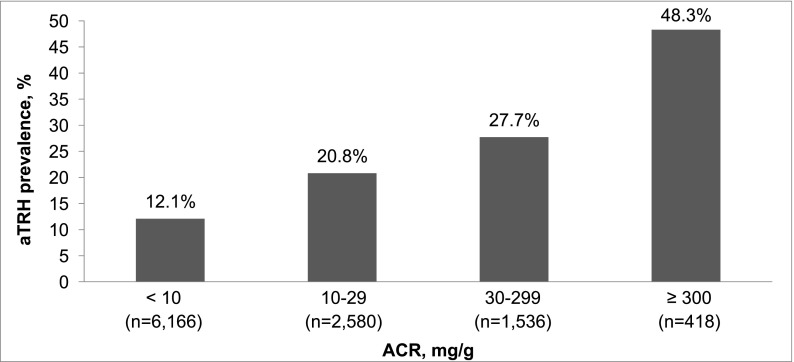
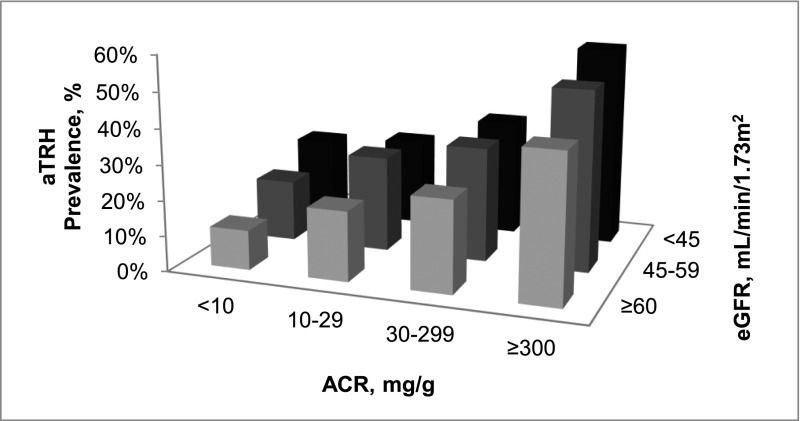
Results: The prevalence of apparent treatment-resistant hypertension was 15.8%, 24.9%, and 33.4% for those participants with estimated GFR ≥ 60, 45-59, and <45 ml/min per 1.73 m(2), respectively, and 12.1%, 20.8%, 27.7%, and 48.3% for albumin-to-creatinine ratio<10, 10-29, 30-299, and ≥ 300 mg/g, respectively. The multivariable-adjusted prevalence ratios (95% confidence intervals) for apparent treatment-resistant hypertension were 1.25 (1.11 to 1.41) and 1.20 (1.04 to 1.37) for estimated GFR levels of 45-59 and <45 ml/min per 1.73 m(2), respectively, versus ≥ 60 ml/min per 1.73 m(2) and 1.54 (1.39 to 1.71), 1.76 (1.57 to 1.97), and 2.44 (2.12 to 2.81) for albumin-to-creatinine ratio levels of 10-29, 30-299, and ≥ 300 mg/g, respectively, versus albumin-to-creatinine ratio<10 mg/g. After multivariable adjustment, men, black race, larger waist circumference, diabetes, history of myocardial infarction or stroke, statin use, and lower estimated GFR and higher albumin-to-creatinine ratio levels were associated with apparent treatment-resistant hypertension among individuals with CKD.
Conclusions: This study highlights the high prevalence of apparent treatment-resistant hypertension among individuals with CKD.
Figures
References
-
- Parikh NI, Hwang SJ, Larson MG, Meigs JB, Levy D, Fox CS: Cardiovascular disease risk factors in chronic kidney disease: Overall burden and rates of treatment and control. Arch Intern Med 166: 1884–1891, 2006 - PubMed
-
- Coresh J, Wei GL, McQuillan G, Brancati FL, Levey AS, Jones C, Klag MJ: Prevalence of high blood pressure and elevated serum creatinine level in the United States: Findings from the third National Health and Nutrition Examination Survey (1988–1994). Arch Intern Med 161: 1207–1216, 2001 - PubMed
-
- Muntner P, Anderson A, Charleston J, Chen Z, Ford V, Makos G, O'Connor A, Perumal K, Rahman M, Steigerwalt S, Teal V, Townsend R, Weir M, Wright JT, Jr, Chronic Renal Insufficiency Cohort (CRIC) Study Investigators : Hypertension awareness, treatment, and control in adults with CKD: Results from the Chronic Renal Insufficiency Cohort (CRIC) Study. Am J Kidney Dis 55: 441–451, 2010 - PMC - PubMed
-
- Calhoun DA, Jones D, Textor S, Goff DC, Murphy TP, Toto RD, White A, Cushman WC, White W, Sica D, Ferdinand K, Giles TD, Falkner B, Carey RM: Resistant hypertension: Diagnosis, evaluation, and treatment. A scientific statement from the American Heart Association Professional Education Committee of the Council for High Blood Pressure Research. Hypertension 51: 1403–1419, 2008 - PubMed
Publication types
MeSH terms
Substances
Grants and funding
LinkOut - more resources
Full Text Sources
Other Literature Sources
Medical