Review
. 2013 Oct:105:186-99.
doi: 10.1016/j.nlm.2013.07.008. Epub 2013 Jul 18.

Learning to learn - intrinsic plasticity as a metaplasticity mechanism for memory formation

Affiliations
Review

Learning to learn - intrinsic plasticity as a metaplasticity mechanism for memory formation

Megha Sehgal et al. Neurobiol Learn Mem. 2013 Oct.

Abstract

"Use it or lose it" is a popular adage often associated with use-dependent enhancement of cognitive abilities. Much research has focused on understanding exactly how the brain changes as a function of experience. Such experience-dependent plasticity involves both structural and functional alterations that contribute to adaptive behaviors, such as learning and memory, as well as maladaptive behaviors, including anxiety disorders, phobias, and posttraumatic stress disorder. With the advancing age of our population, understanding how use-dependent plasticity changes across the lifespan may also help to promote healthy brain aging. A common misconception is that such experience-dependent plasticity (e.g., associative learning) is synonymous with synaptic plasticity. Other forms of plasticity also play a critical role in shaping adaptive changes within the nervous system, including intrinsic plasticity - a change in the intrinsic excitability of a neuron. Intrinsic plasticity can result from a change in the number, distribution or activity of various ion channels located throughout the neuron. Here, we review evidence that intrinsic plasticity is an important and evolutionarily conserved neural correlate of learning. Intrinsic plasticity acts as a metaplasticity mechanism by lowering the threshold for synaptic changes. Thus, learning-related intrinsic changes can facilitate future synaptic plasticity and learning. Such intrinsic changes can impact the allocation of a memory trace within a brain structure, and when compromised, can contribute to cognitive decline during the aging process. This unique role of intrinsic excitability can provide insight into how memories are formed and, more interestingly, how neurons that participate in a memory trace are selected. Most importantly, modulation of intrinsic excitability can allow for regulation of learning ability - this can prevent or provide treatment for cognitive decline not only in patients with clinical disorders but also in the aging population.

Keywords: Aging; Intrinsic excitability; Learning; Memory; Memory allocation; Memory modulation; Metaplasticity.


Figures

Figure 1
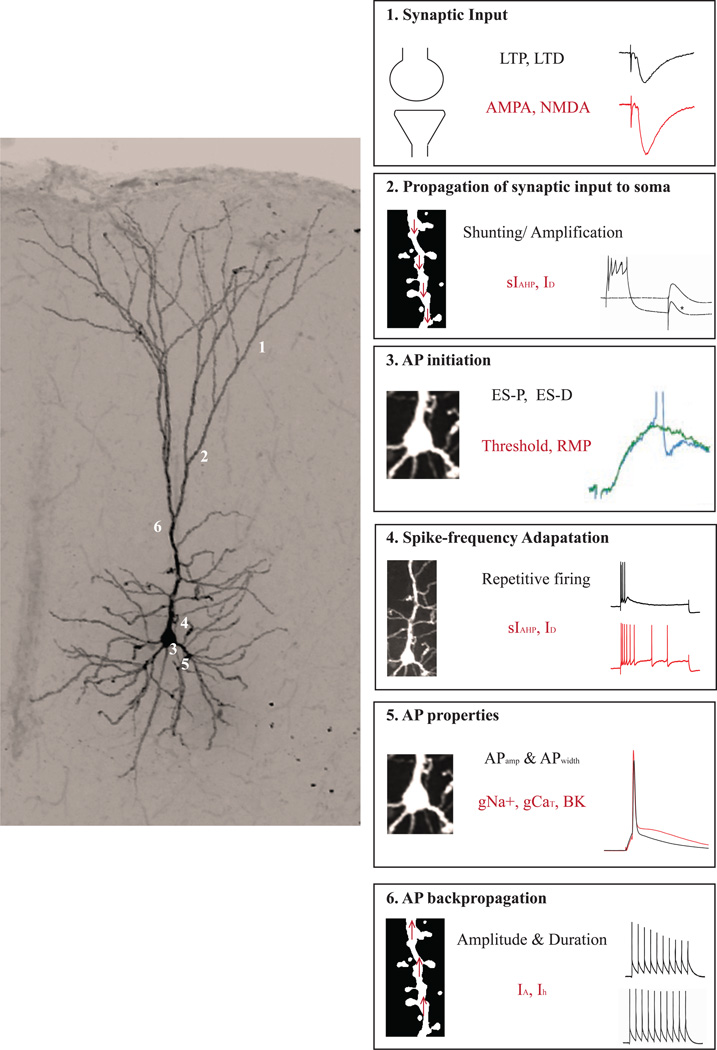
Figure 1. Synaptic and intrinsic properties shape neuronal information processing
Left panel depicts a medial prefrontal cortical neuron filled with biocytin during whole-cell patch clamp recording and imaged using confocal microscopy (Olympus FV1200). Numbers 1, 2, 3, 4, 5 and 6 refer to the boxes in the right panel. (1) A vast majority of neuronal input originates on the dendritic spines with smaller contributions from synapses that are made on the dendrites, soma and axons. Synaptic inputs can undergo bidirectional plasticity in the form of LTP and LTD by modulation of AMPA and NMDA receptor-mediated transmission. (2) Propagation of the synaptically generated signal (EPSP) depends upon the active and passive dendritic properties including ionic conductances that contribute to the afterhyperpolarization (AHP). (3) Once the signal reaches the soma, neuronal output is determined based on factors like AP initiation threshold, resting membrane potential, etc…, which in turn rely on ion channels within the soma. (4) Bidirectional plasticity impacting the coupling of EPSPs to spikes is referred to as ES-P and ES-D. The number of APs generated following sustained stimulation (spike frequency adaptation) can also code relevant information, and relies upon K+ conductances, including those that underlie the AHP. (5) In addition, properties like amplitude and duration of APs can also modulate pre- and postsynaptic aspects of neuronal processing like neurotransmitter release and bAPs. (6) The magnitude and travel distance of bAPs can be influenced by IA currents, which can ultimately modulate Ca2+ influx into the dendritic compartment. Abbreviations: long term potentiation, LTP; long term depression, LTD; excitatory postsynaptic potential, EPSP; afterhyperpolarization, AHP; action potential, AP; EPSP-to-Spike coupling potentiation, ES-P; EPSP-to-Spike coupling potentiation, ES-D; backpropagating APs, bAPs. Electrophysiological traces in boxes 2, 3, 5 and 6 were adapted from Sah and Bekkers (1996), Daoudal et al. (2002), Deng et al. (2013) and Tsubokawa et al. (2000) respectively, with permission.
Figure 2
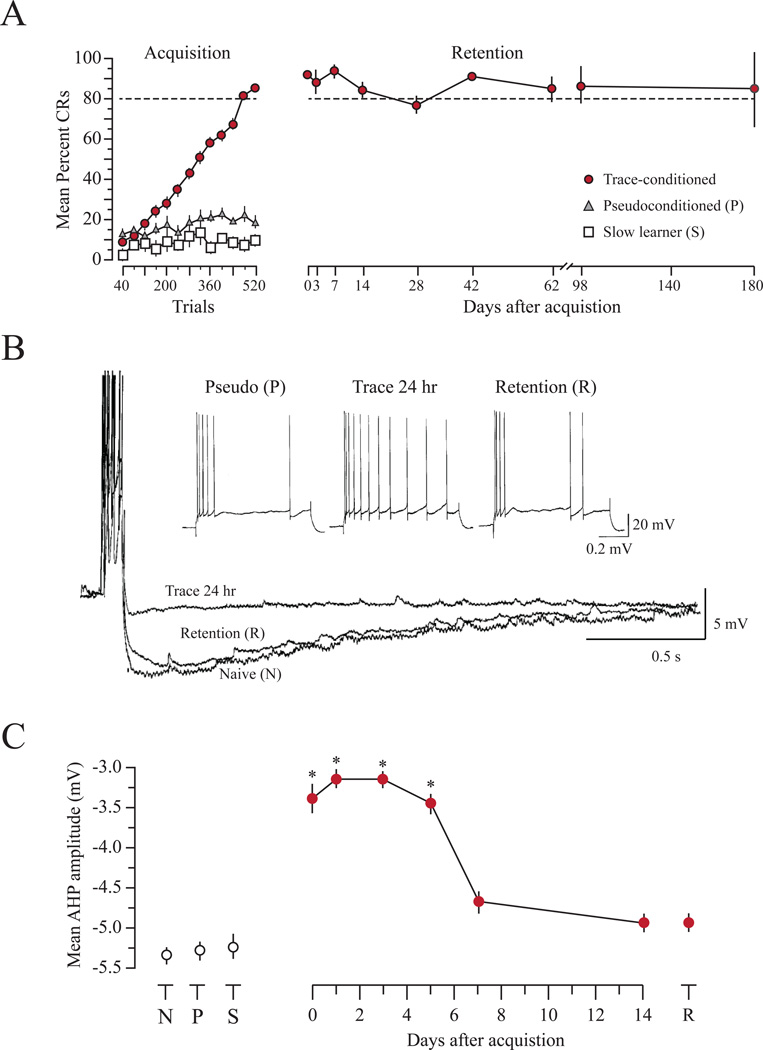
Figure 2. Learning-related intrinsic plasticity in hippocampal neurons is transient while memory persists
A, The left panel (ACQUISITION) shows the normalized learning curves for trace conditioned, pseudoconditioned and slow-learning rabbits. Trace-conditioned rabbits reach criterion performance (>80% correct responses; dashed line) in ~ 7 sessions and maintain behavioral performance over an extended period of time, right panel (RETENTION). The pseudoconditioned and the slow-learning rabbits never reach criterion. B, Representative traces demonstrating reductions in the postburst AHP of a CA1 neuron from a trace-conditioned rabbit 24hr after initial learning (Trace 24 hr) relative to a neuron from a naive rabbit (Naive) and a rabbit that received an additional training session 14 d later (Retention). Inset: Examples of typical spike frequency adaptation responses in CA1 pyramidal cells from Trace 24 hr and Retention rabbits along with a rabbit 24 hr after pseudoconditioning (Pseudo). C, Learning-related reductions of the AHP amplitude were transient, lasting ~5 days. These changes are learning-specific and are not observed in naive (N), pseudoconditioned (P), or slow-learning (S) rabbits. * p < 0.001. Adapted fromMoyer et al. (1996) with permission.
Figure 3
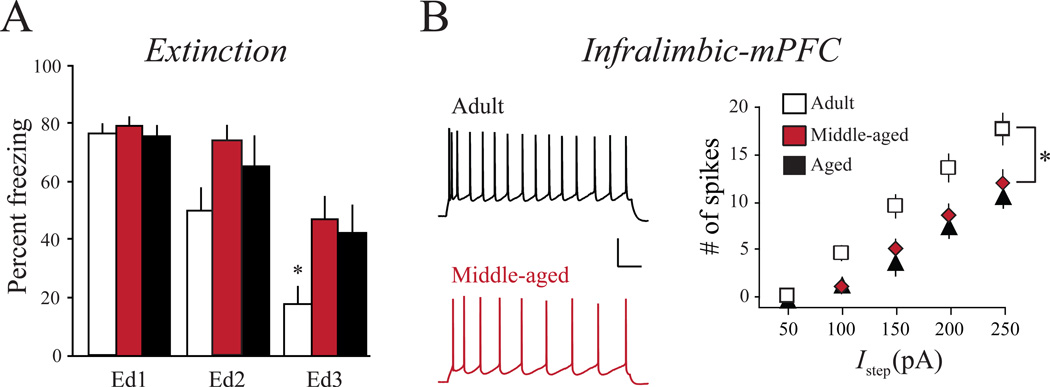
Figure 3. Normal aging leads to aberrant intrinsic plasticity
A, Aging results in extinction deficits. Mean freezing on the first trial of extinction day 1 does not differ as a function of age indicating no differences in acquisition and consolidation of trace fear conditioning across age-groups. Adult rats exhibit a significant decrease in freezing across 3 days of extinction indicating successful extinction relative to both middle-aged and aged rats. (Ed1, Ed2 and Ed3 refer to percent freezing on the first trial of extinction days 1, 2 and 3 respectively). B, Plot and representative traces illustrate that the mean number of spikes (excitability) evoked by increasing current steps decreases in infralimbic cortex regular spiking neurons from middle-aged and aged rats compared to adult rats. Scale 20mV, 100ms. * p < 0.05. Adapted fromKaczorowski et al. (2012) with permission.
Figure 4
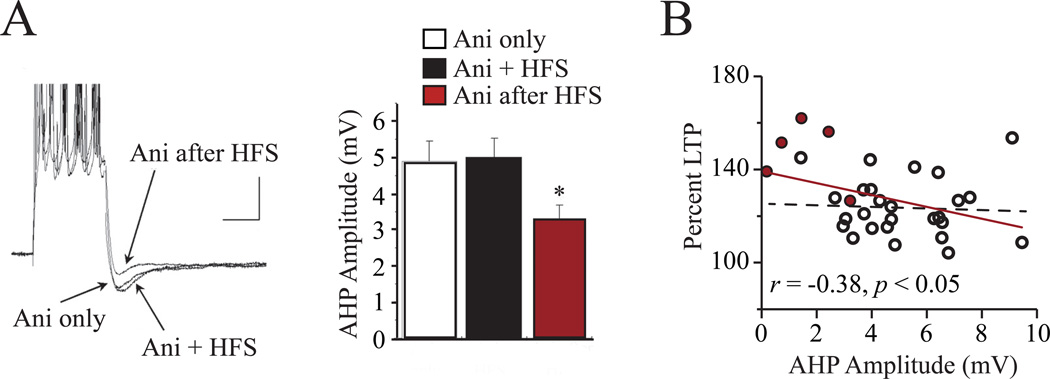
Figure 4. Intrinsic plasticity is induced by synaptic stimulation and predicts future synaptic plasticity
A, High frequency stimulation (HFS) that does not induce LTP can induce long-lasting reductions in the AHP. Postburst AHP in CA1 pyramidal neurons is reduced following HFS, and this reduction is dependent upon de novo protein synthesis. Anisomycin, a protein synthesis inhibitor blocks HFS-induced AHP reductions when applied during (Ani + HFS), but not after HFS (Ani after HFS). Left panel illustrates representative traces and right panel shows that the average AHP amplitude is reduced in neurons administered (Ani-after HFS) in a protein-synthesis dependent manner. * p < 0.05. Scale bars in left panel: 5 mV, 50 ms. B, Synaptic plasticity is correlated with intrinsic plasticity. Following acquisition of trace fear conditioning, intracellular and field recordings were made in the same slices. For slices from control, poor and good learner rats, the magnitude of LTP induced correlates with the AHP amplitude (red line). However, if data from good learners (red circles) are eliminated from the plot, the correlation is no longer significant (dashed line). A and B were adapted with permission from Cohen-Matsliah et al. (2009) and Song et al. (Song et al., 2012) respectively.

References

    1. Abraham WC, Bear MF. Metaplasticity: the plasticity of synaptic plasticity. Trends Neurosci. 1996;19:126–130. - PubMed
    1. Abraham WC. Metaplasticity: tuning synapses and networks for plasticity. Nat Rev Neurosci. 2008;9:387. - PubMed
    1. Alger BE, Nicoll RA. Epileptiform burst afterhyperolarization: calciumdependent potassium potential in hippocampal CA1 pyramidal cells. Science. 1980;210:1122–1124. - PubMed
    1. Alkon DL. Associative training of Hermissenda. J Gen Physiol. 1974;64:70–84. - PMC - PubMed
    1. Alkon DL. Voltage-dependent calcium and potassium ion conductances: a contingency mechanism for an associative learning model. Science. 1979;205:810–816. - PubMed

Publication types