


Suppression of HBV by tenofovir in HBV/HIV coinfected patients: a systematic review and meta-analysis
- PMID: 23874527
- PMCID: PMC3707972
- DOI: 10.1371/journal.pone.0068152
Suppression of HBV by tenofovir in HBV/HIV coinfected patients: a systematic review and meta-analysis
Abstract
Background: Hepatitis B coinfection is common in HIV-positive individuals and as antiretroviral therapy has made death due to AIDS less common, hepatitis has become increasingly important. Several drugs are available to treat hepatitis B. The most potent and the one with the lowest risk of resistance appears to be tenofovir (TDF). However there are several questions that remain unanswered regarding the use of TDF, including the proportion of patients that achieves suppression of HBV viral load and over what time, whether suppression is durable and whether prior treatment with other HBV-active drugs such as lamivudine, compromises the efficacy of TDF due to possible selection of resistant HBV strains.
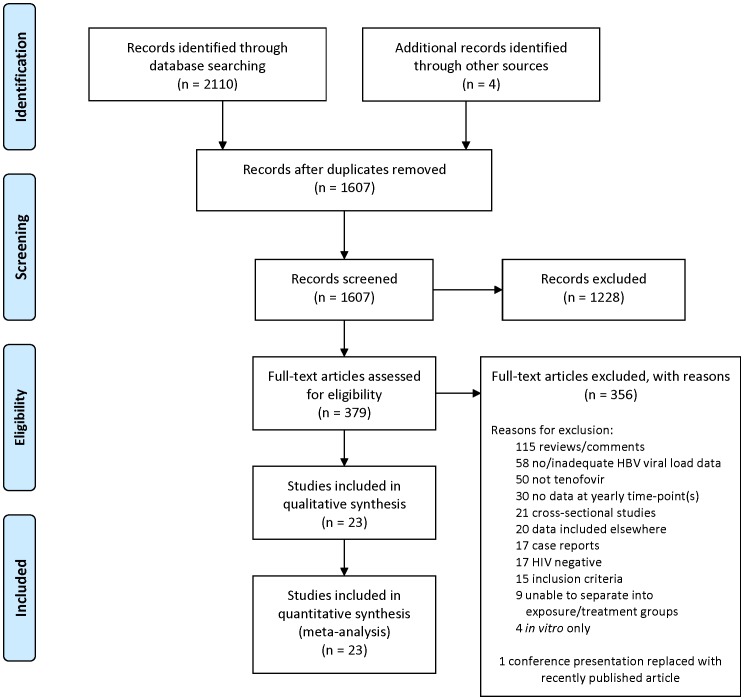
Methods: A systematic review and meta-analysis following PRISMA guidelines and using multilevel mixed effects logistic regression, stratified by prior and/or concomitant use of lamivudine and/or emtricitabine.
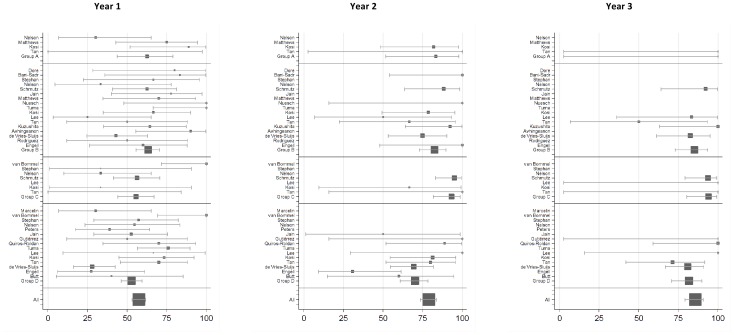
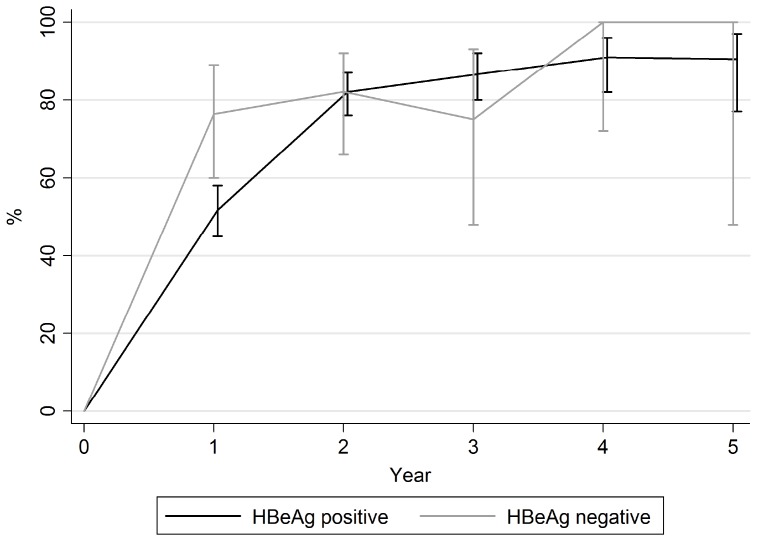
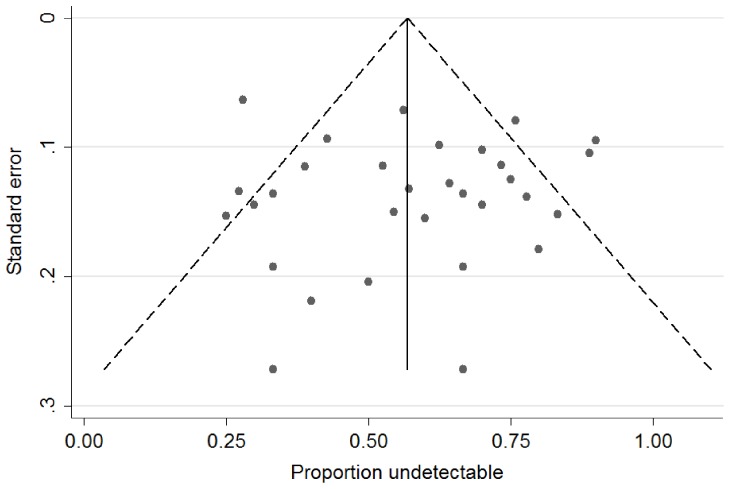
Results: Data was available from 23 studies including 550 HBV/HIV coinfected patients treated with TDF. Follow up was for up to seven years but to ensure sufficient power the data analyses were limited to three years. The overall proportion achieving suppression of HBV replication was 57.4%, 79.0% and 85.6% at one, two and three years, respectively. No effect of prior or concomitant 3TC/FTC was shown. Virological rebound on TDF treatment was rare.
Interpretation: TDF suppresses HBV to undetectable levels in the majority of HBV/HIV coinfected patients with the proportion fully suppressed continuing to increase during continuous treatment. Prior treatment with 3TC/FTC does not compromise efficacy of TDF treatment. The use of combination treatment with 3TC/FTC offers no significant benefit over TDF alone.
Conflict of interest statement
Figures
References
-
- Weber R, Sabin CA, Friis-Moller N, Reiss P, El-Sadr WM, et al. (2006) Liver-related deaths in persons infected with the human immunodeficiency virus: the D:A:D study. Arch Intern Med 166: 1632–1641. - PubMed
-
- Brook G, Main J, Nelson M, Bhagani S, Wilkins E, et al. (2010) British HIV Association guidelines for the management of coinfection with HIV-1 and hepatitis B or C virus 2010. HIV Med 11: 1–30. - PubMed
-
- Woo G, Tomlinson G, Nishikawa Y, Kowgier M, Sherman M, et al. (2010) Tenofovir and entecavir are the most effective antiviral agents for chronic hepatitis B: a systematic review and Bayesian meta-analyses. Gastroenterology 139: 1218–1229. - PubMed
-
- Avihingsanon A, Lewin SR, Kerr S, Chang JJ, Piyawat K, et al. (2010) Efficacy of tenofovir disoproxil fumarate/emtricitabine compared with emtricitabine alone in antiretroviral-naive HIV-HBV coinfection in Thailand. Antivir Ther 15: 917–922. - PubMed
Publication types
MeSH terms
Substances
Grants and funding
LinkOut - more resources
Full Text Sources
Other Literature Sources
Medical
