


Analysis of the airway microbiota of healthy individuals and patients with chronic obstructive pulmonary disease by T-RFLP and clone sequencing
- PMID: 23874580
- PMCID: PMC3706416
- DOI: 10.1371/journal.pone.0068302
Analysis of the airway microbiota of healthy individuals and patients with chronic obstructive pulmonary disease by T-RFLP and clone sequencing
Abstract
Chronic obstructive pulmonary disease (COPD) is a progressive, inflammatory lung disease that affects a large number of patients and has significant impact. One hallmark of the disease is the presence of bacteria in the lower airways.
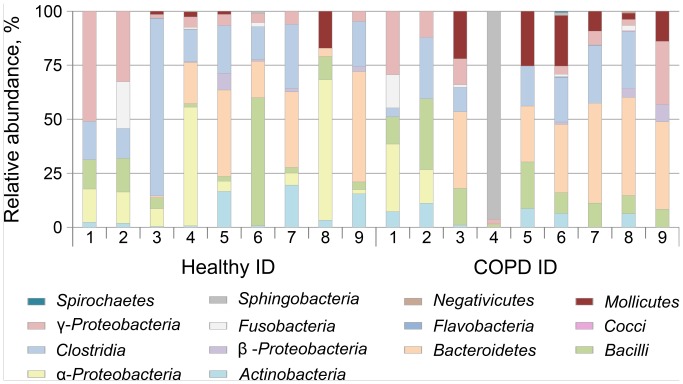
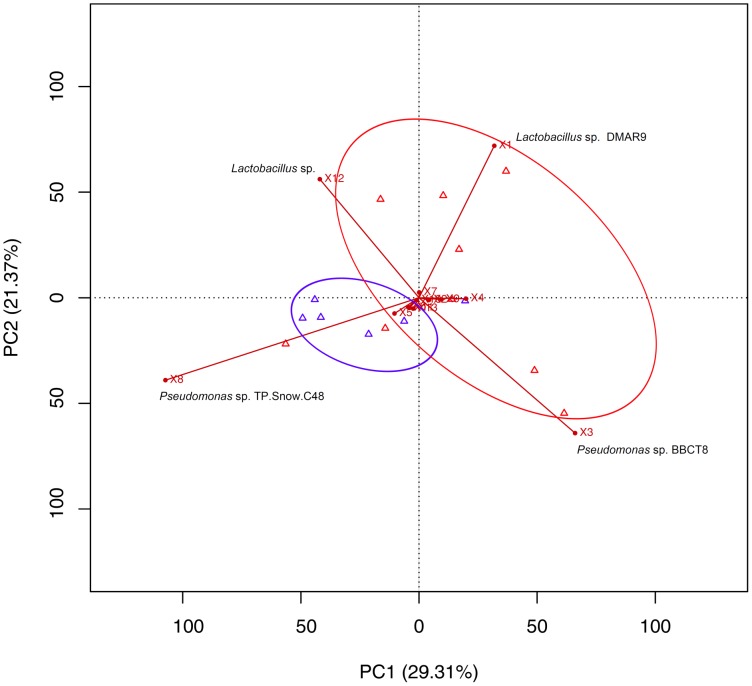
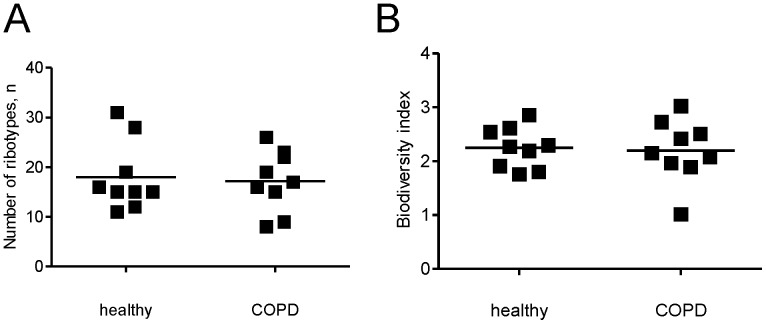
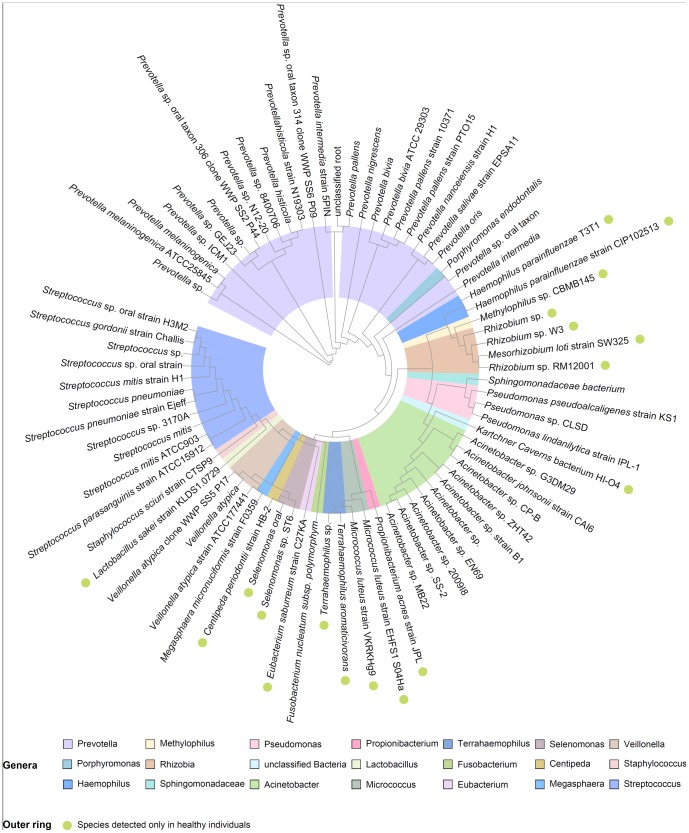
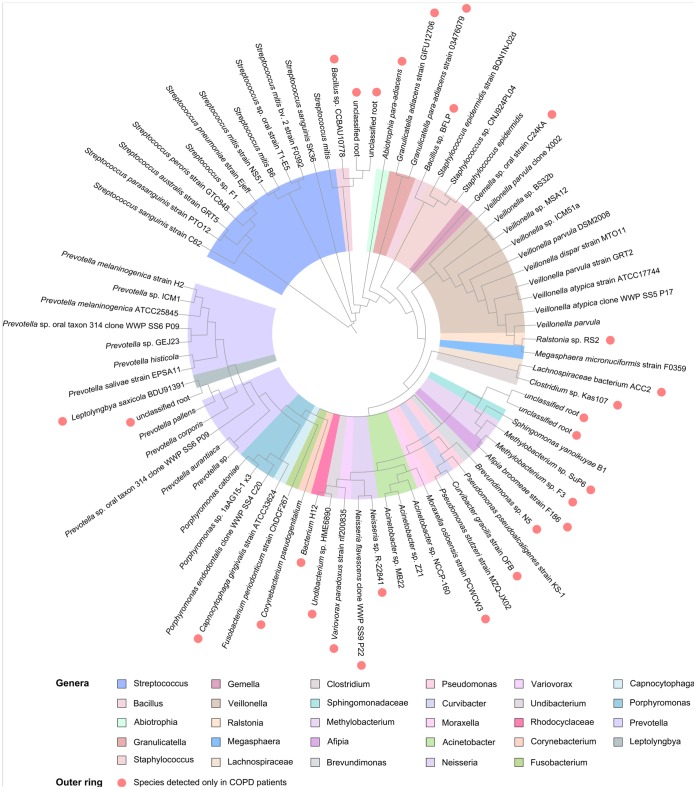
Objective: The aim of this study was to analyze the detailed structure of microbial communities found in the lungs of healthy individuals and patients with COPD. Nine COPD patients as compared and 9 healthy individuals underwent flexible bronchoscopy and BAL was performed. Bacterial nucleic acids were subjected to terminal restriction fragment (TRF) length polymorphism and clone library analysis. Overall, we identified 326 T-RFLP band, 159 in patients and 167 in healthy controls. The results of the TRF analysis correlated partly with the data obtained from clone sequencing. Although the results of the sequencing showed high diversity, the genera Prevotella, Sphingomonas, Pseudomonas, Acinetobacter, Fusobacterium, Megasphaera, Veillonella, Staphylococcus, and Streptococcus constituted the major part of the core microbiome found in both groups. A TRF band possibly representing Pseudomonas sp. monoinfection was associated with a reduction of the microbial diversity. Non-cultural methods reveal the complexity of the pulmonary microbiome in healthy individuals and in patients with COPD. Alterations of the microbiome in pulmonary diseases are correlated with disease.
Conflict of interest statement
Figures
References
-
- Veeramachaneni SB, Sethi S (2006) Pathogenesis of bacterial exacerbations of COPD. COPD 3: 109–115. - PubMed
-
- Sethi S (2010) Infection as a comorbidity of COPD. Eur Respir J 35: 1209–1215. - PubMed
-
- Herr C, Beisswenger C, Hess C, Kandler K, Suttorp N, et al. (2009) Suppression of pulmonary innate host defence in smokers. Thorax 64: 144–149. - PubMed
-
- Heijink IH, Brandenburg SM, Postma DS, van Oosterhout AJ (2012) Cigarette smoke impairs airway epithelial barrier function and cell-cell contact recovery. Eur Respir J 39: 419–428. - PubMed
Publication types
MeSH terms
Substances
Associated data
- Actions
- Actions
- Actions
- Actions
- Actions
- Actions
- Actions
- Actions
- Actions
- Actions
- Actions
- Actions
- Actions
- Actions
- Actions
- Actions
- Actions
- Actions
- Actions
- Actions
- Actions
- Actions
- Actions
- Actions
- Actions
- Actions
- Actions
- Actions
- Actions
- Actions
- Actions
- Actions
- Actions
- Actions
- Actions
- Actions
- Actions
- Actions
- Actions
- Actions
- Actions
- Actions
- Actions
- Actions
- Actions
- Actions
- Actions
- Actions
- Actions
- Actions
- Actions
- Actions
- Actions
- Actions
- Actions
- Actions
- Actions
- Actions
- Actions
- Actions
- Actions
- Actions
- Actions
- Actions
- Actions
- Actions
- Actions
- Actions
- Actions
- Actions
- Actions
- Actions
- Actions
- Actions
- Actions
- Actions
- Actions
- Actions
- Actions
- Actions
- Actions
- Actions
- Actions
- Actions
- Actions
- Actions
- Actions
- Actions
- Actions
- Actions
- Actions
- Actions
- Actions
- Actions
- Actions
- Actions
- Actions
- Actions
- Actions
- Actions
- Actions
- Actions
- Actions
- Actions
- Actions
- Actions
- Actions
- Actions
- Actions
- Actions
- Actions
- Actions
- Actions
- Actions
- Actions
- Actions
- Actions
- Actions
- Actions
- Actions
- Actions
- Actions
- Actions
- Actions
- Actions
- Actions
- Actions
- Actions
- Actions
- Actions
LinkOut - more resources
Full Text Sources
Other Literature Sources
Medical
Molecular Biology Databases
