


Increased risk for congenital heart defects in children carrying the ABCB1 Gene C3435T polymorphism and maternal periconceptional toxicants exposure
- PMID: 23874772
- PMCID: PMC3714281
- DOI: 10.1371/journal.pone.0068807
Increased risk for congenital heart defects in children carrying the ABCB1 Gene C3435T polymorphism and maternal periconceptional toxicants exposure
Abstract
Backgrounds: The etiology of congenital heart defect (CHD) is commonly believed to involve the interaction of multiple environmental and genetic factors. This study aimed to explore the joint effects of the ABCB1 gene C3435T polymorphism and maternal periconceptional toxicants exposure on the CHD risk in a Han Chinese population.
Methods: An age and gender matched case-control study with standardized data collection involving 201 pairs was conducted. Periconceptional toxicants exposure was obtained through a structured questionnaire. A job exposure matrix (JEM) was used for toxicants exposure assessment. Genotyping of the ABCB1 C3435T polymorphism was performed by sequencing. Logistic regression analysis was performed to assess the joint effects of the ABCB1 gene C3435T polymorphism and toxicants exposure on the risk of CHD. Placenta tissues and umbilical cords were collected to investigate the impact of C3435T polymorphism on the transcription and translation activities of ABCB1 gene.
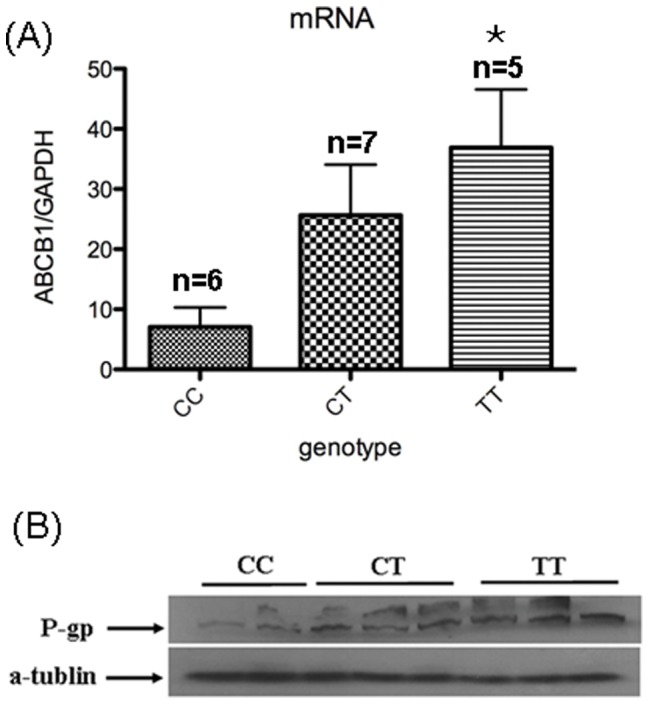
Results: MATERNAL PERICONCEPTIONAL EXPOSURES TO PHTHALATES (ADJUSTED OR: 1.6; 95%CI: 1.0-2.6) and alkylphenolic compounds (adjusted OR:1.8; 95%CI:1.1-3.0) were associated with a higher incidence of CHDs in general. More cases were carriers of the ABCB1 CC/CT genotypes (OR: 2.0, 95%CI: 1.1-3.5, P-value: 0.021). Children carrying the CC/CT genotype and periconceptionally exposed to phthalates and alkylphenolic compounds suffered almost 3.5-fold increased risk of having CHD than non-exposed children with TT genotype (adjusted OR: 3.5, 95%CI: 1.5-7.9, P-value: 0.003), and the OR changed to 4.4 for septal defects (adjusted OR: 4.4,95%CI:1.8-10.9,P-value:0.001). The ABCB1 mRNA expression of the TT genotype was significantly higher than that of the CC genotype (P = 0.03). Compared with TT genotype, lower P-glycoprotein expression was observed for the CC/CT genotypes.
Conclusion: The C3435T polymorphism in the ABCB1 gene of fetus increases the risks of CHD in a Han Chinese population when the mothers are exposed to phthalates and alkylphenolic compounds during the periconceptional period, particularly for septal defects.
Conflict of interest statement
Figures
References
-
- Pierpont ME, Basson CT, Benson DW Jr, Gelb BD, Giglia TM, et al. (2007) Genetic basis for congenital heart defects: current knowledge: a scientific statement from the American Heart Association Congenital Cardiac Defects Committee, Council on Cardiovascular Disease in the Young: endorsed by the American Academy of Pediatrics. Circulation 115: 3015–3038. - PubMed
-
- Jenkins KJ, Correa A, Feinstein JA, Botto L, Britt AE, et al. (2007) Noninherited risk factors and congenital cardiovascular defects: current knowledge: a scientific statement from the American Heart Association Council on Cardiovascular Disease in the Young: endorsed by the American Academy of Pediatrics. Circulation 115: 2995–3014. - PubMed
-
- Thulstrup AM, Bonde JP (2006) Maternal occupational exposure and risk of specific birth defects. Occup Med (Lond) 56: 532–543. - PubMed
Publication types
MeSH terms
Substances
LinkOut - more resources
Full Text Sources
Other Literature Sources
Medical
