


A review of the evidence to support influenza vaccine introduction in countries and areas of WHO's Western Pacific Region
- PMID: 23875015
- PMCID: PMC3713047
- DOI: 10.1371/journal.pone.0070003
A review of the evidence to support influenza vaccine introduction in countries and areas of WHO's Western Pacific Region
Abstract
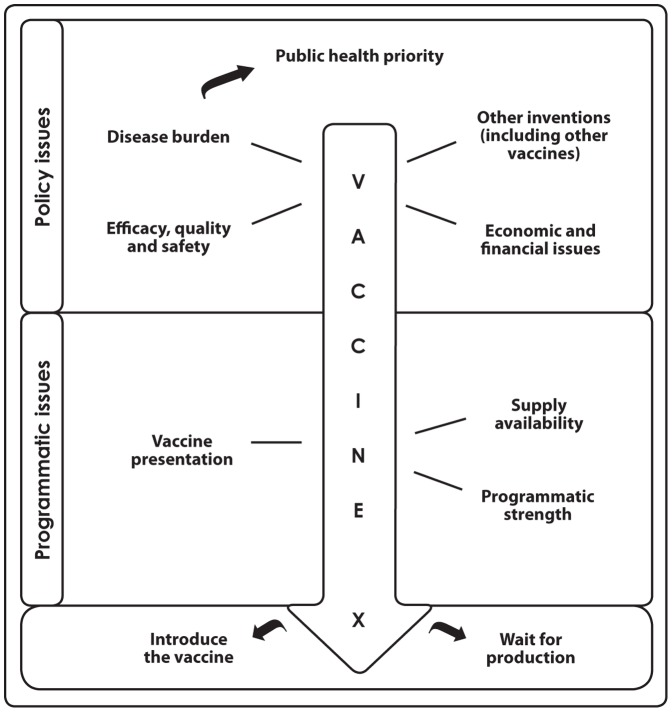
Background: Immunization against influenza is considered an essential public health intervention to control both seasonal epidemics and pandemic influenza. According to the World Health Organization (WHO), there are five key policy and three key programmatic issues that decision-makers should consider before introducing a vaccine. These are (a) public health priority, (b) disease burden, (c) efficacy, quality and safety of the vaccine, (d) other inventions, (e) economic and financial issues, (f) vaccine presentation, (g) supply availability and (h) programmatic strength. We analyzed the body of evidence currently available on these eight issues in the WHO Western Pacific Region.
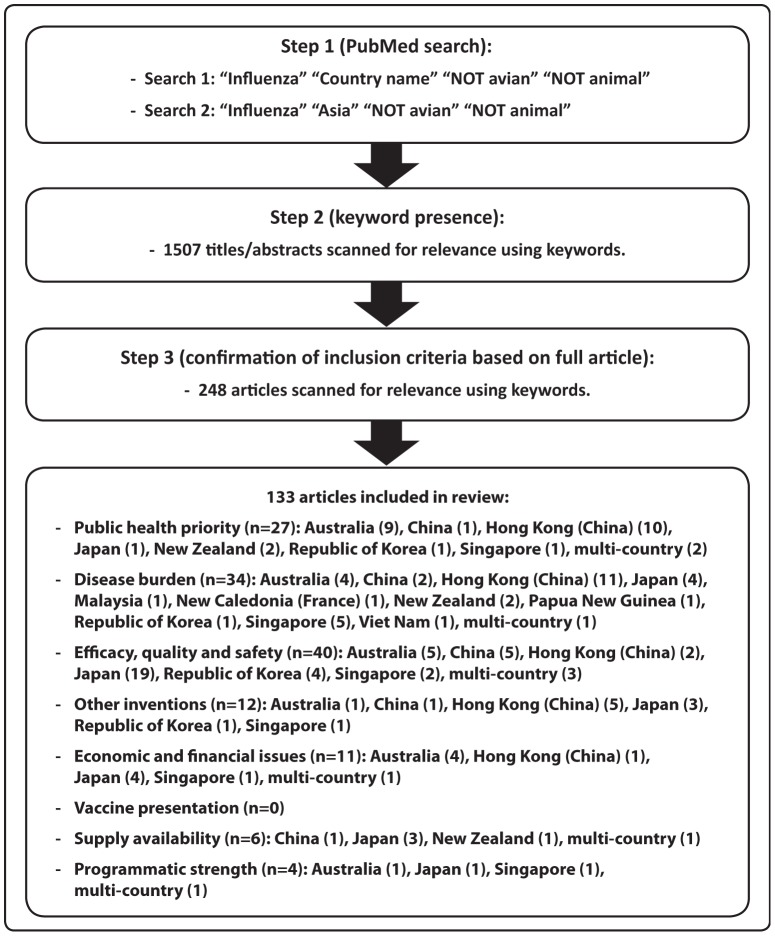
Methodology/principal findings: Studies indexed in PubMed and published in English between 1 January 2000 and 31 December 2010 from the 37 countries and areas of the Western Pacific Region were screened for keywords pertaining to the five policy and three programmatic issues. Studies were grouped according to country income level and vaccine target group. There were 133 articles that met the selection criteria, with most (90%) coming from high-income countries. Disease burden (n = 34), vaccine efficacy, quality and safety (n = 27) and public health priority (n = 27) were most frequently addressed by studies conducted in the Region. Many studies assessed influenza vaccine policy and programmatic issues in the general population (42%), in the elderly (24%) and in children (17%). Few studies (2%) addressed the eight issues relating to pregnant women.
Conclusions/significance: The evidence for vaccine introduction in countries and areas in this Region remains limited, particularly in low- and middle-income countries that do not currently have influenza vaccination programmes. Surveillance activities and specialized studies can be used to assess the eight issues including disease burden among vaccine target groups and the cost-effectiveness of influenza vaccine. Multi-country studies should be considered to maximize resource utilization for cross-cutting issues such as vaccine presentation and other inventions.
Conflict of interest statement
Figures
References
-
- World Health Organization (2005) Countries and areas. Available: www.wpro.who.int/countries/list.htm. Accessed 2011 November 23.
-
- World Health Organization (2010) National Influenza Centres. Available: www.who.int/csr/disease/influenza/centres/en/index.html. Accessed 2011 March 15.
-
- World Health Organization (2005) Vaccine Introduction Guidelines. Adding a vaccine to a national immunization programme: decision and implementation. Available: http://www.who.int/vaccines-documents/DoxGen/H3DoxList.htm. Accessed 2011 November 1.
-
- World Health Organization (2012) Vaccines against influenza WHO position paper - November 2012. Releve epidemiologique hebdomadaire/Section d'hygiene du Secretariat de la Societe des Nations = Weekly epidemiological record/Health Section of the Secretariat of the League of Nations 87: 461–476. - PubMed
-
- World Bank (2011) Country classifications Available: http://data.worldbank.org/about/country-classifications/country-and-lend.... Accessed 2011 March 15.
Publication types
MeSH terms
Substances
LinkOut - more resources
Full Text Sources
Other Literature Sources
Medical
Miscellaneous
