


Sequential waves of gene expression in patients with clinically defined dengue illnesses reveal subtle disease phases and predict disease severity
- PMID: 23875036
- PMCID: PMC3708824
- DOI: 10.1371/journal.pntd.0002298
Sequential waves of gene expression in patients with clinically defined dengue illnesses reveal subtle disease phases and predict disease severity
Abstract
Background: Dengue virus (DENV) infection can range in severity from mild dengue fever (DF) to severe dengue hemorrhagic fever (DHF) or dengue shock syndrome (DSS). Changes in host gene expression, temporally through the progression of DENV infection, especially during the early days, remains poorly characterized. Early diagnostic markers for DHF are also lacking.
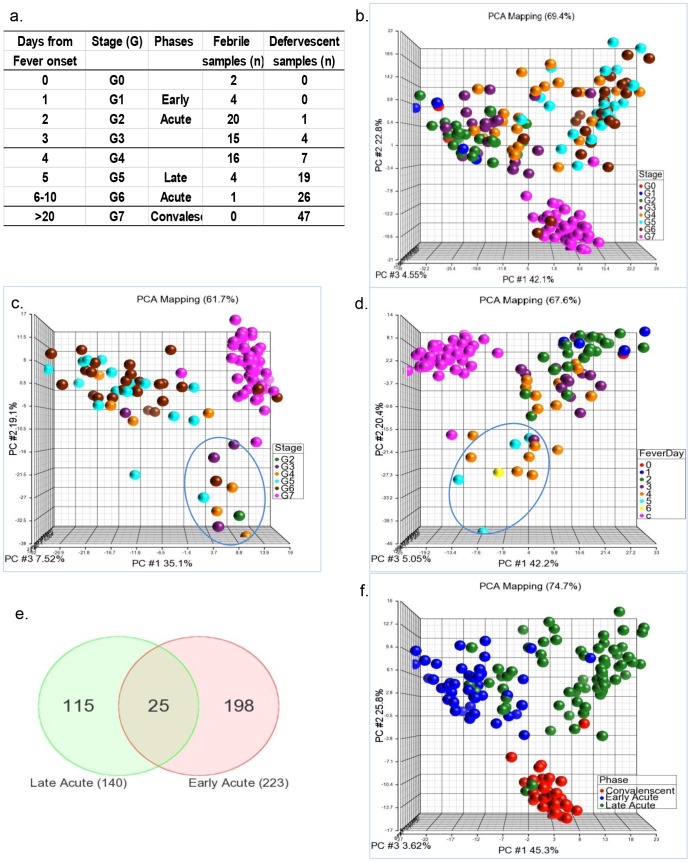
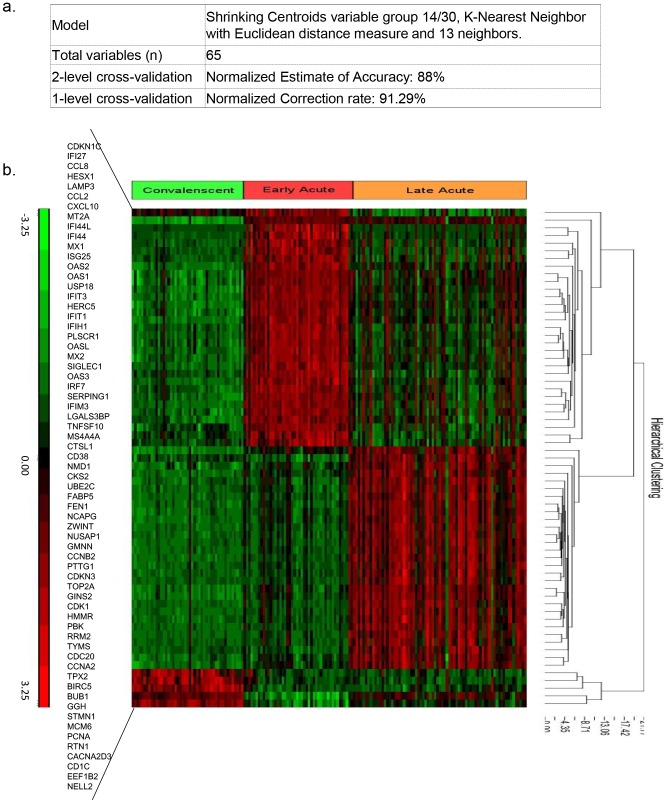
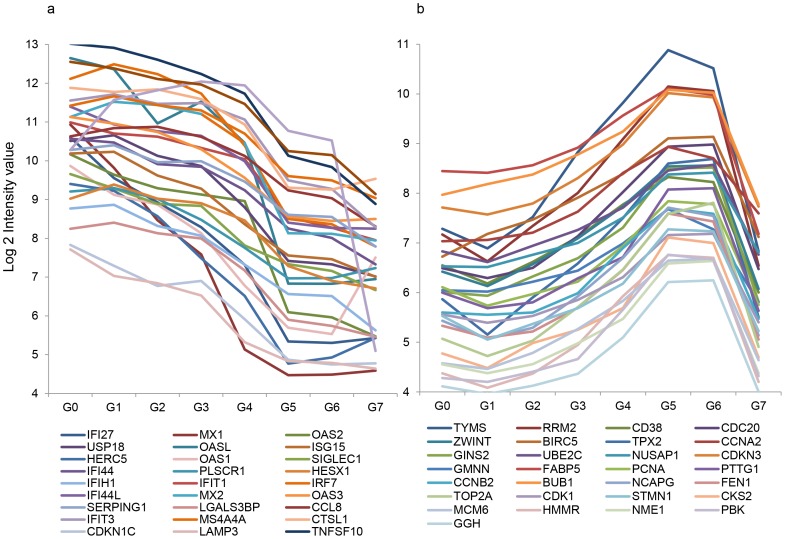
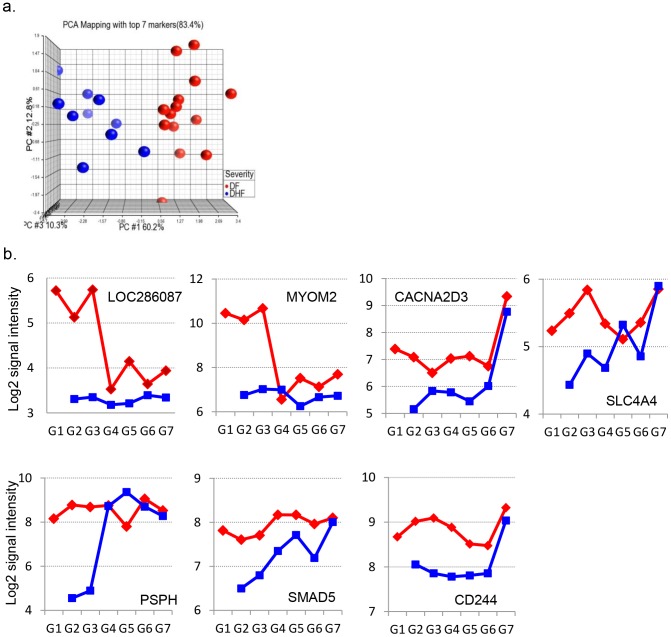
Methodology/principal findings: In this study, we investigated host gene expression in a cohort of DENV-infected subjects clinically diagnosed as DF (n = 51) and DHF (n = 13) from Maracay, Venezuela. Blood specimens were collected daily from these subjects from enrollment to early defervescence and at one convalescent time-point. Using convalescent expression levels as baseline, two distinct groups of genes were identified: the "early" group, which included genes associated with innate immunity, type I interferon, cytokine-mediated signaling, chemotaxis, and complement activity peaked at day 0-1 and declined on day 3-4; the second "late" group, comprised of genes associated with cell cycle, emerged from day 4 and peaked at day 5-6. The up-regulation of innate immune response genes coincided with the down-regulation of genes associated with viral replication during day 0-3. Furthermore, DHF patients had lower expression of genes associated with antigen processing and presentation, MHC class II receptor, NK and T cell activities, compared to that of DF patients. These results suggested that the innate and adaptive immunity during the early days of the disease are vital in suppressing DENV replication and in affecting outcome of disease severity. Gene signatures of DHF were identified as early as day 1.
Conclusions/significance: Our study reveals a broad and dynamic picture of host responses in DENV infected subjects. Host response to DENV infection can now be understood as two distinct phases with unique transcriptional markers. The DHF signatures identified during day 1-3 may have applications in developing early molecular diagnostics for DHF.
Conflict of interest statement
None of the authors has a financial or personal conflict of interest related to this study. The corresponding author had full access to all data in the study and final responsibility for the decision to submit this publication.
Figures
References
-
- Mathew A, Rothman AL (2008) Understanding the contribution of cellular immunity to dengue disease pathogenesis. Immunol Rev 225: 300–313. - PubMed
-
- Nishiura H, Halstead SB (2007) Natural history of dengue virus (DENV)-1 and DENV-4 infections: reanalysis of classic studies. J Infect Dis 195: 1007–1013. - PubMed
-
- Halstead SB (1988) Pathogenesis of dengue: challenges to molecular biology. Science 239: 476–481. - PubMed
-
- Gubler DJ (1989) Surveillance for dengue and dengue hemorrhagic fever. Bull Pan Am Health Organ 23: 397–404. - PubMed
Publication types
MeSH terms
Substances
LinkOut - more resources
Full Text Sources
Other Literature Sources
Medical
Molecular Biology Databases
Research Materials
Miscellaneous
