Prognostic factors associated with local recurrence in squamous cell carcinoma of the vulva
- PMID: 23875074
- PMCID: PMC3714462
- DOI: 10.3802/jgo.2013.24.3.242
Prognostic factors associated with local recurrence in squamous cell carcinoma of the vulva
Abstract
Objective: To analyze the prognostic factors related to the recurrence rate of vulvar cancer.
Methods: Retrospective study of 87 patients diagnosed of vulvar squamous cell carcinoma diagnosed at a tertiary hospital in Madrid between January 2000 and December 2010.
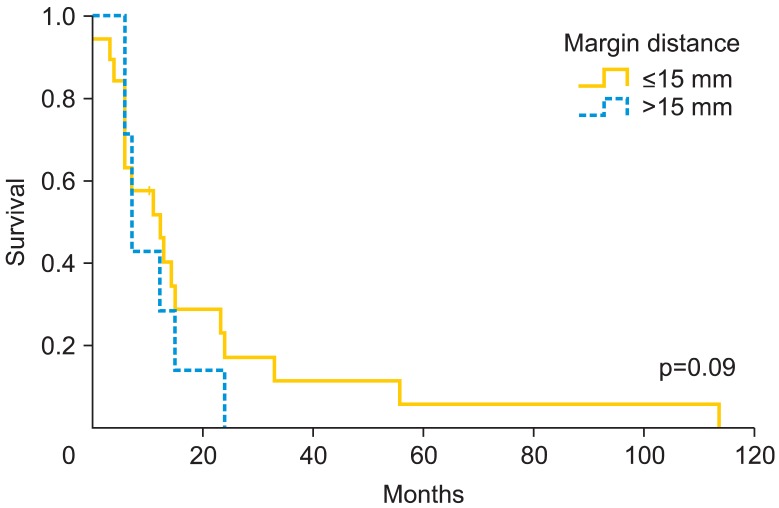
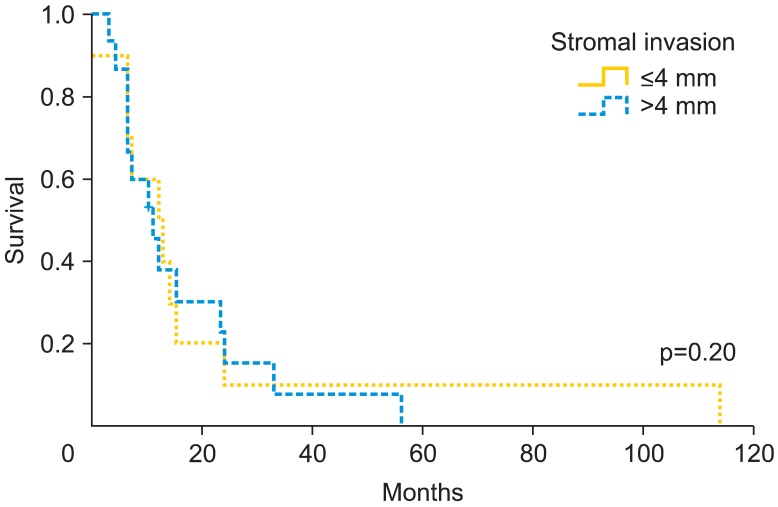
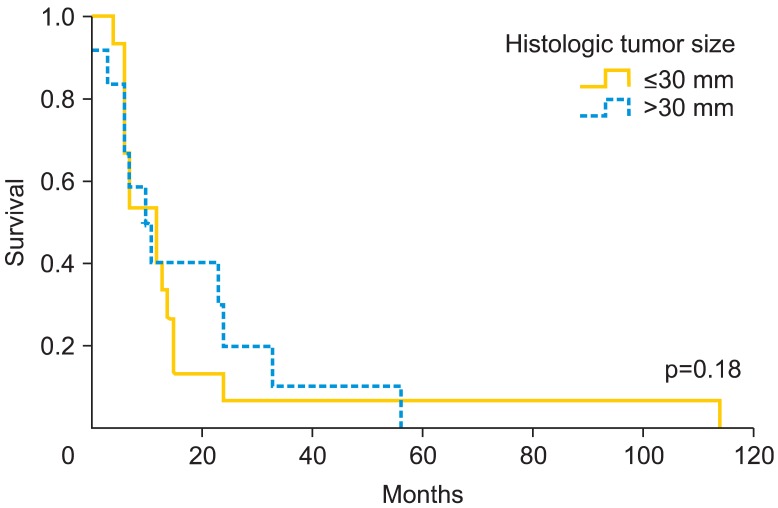
Results: The pathological mean tumor size was 35.1±22.8 mm, with stromal invasion of 7.7±6.6 mm. The mean free margin after surgery was 16.8±10.5 mm. Among all patients, 31 (35.6%) presented local recurrence (mean time 10 months; range, 1 to 114 months) and 7 (8%) had distant metastases (mean time, 5 months; range, 1 to 114 months). We found significant differences in the mean tumor size between patients who presented a relapse and those who did not (37.6±21.3 mm vs. 28.9±12.1 mm; p=0.05). Patients with free margins equal or less than 8 mm presented a relapse rate of 52.6% vs. 43.5% of those with free margin greater than 8 mm (p=0.50). However, with a cut-off of 15 mm, we observed a local recurrence rate of 55.6% vs. 34.5%, respectively (p=0.09). When the stromal invasion cut-off was >4 mm, local recurrence rate increased up to 52.9% compared to 37.5% when the stromal invasion was ≤4 mm (p=0.20).
Conclusion: Tumor size, pathologic margin distance and stromal invasion seem to be the most important predictors of local vulvar recurrence. We consider the cut-off of 35 mm of tumor size, 15 mm tumor-free surgical margin and stromal invasion >4 mm, high risk predictors of local recurrence rate.
Keywords: Margin distance; Prognostic factors; Recurrence rate; Vulvar carcinoma.
Conflict of interest statement
No potential conflict of interest relevant to this article was reported.
Figures
References
-
- Hacker NF. Vulvar cancer. In: Berek JS, Hacker NF, editors. Practical gynecologic oncology. 4th ed. Philadelphia: Williams & Wilkins; 2005. pp. 585–602.
-
- Beller U, Quinn MA, Benedet JL, Creasman WT, Ngan HY, Maisonneuve P, et al. Carcinoma of the vulva: FIGO 26th Annual Report on the Results of Treatment in Gynecological Cancer. Int J Gynaecol Obstet. 2006;95(Suppl 1):S7–S27. - PubMed
-
- Joura EA. Epidemiology, diagnosis and treatment of vulvar intraepithelial neoplasia. Curr Opin Obstet Gynecol. 2002;14:39–43. - PubMed
-
- Finan MA, Barre G. Bartholin's gland carcinoma, malignant melanoma and other rare tumours of the vulva. Best Pract Res Clin Obstet Gynaecol. 2003;17:609–633. - PubMed
-
- Homesley HD, Bundy BN, Sedlis A, Yordan E, Berek JS, Jahshan A, et al. Assessment of current International Federation of Gynecology and Obstetrics staging of vulvar carcinoma relative to prognostic factors for survival (a Gynecologic Oncology Group study) Am J Obstet Gynecol. 1991;164:997–1004. - PubMed
LinkOut - more resources
Full Text Sources
Other Literature Sources