. 2013 Nov 15;425(22):4177-91.
doi: 10.1016/j.jmb.2013.07.021. Epub 2013 Jul 20.

Low-molecular-weight DNA replication intermediates in Escherichia coli: mechanism of formation and strand specificity

Affiliations

Low-molecular-weight DNA replication intermediates in Escherichia coli: mechanism of formation and strand specificity

Luciana Amado et al. J Mol Biol. .

Abstract

Chromosomal DNA replication intermediates, revealed in ligase-deficient conditions in vivo, are of low molecular weight (LMW) independently of the organism, suggesting discontinuous replication of both the leading and the lagging DNA strands. Yet, in vitro experiments with purified enzymes replicating sigma-structured substrates show continuous synthesis of the leading DNA strand in complete absence of ligase, supporting the textbook model of semi-discontinuous DNA replication. The discrepancy between the in vivo and in vitro results is rationalized by proposing that various excision repair events nick continuously synthesized leading strands after synthesis, producing the observed LMW intermediates. Here, we show that, in an Escherichia coli ligase-deficient strain with all known excision repair pathways inactivated, new DNA is still synthesized discontinuously. Furthermore, hybridization to strand-specific targets demonstrates that the LMW replication intermediates come from both the lagging and the leading strands. These results support the model of discontinuous leading strand synthesis in E. coli.

Keywords: BER; EDTA; HMW; IMW; LMW; MR; NER; Okazaki fragments; base excision repair; ethylenediaminetetraacetic acid; excision repair; high molecular weight; intermediate molecular weight; ligA mutants; low molecular weight; mismatch repair; nucleotide excision repair; pulse labeling; strand-specific hybridization.


Figures

Fig. 1
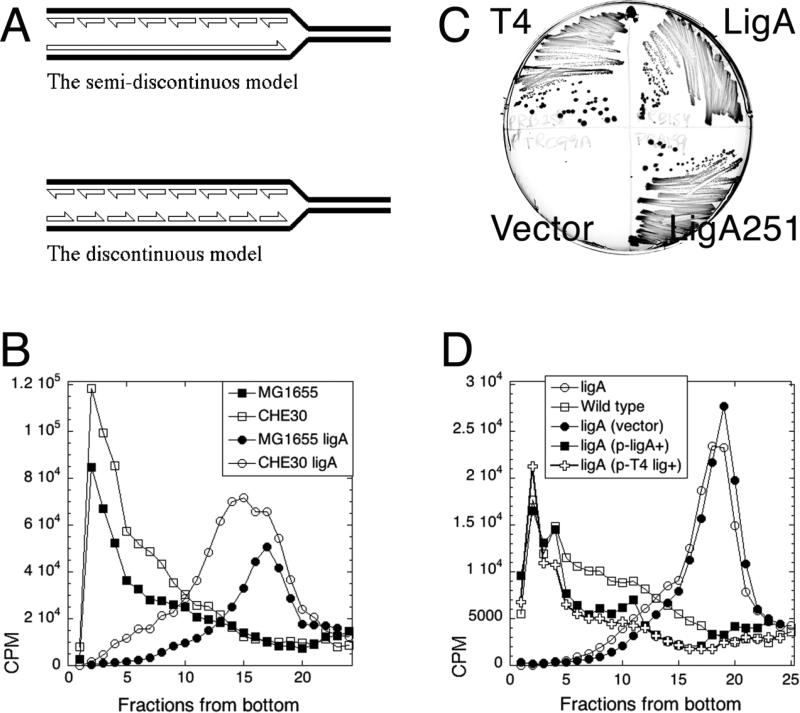
Fig. 1. The test of two models of DNA replication in the ligase mutant: background-independence and complementation of the ligase defect
A. The two models of intermediates in DNA replication. Half-arrowheads, 3'-ends. The LMW intermediates (Okazaki fragments) are eventually linked together to form mature DNA strands. B. LMW intermediates are background-independent. Alkaline 5-20% sucrose gradients were run from right to left and collected from bottom. In this and all subsequent gradients, fractions 1-5 are considered high molecular weight (HMW), whereas fractions 15 and up are low molecular weight (LMW). Strains are: CHE30, GR523; MG1655 ligA, LA98; CHE30 ligA, GR501. C. Phenotypic complementation. MG1655 ligA251 (LA98) was transformed with plasmids expressing either T4 DNA ligase, or WT E. coli ligase, or the LigA251 mutant protein, as well as with the control vector. Strains were streaked on to agar plates and incubated overnight at 42°C. D. Complementation with functional ligase genes from plasmids. Strains are: ligA, LA98; wild type, MG1655. Plasmids are: vector, pTRC99a; p-ligA+, pRB154; p-T4 lig+, pRB258.
Fig. 2
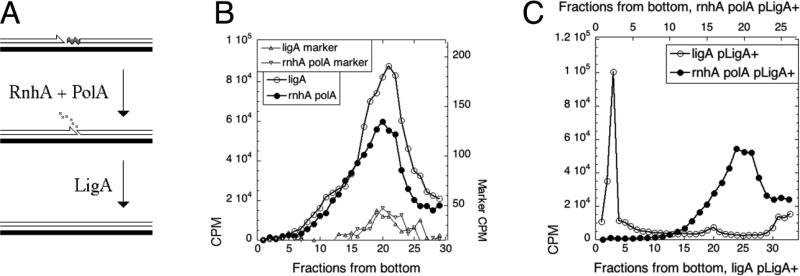
Fig. 2. LMW replication intermediates in a non-ligase mutant
A. A scheme of maturation of Okazaki fragments in E. coli. Filled line, template DNA strand; open line, primer (nascent) DNA strand; half-arrowhead, 3'-end; wavy gray segment, the RNA primer on the 5'-end. B. Pulse label accumulates in LMW species in the rnhA polA double mutant. The original size of the 32P-labeled linear marker was 11.2 kbp (should have peaked between fractions 13 and 15), but it became degraded upon storage. However, its characteristic profile still allows one to align the two gradients. The strains are: rnhA polA, ON2104; ligA, GR501. C. The ligase defect in Okazaki fragment maturation is complemented by the ligA+ plasmid, whereas the rnhA polA defect is not. The strains are GR501 (ligA251) and ON2104 (rnhA polA); the LigA+ plasmid is pRB154.
Fig. 3
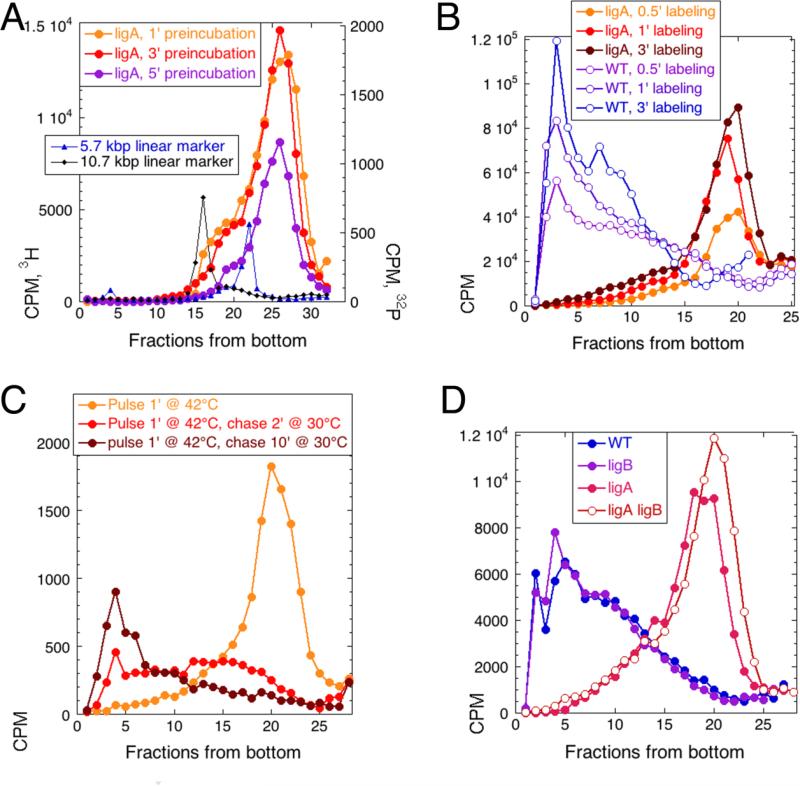
Fig. 3. The nature of the intermediate molecular weight (IMW) species
In all panels, the WT strain is GR523, while the ligA251 mutant is GR501. A. Varying the time of pre-incubation. The ligA251 mutant cells were preincubated at 42°C for 1, 3 or 5 minutes and then pulsed-labeled at 42°C for 1 minute. In this experiment, the intermediate molecular weight species are defined by the two 32P-labeled MW markers, the 5.7 and the 10.7 kbp. B. Varying the time of labeling. Either WT or ligA251 mutant cells were pre-incubated at 42°C for 3 minute before being labeled at 42°C for 30 seconds, 1 minute or 3 minutes. The IMW species in this gradient are in fractions 10-15. C. The pulse-chase experiment. ligA251 mutant cells were labeled at 42°C, and the label was chased with cold thymidine (50 μg/ml) at 30°C for the indicated times. D. The effect of ΔligB mutation. The additional strains are: ligB, LA37; ligA ligB, LA38.
Fig. 4
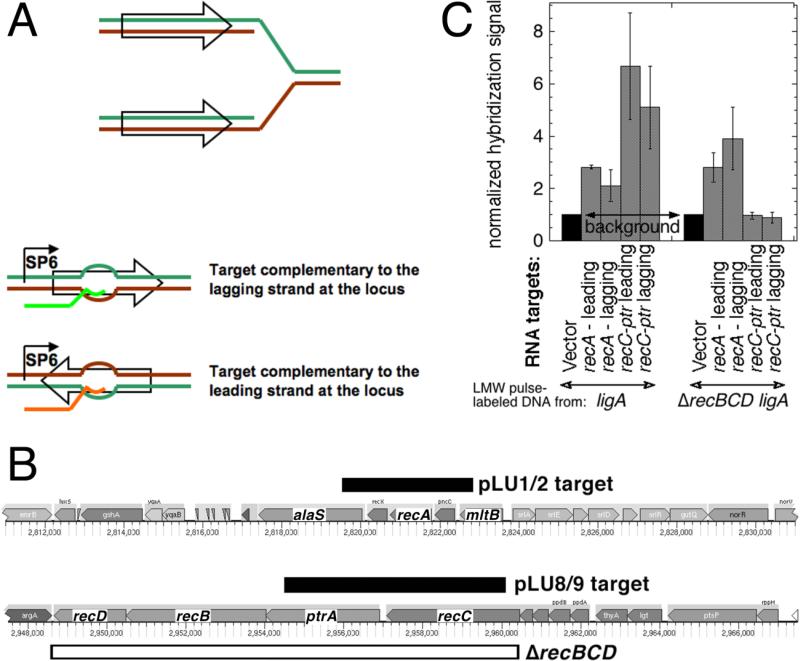
Fig. 4. LMW replication intermediates hybridize to both DNA strands
A. Strand-specific RNA targets were generated by in vitro SP6 polymerase transcription of chromosomal fragments (shown as empty arrows on a replication fork) cloned under the SP6 promoter in a vector (pSP72) and deposited on a hybridization membrane. The “Watson” strand at the chromosomal locus is labeled green, while the “Crick” strand is labeled brown. The generated RNA target identical to the Watson strand is shown in bright green, while the one identical to the Crick strand is shown in orange. B. The chromosomal position and the actual length of the fragments (pLU1/2 and pLU8/9 targets) is shown as black rectangles. The span of the ΔrecBCD deletion in the AK148 strain, used for the negative control, is shown as the open rectangle. The direction of replication for both regions is from right to left. C. Hybridization of pulsed-labeled LMW DNA to strand-specific RNA targets at the two chromosomal loci. Transcripts from vector-only were deposited to generate the background reading. 3H-labeled replication intermediates from ligA (GR501) or ligA ΔrecBCD (AK148) mutant cells were isolated by alkaline sucrose gradients and used as probes for the membranes with the deposited strand-specific targets. The total counts from various targets in any given experiment were normalized to the vector counts. The values are averages of 4-6 independent measurements ± SEM.
Fig. 5
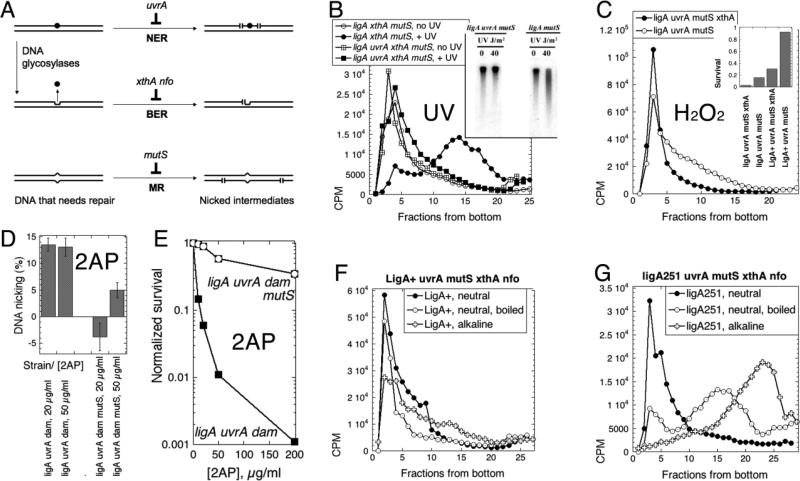
Fig. 5. Inactivation of the major DNA-scission activities does not affect the LMW replication intermediates in the ligA251 mutant
Panels B-E are labeled with the DNA-damaging agents tested. A. A scheme of the major DNA repair pathways going through strand scission intermediates. DNA duplex is shown as a double line; DNA lesion is indicated by black circle; DNA mismatch is the bump in the duplex; abasic site is the indent in one of the DNA strands, left after the base was removed. NER, nucleotide excision repair; BER, base excision repair; MR, mismatch removal. The scenario shown (that the same DNA lesion is the substrate for both NER and BER) is not a common one and is shown for parsimony: typical DNA lesions are substrates to either NER or BER, but not both. B. Inactivation of the nucleotide excision repair prevents strand fragmentation after UV irradiation (100 J/m2), as revealed by alkaline sucrose gradient. Chromosomal DNA in this case was labeled chronically (the pre-labeling with 3H-thymidine protocol). The cells are: UvrA+, LA55; uvrA, LA44. Inset: the (A600=0.45) cultures of cells of the indicated phenotype were irradiated with the indicated dose of UV, and after 15' at 42°C the total DNA was isolated, run on an 0.7% alkaline agarose gel, that was transferred, and the membrane hybridized with the total chromosomal probe. C. Inactivation of the major abasic site endonuclease ExoIII by the xthA mutation prevents strand fragmentation after H2O2 treatment (0.5 mM for 13 minutes at 42°C) of chronically-labeled cultures. The “pre-labeling with 3H-thymidine protocol” was again used. Neutral sucrose gradient in this case, with samples boiled for 10 minutes and chilled on ice before loading. The strains are: ligA uvrA mutS, LA53; ligA uvrA mutS xthA, LA44. Inset: survival of the indicated strains (A600=0.4) after treatment with 1 mM H2O2 for 10 minutes at 30°C. D. Inactivation of mismatch removal prevents strand fragmentation after 2-aminopurine (2AP) treatment of the dam mutants. Cells of the indicated genotype were kept at 30°C throughout the assay. Once the cultures reached OD600= 0.2, they were labeled with 32P for 30 minutes, shaken in the presence of the indicated concentration of 2-AP overnight, the total DNA was prepared and ran in an alkaline agarose gel. Strand fragmentation was calculated as the percentage of DNA signal in the smear below the chromosomal DNA band relative to the total DNA signal (for example, see Fig. 5B and E). Since the background in untreated cells varied widely in this set of experiments, while the signal-to-background difference (including one negative value) was quite reproducible, we report the latter. The values are means of 4-5 independent measurements ± SEM. The strains are: ligA uvrA dam (LA73) and ligA uvrA mutsS dam (LA74). E. Sensitivity of the ligA uvrA dam strain to 2AP and its relief by the mutS defect. Cultures were shaken at 28°C throughout. When they reached OD600 = 0.4, 2AP was added to the indicated concentrations, and shaking continued for five more hours, at which time the titer of the colony-forming units was determined. The strains are: ligA uvrA dam (LA73) and ligA uvrA mutsS dam (LA74). F. Replication intermediates in the LigA+ mutant devoid of the major DNA excision activities are HMW independent of the denaturation conditions. Both neutral and alkaline sucrose gradients are shown in the same panel. The strain is LA115. G. Replication intermediates in the ligA251 mutant devoid of the major DNA excision activities are LMW independently of the denaturation conditions. Both neutral and alkaline sucrose gradients are shown in the same panel. The strain is LA114.
Fig. 6
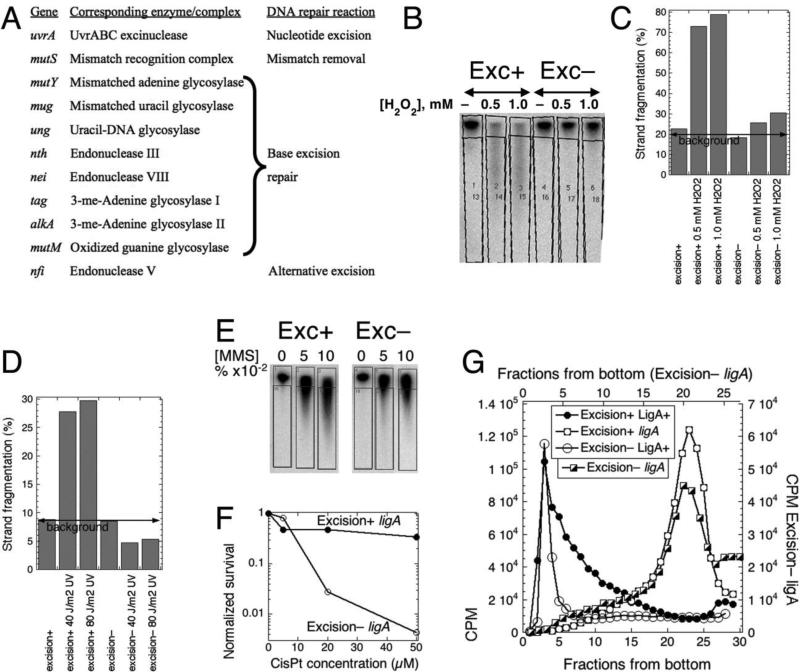
Fig. 6. Excision-less strain still synthesizes LMW replication intermediates in ligase-deficient conditions
The strains are: excision+, GR501; excision–, LA111. A. DNA damage-recognition functions, inactivated to generate the excisionless mutant. B. Hydrogen peroxide fails to induce nicks in the excisionless mutant. 32P-labeled growing cultures (OD600 = 0.25) of GR501 (ligA251) and of its excisionless variant (LA111) were treated with the indicated concentrations of H2O2 for 15 minutes at 30°C, the total DNA was isolated by phenol extraction and ran on an alkaline agarose gel. The direct radioactivity scan shows quantification boxes along the lanes. C. Absence of strand breaks in the excisionless strain after treatment with hydrogen peroxide. Quantification of the gel in “B” according to the drawn boxes. D. Absence of strand breaks in the excisionless strain after irradiation with ultraviolet light. Method like in “A”. E. MMS-induced nicking in the excisionless strains. Treatment was like in Fig. S5A. F. Sensitivity of excisionless strain to CisPlatin. G. LMW intermediates still form in ligase-deficient conditions in excisionless strain, as revealed by alkaline sucrose gradient centrifugation. Strains: Excision+ LigA+, GR523; Excision+ ligA, GR501; Excision– LigA+, LA113; Excision– ligA, LA111.

References

    1. Amado L, Kuzminov A. The replication intermediates in Escherichia coli are not the product of DNA processing or uracil excision. J. Biol. Chem. 2006;281:22635–22646. - PubMed
    1. Dermody JJ, Robinson GT, Sternglanz R. Conditional-lethal deoxyribonucleic acid ligase mutant of Escherichia coli. J. Bacteriol. 1979;139:701–704. - PMC - PubMed
    1. Gottesman MM, Hicks ML, Gellert M. Genetics and function of DNA ligase in Escherichia coli. J. Mol. Biol. 1973;77:531–547. - PubMed
    1. Horiuchi T, Sato T, Nagata T. DNA degradation in an amber mutant of Escherichia coli K12 affecting DNA ligase and viability. J. Mol. Biol. 1975;95:271–287. - PubMed
    1. Konrad EB, Modrich P, Lehman IR. Genetic and enzymatic characatrization of a conditional lethal mutant of Escherichia coli K12 with a temperature-sensitive DNA ligase. J. Mol. Biol. 1973;77:519–529. - PubMed

Publication types