


Depressive symptoms are associated with reduced neutrophil function in hip fracture patients
- PMID: 23876747
- PMCID: PMC3781604
- DOI: 10.1016/j.bbi.2013.07.004
Depressive symptoms are associated with reduced neutrophil function in hip fracture patients
Abstract
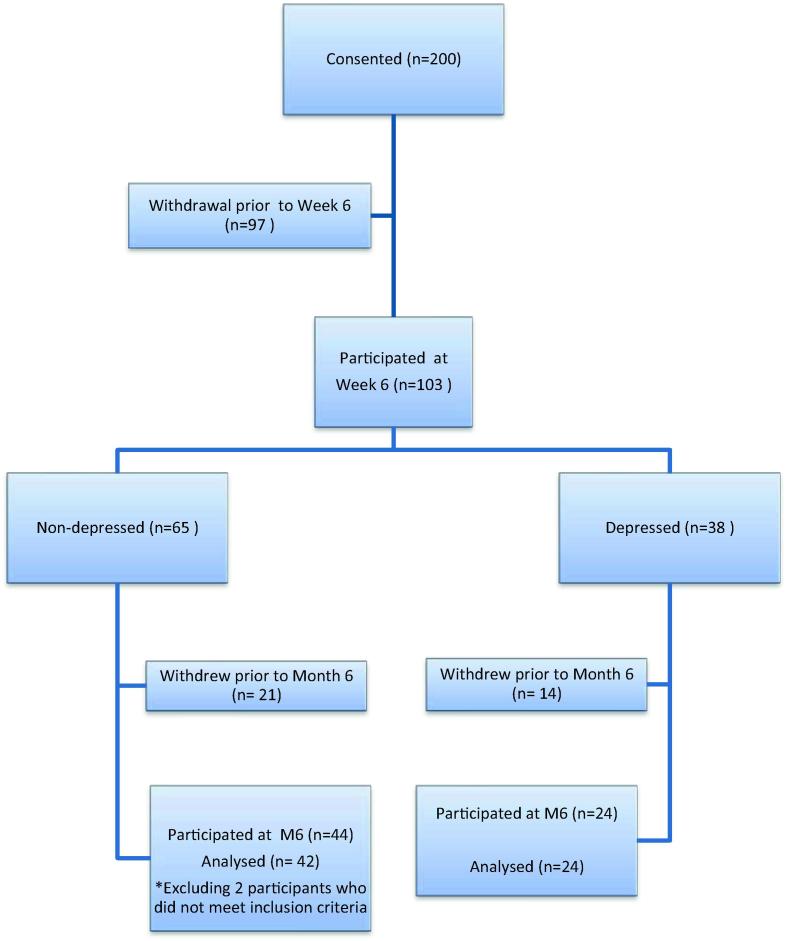
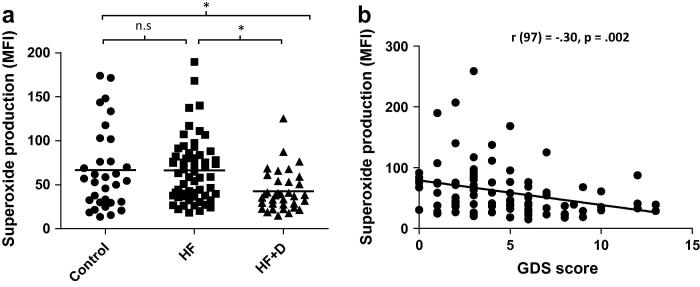
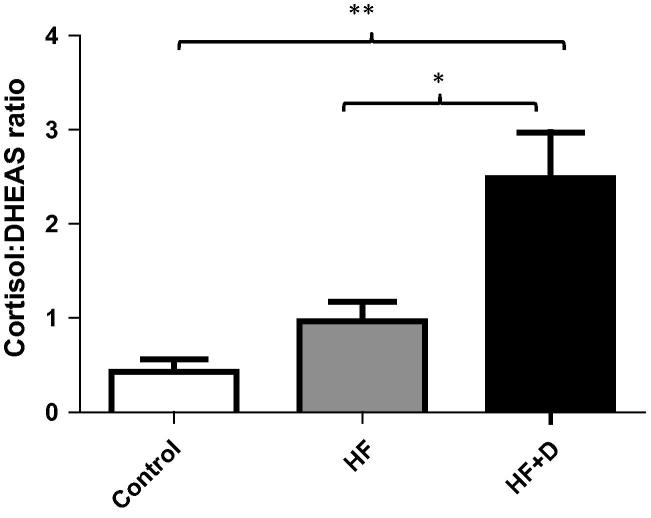
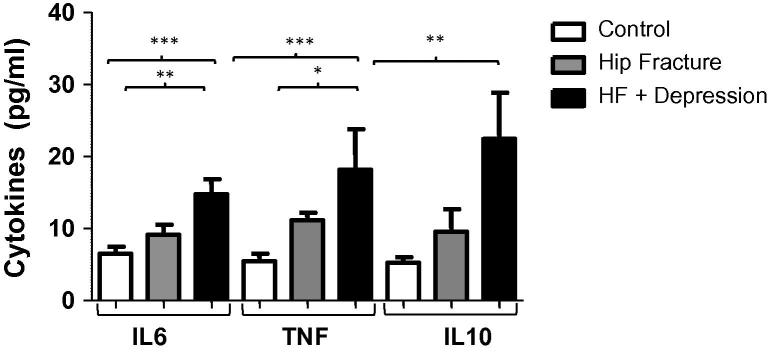
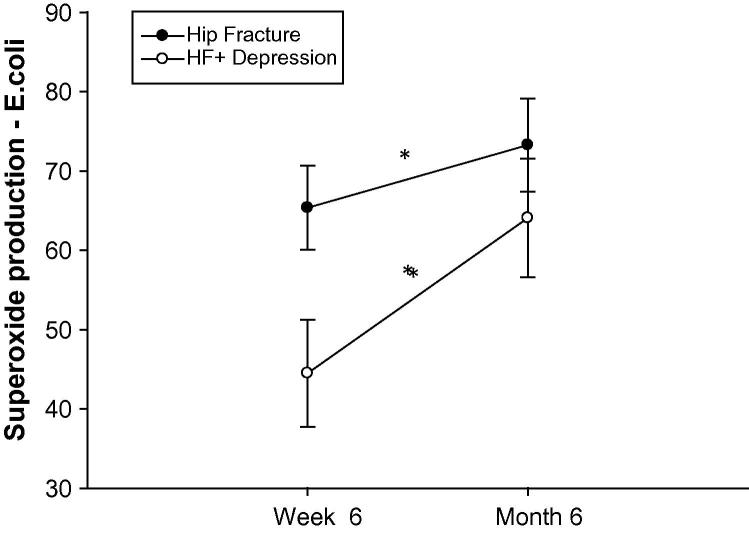
Hip fracture is a common trauma in older adults with a high incidence of depression, which relates to poorer prognosis including increased risk of infection. Ageing is accompanied by reduced immunity, termed immunesenescence, resulting in increased susceptibility to infection. We examined whether physical trauma (hip fracture) and psychological distress (depressive symptoms) had additive effects upon the aged immune system that might contribute to poor outcomes after injury. Neutrophil function was assessed in 101 hip fracture patients (81 female) 6 weeks and 6 months after injury and 43 healthy age-matched controls (28 female). Thirty eight fracture patients had depressive symptoms at 6 weeks. No difference in neutrophil phagocytosis of Escherichia coli was observed between controls and hip fracture patients, but superoxide production was significantly reduced in hip fracture patients with depressive symptoms compared with patients without symptoms (p=.001) or controls (p=.004) at 6 weeks. Superoxide production improved 6 months following fracture to the level seen in controls. We detected elevated serum cortisol, reduced dehydroepiandrosterone sulphate (DHEAS) and an increased cortisol:DHEAS ratio in fracture patients with depressive symptoms compared with patients without depressive symptoms or controls at 6 weeks and 6 months after injury. Serum IL6, TNFα and IL10 were higher among patients with depressive symptoms at 6 weeks. The cortisol:DHEAS ratio and IL6 levels related to depressive symptom scores but not to neutrophil function. In conclusion, depressive symptoms related to poorer neutrophil function after hip fracture, but this was not driven by changes in stress hormone or cytokine levels.
Keywords: Ageing; Cortisol; Dehydroepiandrosterone; Depressive symptoms; Hip fracture; Neutrophil function.
Copyright © 2013 The Authors. Published by Elsevier Inc. All rights reserved.
Figures
Similar articles
-
Development of depressive symptoms post hip fracture is associated with altered immunosuppressive phenotype in regulatory T and B lymphocytes.Biogerontology. 2016 Feb;17(1):229-39. doi: 10.1007/s10522-015-9587-7. Epub 2015 Jun 26. Biogerontology. 2016. PMID: 26112234 Free PMC article.
-
Depressive symptoms in hip fracture patients are associated with reduced monocyte superoxide production.Exp Gerontol. 2014 Jun;54:27-34. doi: 10.1016/j.exger.2014.01.028. Epub 2014 Feb 8. Exp Gerontol. 2014. PMID: 24512764
-
Raised cortisol:DHEAS ratios in the elderly after injury: potential impact upon neutrophil function and immunity.Aging Cell. 2005 Dec;4(6):319-24. doi: 10.1111/j.1474-9726.2005.00178.x. Aging Cell. 2005. PMID: 16300484
-
Neutrophil function and cortisol:DHEAS ratio in bereaved older adults.Brain Behav Immun. 2011 Aug;25(6):1182-6. doi: 10.1016/j.bbi.2011.03.008. Epub 2011 Mar 21. Brain Behav Immun. 2011. PMID: 21420485
-
A critical review of the long-term disability outcomes following hip fracture.BMC Geriatr. 2016 Sep 2;16(1):158. doi: 10.1186/s12877-016-0332-0. BMC Geriatr. 2016. PMID: 27590604 Free PMC article. Review.
Cited by
-
Exercising our brains, muscles and cells to fight the ageing process.Sci Prog. 2015;98(Pt 4):413-5. doi: 10.3184/003685015X14467218232110. Sci Prog. 2015. PMID: 26790179 Free PMC article. No abstract available.
-
NK cell immunesenescence is increased by psychological but not physical stress in older adults associated with raised cortisol and reduced perforin expression.Age (Dordr). 2015 Feb;37(1):9748. doi: 10.1007/s11357-015-9748-2. Epub 2015 Feb 7. Age (Dordr). 2015. PMID: 25663421 Free PMC article.
-
Depressive symptoms post hip fracture in older adults are associated with phenotypic and functional alterations in T cells.Immun Ageing. 2014 Dec 16;11(1):25. doi: 10.1186/s12979-014-0025-5. eCollection 2014. Immun Ageing. 2014. PMID: 25628751 Free PMC article.
-
Neutrophil-to-Lymphocyte, Monocyte-to-Lymphocyte, Platelet-to-Lymphocyte Ratio and Systemic Immune-Inflammatory Index in Different States of Bipolar Disorder.Brain Sci. 2022 Aug 4;12(8):1034. doi: 10.3390/brainsci12081034. Brain Sci. 2022. PMID: 36009097 Free PMC article.
-
Development of depressive symptoms post hip fracture is associated with altered immunosuppressive phenotype in regulatory T and B lymphocytes.Biogerontology. 2016 Feb;17(1):229-39. doi: 10.1007/s10522-015-9587-7. Epub 2015 Jun 26. Biogerontology. 2016. PMID: 26112234 Free PMC article.
References
-
- Abrahamsen B., van Staa T., Ariely R., Olson M., Cooper C. Excess mortality following hip fracture: a systematic epidemiological review. Osteoporos. Int. 2009;20:1633–1650. - PubMed
-
- Babior B.M., Lambeth J.D., Nauseef W. The neutrophil NADPH oxidase. Arch. Biochem. Biophys. 2002;397:342–344. - PubMed
-
- Bekesi G., Kakucs R., Varbiro S., Racz K., Sprintz D., Feher J., Szakacs B. In vitro effects of different steroid hormones on superoxide anion production of human granulocytes. Steroids. 2000;65:889–894. - PubMed
Publication types
MeSH terms
Grants and funding
LinkOut - more resources
Full Text Sources
Other Literature Sources
Medical
