


DC-LAMP+ dendritic cells are recruited to gastric lymphoid follicles in Helicobacter pylori-infected individuals
- PMID: 23876802
- PMCID: PMC3811775
- DOI: 10.1128/IAI.00801-13
DC-LAMP+ dendritic cells are recruited to gastric lymphoid follicles in Helicobacter pylori-infected individuals
Abstract
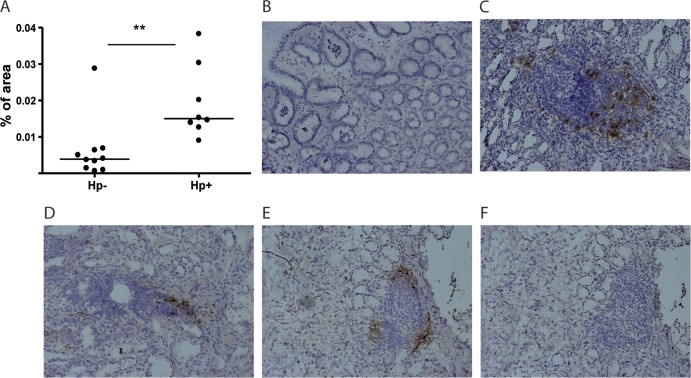
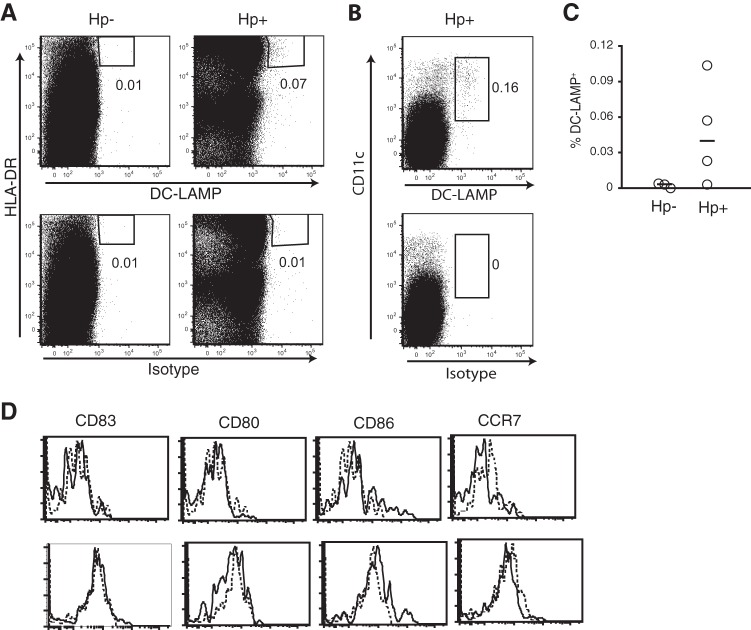
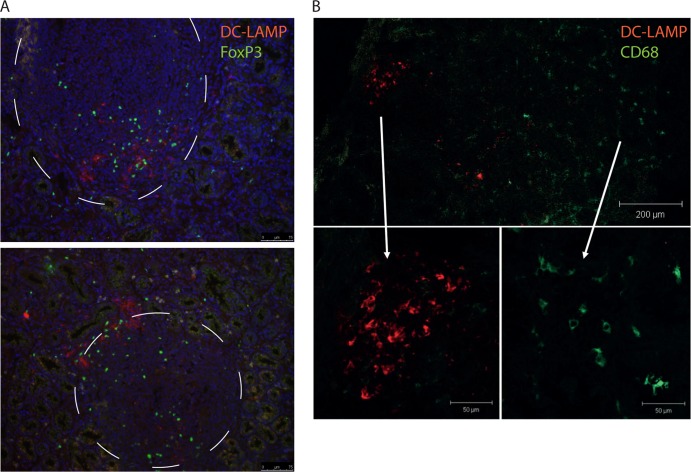
Infection with Helicobacter pylori is associated with development of ulcer disease and gastrointestinal adenocarcinoma. The infection leads to a large infiltration of immune cells and the formation of organized lymphoid follicles in the human gastric mucosa. Still, the immune system fails to eradicate the bacteria, and the substantial regulatory T cell (Treg) response elicited is probably a major factor permitting bacterial persistence. Dendritic cells (DCs) are professional antigen-presenting cells that can activate naive T cells, and maturation of DCs is crucial for the initiation of primary immune responses. The aim of this study was to investigate the presence and localization of mature human DCs in H. pylori-infected gastric mucosa. Gastric antral biopsy specimens were collected from patients with H. pylori-associated gastritis and healthy volunteers, and antrum tissue was collected from patients undergoing gastric resection. Immunohistochemistry and flow cytometry showed that DCs expressing the maturation marker dendritic cell lysosome-associated membrane glycoprotein (DC-LAMP; CD208) are enriched in the H. pylori-infected gastric mucosa and that these DCs are specifically localized within or close to lymphoid follicles. Gastric DC-LAMP-positive (DC-LAMP(+)) DCs express CD11c and high levels of HLA-DR but little CD80, CD83, and CD86. Furthermore, immunofluorescence analyses demonstrated that DC-LAMP(+) DCs are in the same location as FoxP3-positive putative Tregs in the follicles. In conclusion, we show that DC-LAMP(+) DCs with low costimulatory capacity accumulate in the lymphoid follicles in human H. pylori-infected gastric tissue, and our results suggest that Treg-DC interactions may promote chronic infection by rendering gastric DCs tolerogenic.
Figures
References
-
- Fischbach W, Chan AO, Wong BC. 2005. Helicobacter pylori and gastric malignancy. Helicobacter 10(Suppl 1):34–39 - PubMed
-
- Huang JQ, Sridhar S, Hunt RH. 2002. Role of Helicobacter pylori infection and non-steroidal anti-inflammatory drugs in peptic-ulcer disease: a meta-analysis. Lancet 359:14–22 - PubMed
-
- Makola D, Peura DA, Crowe SE. 2007. Helicobacter pylori infection and related gastrointestinal diseases. J. Clin. Gastroenterol. 41:548–558 - PubMed
-
- Figueiredo C, Machado JC, Yamaoka Y. 2005. Pathogenesis of Helicobacter pylori infection. Helicobacter 10(Suppl 1):14–20 - PubMed
-
- Del Giudice G, Michetti P. 2004. Inflammation, immunity and vaccines for Helicobacter pylori. Helicobacter 9(Suppl 1):23–28 - PubMed
Publication types
MeSH terms
Substances
LinkOut - more resources
Full Text Sources
Other Literature Sources
Medical
Research Materials
