


Pathological ventricular remodeling: mechanisms: part 1 of 2
- PMID: 23877061
- PMCID: PMC3801217
- DOI: 10.1161/CIRCULATIONAHA.113.001878
Pathological ventricular remodeling: mechanisms: part 1 of 2
Abstract
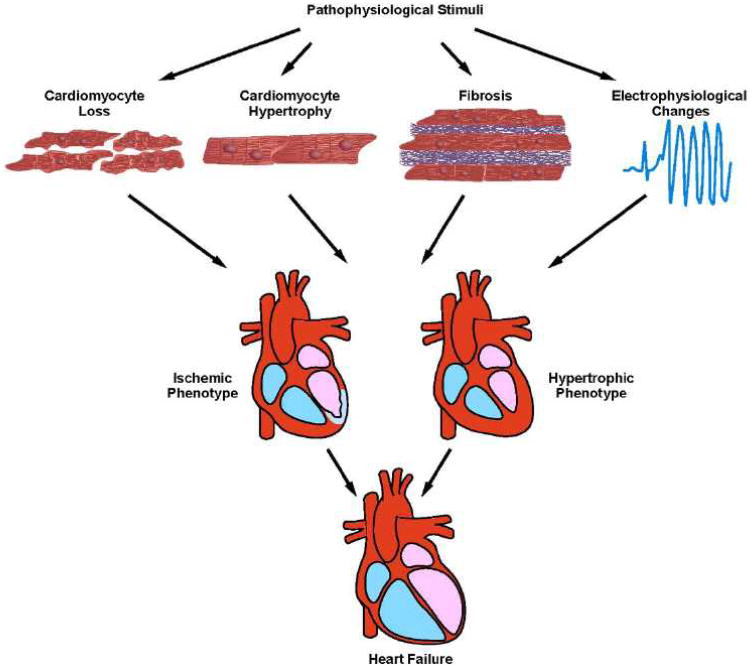
Despite declines in heart failure morbidity and mortality with current therapies, rehospitalization rates remain distressingly high, substantially affecting individuals, society, and the economy. As a result, the need for new therapeutic advances and novel medical devices is urgent. Disease-related left ventricular remodeling is a complex process involving cardiac myocyte growth and death, vascular rarefaction, fibrosis, inflammation, and electrophysiological remodeling. Because these events are highly interrelated, targeting a single molecule or process may not be sufficient. Here, we review molecular and cellular mechanisms governing pathological ventricular remodeling.
Keywords: cardiac electrophysiology; fibrosis; inflammation; stem cells; ventricular remodeling.
Conflict of interest statement
Figures
References
-
- Heidenreich PA, Trogdon JG, Khavjou OA, Butler J, Dracup K, Ezekowitz MD, Finkelstein EA, Hong Y, Johnston SC, Khera A, Lloyd-Jones DM, Nelson SA, Nichol G, Orenstein D, Wilson PW, Woo YJ. Forecasting the future of cardiovascular disease in the united states: A policy statement from the american heart association. Circulation. 2011;123:933–944. - PubMed
-
- Hill JA, Olson EN. Cardiac plasticity. N Engl J Med. 2008;358:1370–1380. - PubMed
-
- Hill JA, Olson EN. Muscle: Fundamental biology and mechanisms of disease. Academic Press; 2012.
-
- Goldberg LR. Heart failure. Ann Intern Med. 2010;152:ITC61–15. quiz ITC616. - PubMed
Publication types
MeSH terms
Grants and funding
LinkOut - more resources
Full Text Sources
Other Literature Sources
Medical
