Review
. 2013 Jul 19;5(7):2811-35.
doi: 10.3390/nu5072811.

Peculiarities of one-carbon metabolism in the strict carnivorous cat and the role in feline hepatic lipidosis

Affiliations
Review

Peculiarities of one-carbon metabolism in the strict carnivorous cat and the role in feline hepatic lipidosis

Adronie Verbrugghe et al. Nutrients. .

Abstract

Research in various species has indicated that diets deficient in labile methyl groups (methionine, choline, betaine, folate) produce fatty liver and links to steatosis and metabolic syndrome, but also provides evidence of the importance of labile methyl group balance to maintain normal liver function. Cats, being obligate carnivores, rely on nutrients in animal tissues and have, due to evolutionary pressure, developed several physiological and metabolic adaptations, including a number of peculiarities in protein and fat metabolism. This has led to specific and unique nutritional requirements. Adult cats require more dietary protein than omnivorous species, maintain a consistently high rate of protein oxidation and gluconeogenesis and are unable to adapt to reduced protein intake. Furthermore, cats have a higher requirement for essential amino acids and essential fatty acids. Hastened use coupled with an inability to conserve certain amino acids, including methionine, cysteine, taurine and arginine, necessitates a higher dietary intake for cats compared to most other species. Cats also seemingly require higher amounts of several B-vitamins compared to other species and are predisposed to depletion during prolonged inappetance. This carnivorous uniqueness makes cats more susceptible to hepatic lipidosis.


Figures
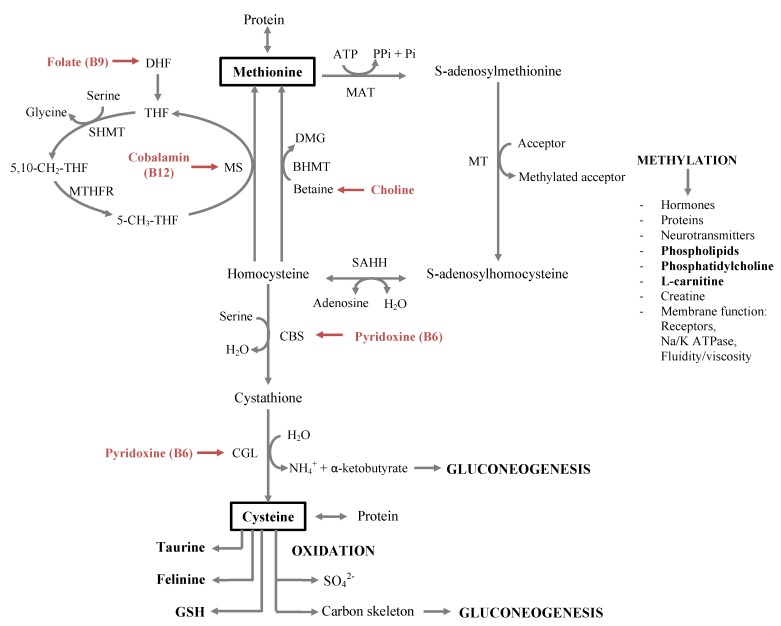
Figure 1
Figure 1
Major pathways of sulphur-containing amino acid metabolism in the feline, involving the esstential amino acids, methionine, cysteine and taurine, and the B-vitamines, cobalamin, choline, folate and pyridoxine.5-CH3-THF: 5-methyl-tetrahydrofolate; 5,10-CH2-THF: 5,10-methylene-tetrahydrofolate; BHMT: betaine-homocysteine methyltransferase; CBS: cystathione β-synthase; CGL: cystathione γ-lyase; DMG: dimethyl glycine; MAT: methionine adenosyltransferase; MS: methionine synthase; MT: various methyltransferases; MTHFR: methylenetetrahydrofolate reductase; Pi: orthophosphate; Pii: pyrophosphate; SAHH: S-adenosylhomocysteine hydrolyase; SHMT: serine hodroxymethyltransferase; THF: tetrahydrolfolate.
Figure 2
Figure 2
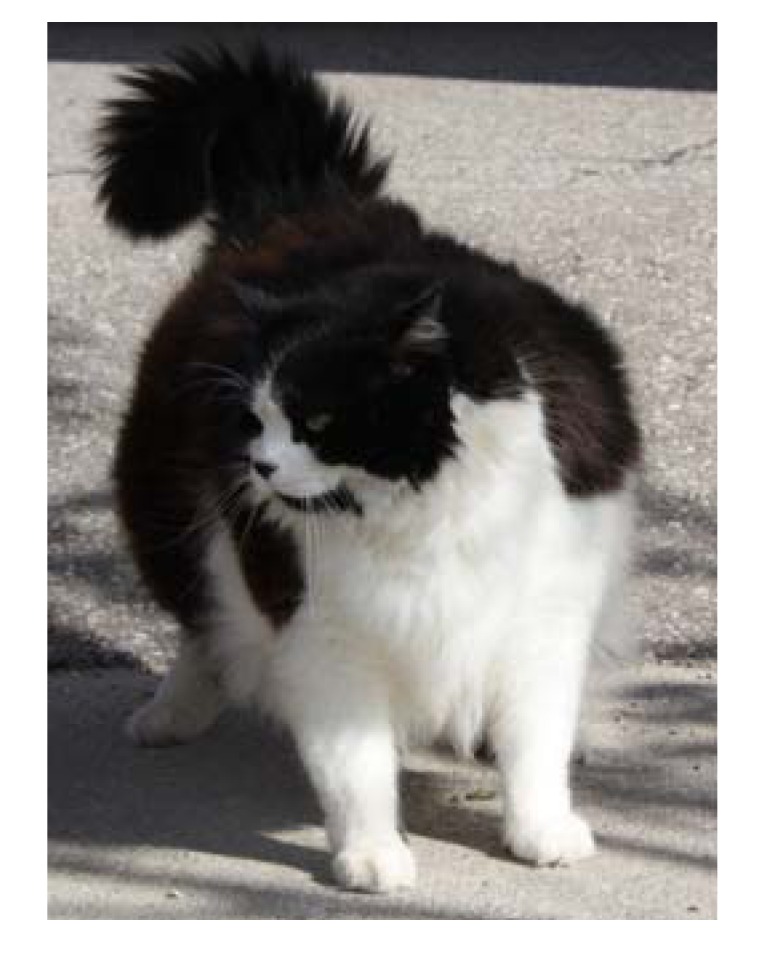
Obesity predisposes cats to hepatic lipidosis.
Figure 3
Figure 3
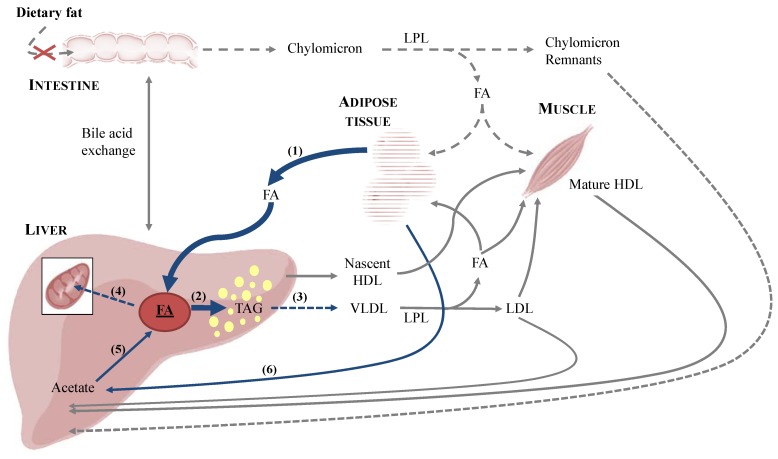
Lipid metabolism in fasting cats. Fasting in cats promotes lipolysis in adipose tissue and transportation of free fatty acids to the liver (1). In the liver, fatty acids are reconstituted in triacylglycerol (TAG) (2), which are secreted from the liver in very-low-density lipoproteins (3) or are transported over the mitochondrial membrane by l-carnitine to enter β-oxidation (4). The hepatic load of fatty acids is also increased by de novo synthesis of fatty acids, most probably by use of acetate a carbon source (5), resulting from ketogenesis (6). An imbalance between these different aspects of the feline lipid metabolism leads to accumulation of lipids in the liver, represented as yellow fat droplets. HDL: high-density lipoproteins; FA: fatty acids; LDL: low-density lipoproteins; LPL: lipoprotein lipase; NEFA: non-esterified fatty acids; TAG: triacylglycerols; VLDL: very-low-density lipoproteins.
Figure 4
Figure 4
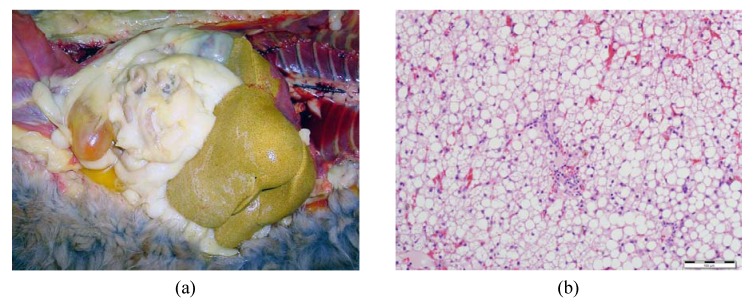
The liver of an obese cat with hepatic lipidosis. (a) In situ liver of an obese cat with hepatic lipidosis; note the yellow discoloration and hepatomegaly. (b) Liver tissue of an obese cat with hepatic lipidosis, showing diffuse cytoplasmic vacuolization of the hepatocytes representing fat accumulation (H & E staining, original magnification: 20×).

References

    1. Angulo P., Lindor K.D. Treatment of non-alcoholic steatohepatitis. Best Pract. Res. Clin. Gastroenterol. 2002;16:797–810. doi: 10.1053/bega.2002.0327. - DOI - PubMed
    1. Reddy J.K., Rao M.S. Lipid metabolism and liver inflammation. II. Fatty liver disease and fatty acid oxidation. Am. J. Physiol. Gastrointest. Liver Physiol. 2006;290:G852–G858. doi: 10.1152/ajpgi.00521.2005. - DOI - PubMed
    1. Begriche K., Igoudjil A., Pessayre D., Fromenty B. Mitochondrial dysfunction in NASH: Causes, consequences and possible means to prevent it. Mitochondrion. 2006;6:1–28. - PubMed
    1. Larter C.Z., Yeh M.M. Animal models of NASH: Getting both pathology and metabolic context right. J. Gastroenterol. Hepatol. 2008;23:1635–1648. doi: 10.1111/j.1440-1746.2008.05543.x. - DOI - PubMed
    1. Anstee Q.M., Goldin R.D. Mouse models in non-alcoholic fatty liver disease and steatohepatitis research. Int. J. Exp. Pathol. 2006;87:1–16. doi: 10.1111/j.0959-9673.2006.00465.x. - DOI - PMC - PubMed

MeSH terms

LinkOut - more resources