Piceatannol suppresses the metastatic potential of MCF10A human breast epithelial cells harboring mutated H-ras by inhibiting MMP-2 expression
- PMID: 23877152
- PMCID: PMC3812238
- DOI: 10.3892/ijmm.2013.1449
Piceatannol suppresses the metastatic potential of MCF10A human breast epithelial cells harboring mutated H-ras by inhibiting MMP-2 expression
Abstract
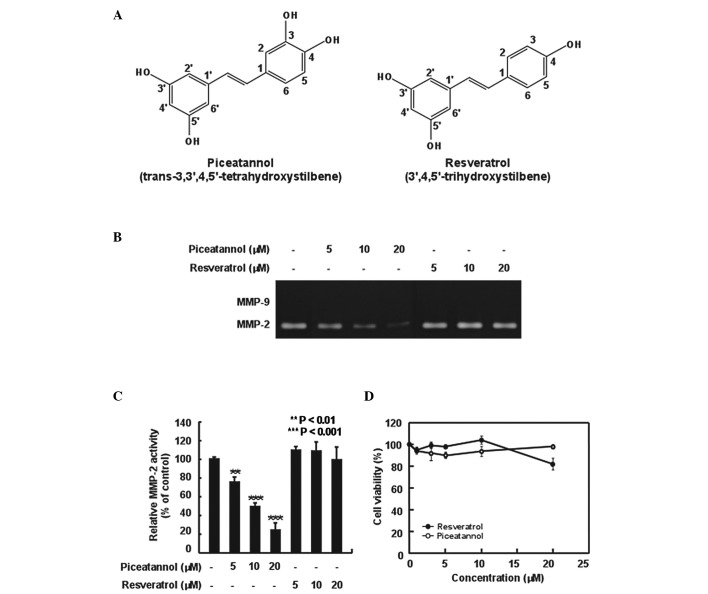
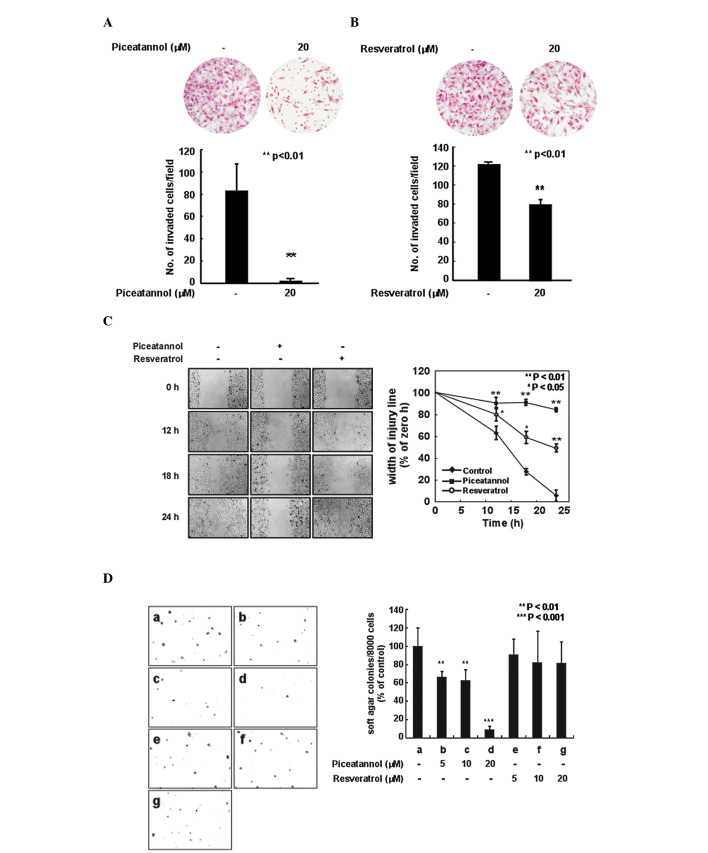
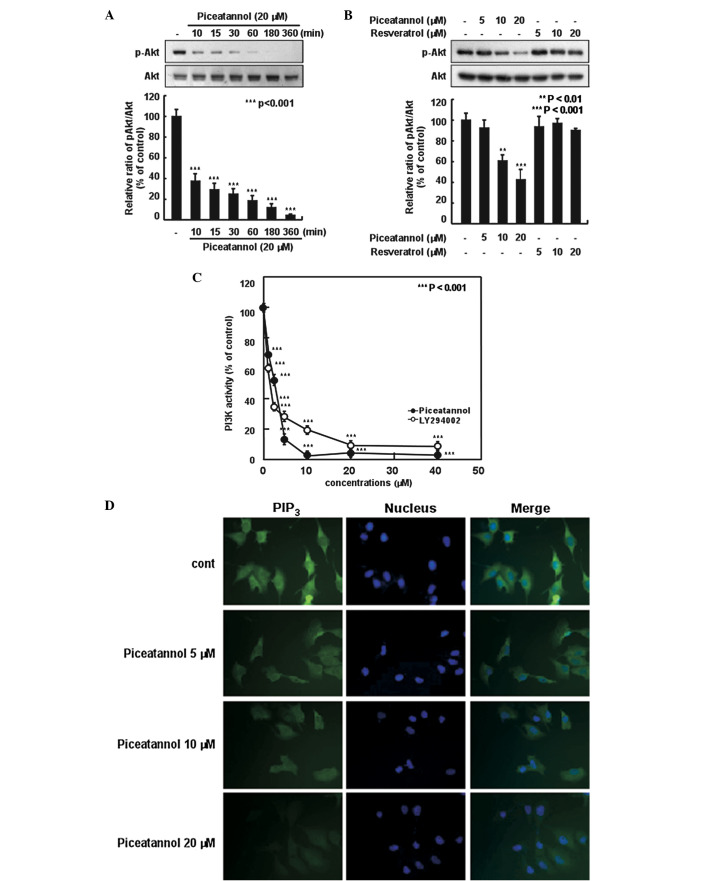
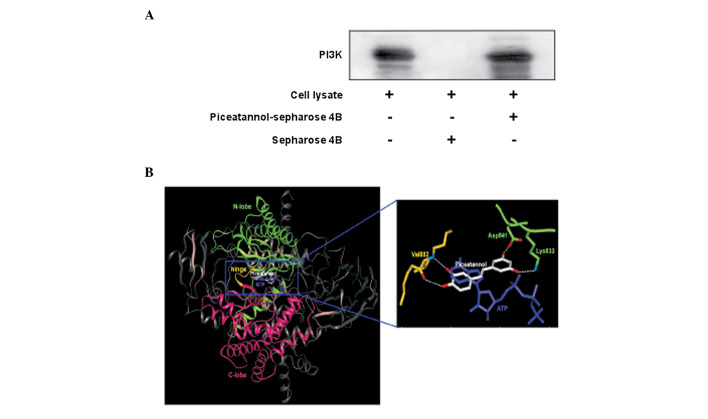
Metastasis is one of the most threatening features of the oncogenic process and the main cause of cancer-related mortality. Several studies have demonstrated that matrix metalloproteinases (MMPs) are critical for tumor invasion and metastasis. Resveratrol (3,5,4'-trihydroxystilbene), a phenolic compound of red wine, has been reported to be a natural chemopreventive agent. However, the cancer preventive effects of piceatannol (3,5,3',4'-tetrahydroxystilbene), a metabolite of resveratrol and the underlying molecular mechanisms have not yet been fully elucidated. In this study, we report that piceatannol inhi-bits H-ras-induced MMP-2 activity and the invasive phenotype of MCF10A human breast epithelial cells harboring mutated H-ras (H-ras MCF10A cells) more effectively than resveratrol. Piceatannol attenuated the H-ras-induced phosphorylation of Akt in a time- and dose-dependent manner, whereas resveratrol, at the same concentrations, did not exert an inhibitory effect. In vitro kinase assays demonstrated that piceatannol significantly inhibited phosphatidylinositol 3-kinase (PI3K) activity and suppressed phospha-tidylinositol (3,4,5)-trisphosphate (PIP3) expression in the H-ras MCF10A cells. Ex vivo pull-down assays revealed that piceatannol directly bound to PI3K, inhibiting PI3K activity. Data from molecular docking suggested that piceatannol is a more tight-binding inhibitor than resveratrol due to the additional hydrogen bond between the hydroxyl group and the backbone amide group of Val882 in the ATP-binding pocket of PI3K.
Figures

References
-
- Sporn MB. The war on cancer. Lancet. 1996;347:1377–1381. - PubMed
-
- Fidler IJ. Critical factors in the biology of human cancer metastasis: twenty-eighth G.H.A. Clowes memorial award lecture. Cancer Res. 1990;50:6130–6138. - PubMed
-
- Liotta LA, Steeg PS, Stetler-Stevenson WG. Cancer metastasis and angiogenesis: an imbalance of positive and negative regulation. Cell. 1991;64:327–336. - PubMed
-
- Sato H, Takino T, Okada Y, et al. A matrix metalloproteinase expressed on the surface of invasive tumour cells. Nature. 1994;370:61–65. - PubMed
-
- McCawley LJ, Matrisian LM. Matrix metalloproteinases: multifunctional contributors to tumor progression. Mol Med Today. 2000;6:149–156. - PubMed
Publication types
MeSH terms
Substances
LinkOut - more resources
Full Text Sources
Other Literature Sources
Research Materials
Miscellaneous