


Trends in life expectancy and the macroeconomy in Malawi
- PMID: 23878664
- PMCID: PMC3345930
- DOI: 10.4314/mmj.v19i4.10946
Trends in life expectancy and the macroeconomy in Malawi
Abstract
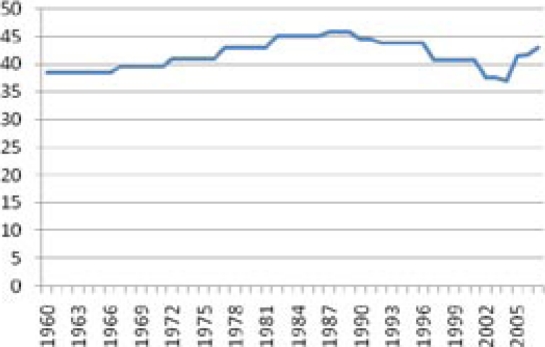
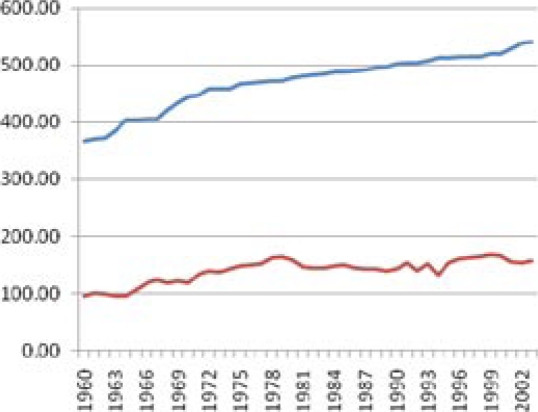
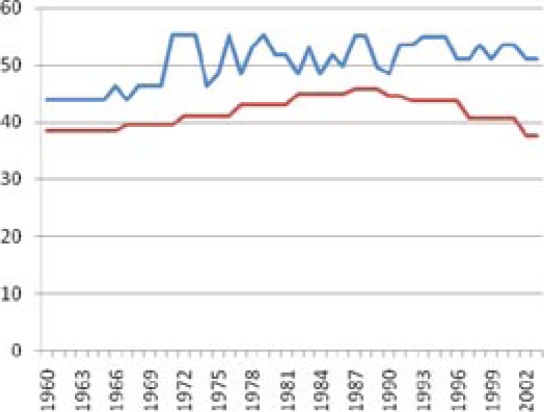
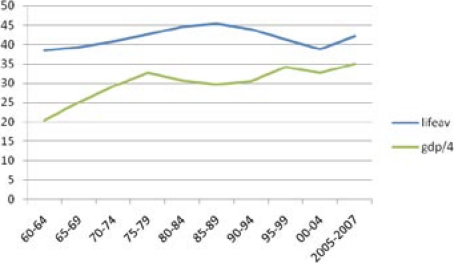
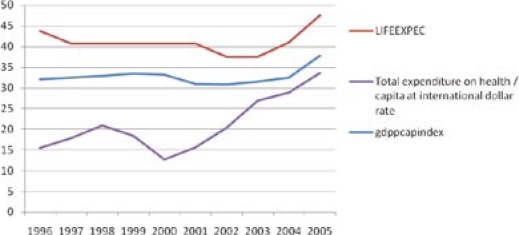
This paper studies the trends in life expectancy in Malawi since independence and offers possible explanations regarding inter-temporal variations. Descriptive analysis reveals that the life expectancy in Malawi has trailed below the Sub Saharan African average. From the 1960s through to the early 1980s life expectancy improved driven mainly by rising incomes and the absence of HIV/AIDS. In the mid 1980s life expectancy declined tremendously and never improved due to the spread of HIV/AIDS, the economic slump that followed the World Bank's Structural Adjustment programmes (SAP) and widespread corruption and poor governance in the era of democracy. At the turn of the new millennium, Malawians were no healthier than their ancestors at the dawn of independence though this improved after 2004. If Malawi is to meet its health Millennium Development Goals by 2015, good governance, improved agricultural performance and an increase in health expenditure should be at the heart of its development policies.
Figures
References
-
- Fayissa B, Gutema P. Estimating a health production function for Sub-Saharan Africa. Applied Economics. 2005;37:155–164.
-
- Sapolsky RM. Why zebras don't get ulcers: A guide to stress, stress-related diseases and coping. New York: W H Freeman and Company; 1994.
-
- WHO-CMH (World Health Organization Commission for Macroeconomics and Health), author Macroeconomics and Health: Investing in Health for Economic Development. Geneva: WHO; 2001.
-
- Fogel RW. Economic growth population theory and physiology: The bearing of long term processes on the making of economic policy. American Economic review. 1994;84(3):369–395.
-
- Subramanian SV, Belli P, Kawachi I. The macroeconomic determinants of health. Annual Review of Public Health. 2002;23:287–302. - PubMed
LinkOut - more resources
Full Text Sources
Miscellaneous