


Genetic variants predicting left ventricular hypertrophy in a diabetic population: a Go-DARTS study including meta-analysis
- PMID: 23879873
- PMCID: PMC3729417
- DOI: 10.1186/1475-2840-12-109
Genetic variants predicting left ventricular hypertrophy in a diabetic population: a Go-DARTS study including meta-analysis
Abstract
Background: Left ventricular hypertrophy has multiple aetiologies including diabetes and genetic factors. We aimed to identify genetic variants predicting left ventricular hypertrophy in diabetic individuals.
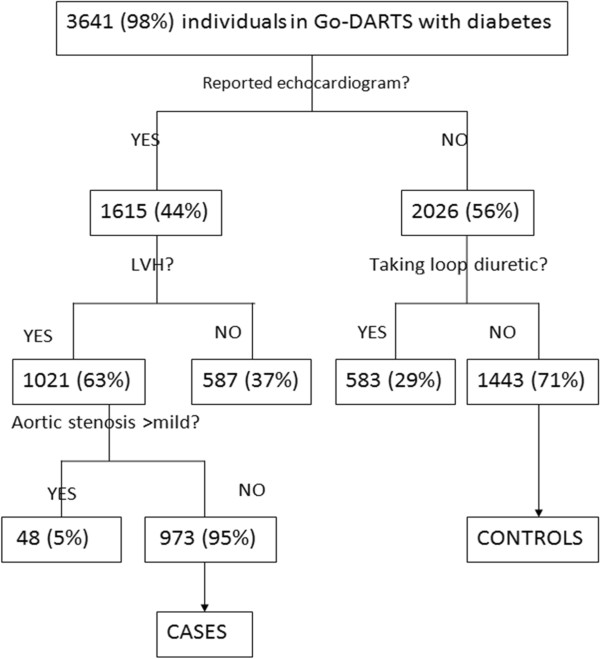
Methods: Demographic, echocardiographic, prescribing, morbidity, mortality and genotyping databases connected with the Genetics of Diabetes Audit and Research in Tayside, Scotland project were accurately linked using a patient-specific identifier. Left ventricular hypertrophy cases were identified using echocardiographic data.Genotyping data from 973 cases and 1443 non-left ventricular hypertrophy controls were analysed, investigating whether single nucleotide polymorphisms associated with left ventricular hypertrophy in previous Genome Wide Association Studies predicted left ventricular hypertrophy in our population of individuals with type 2 diabetes. Meta-analysis assessed overall significance of these single nucleotide polymorphisms, which were also used to create gene scores. Logistic regression assessed whether these scores predicted left ventricular hypertrophy.
Results: Two single nucleotide polymorphisms previously associated with left ventricular hypertrophy were significant: rs17132261: OR 2.03, 95% CI 1.10-3.73, p-value 0.02 and rs2292462: OR 0.82, 95% CI 0.73-0.93 and p-value 2.26x10⁻³. Meta-analysis confirmed rs17132261 and rs2292462 were associated with left ventricular hypertrophy (p=1.03x10⁻⁸ and p=5.86x10⁻¹⁰ respectively) and one single nucleotide polymorphisms in IGF1R (rs4966014) became genome wide significant upon meta-analysis although was not significant in our study. Gene scoring based on published single nucleotide polymorphisms also predicted left ventricular hypertrophy in our study.Rs17132261, within SLC25A46, encodes a mitochondrial phosphate transporter, implying abnormal myocardial energetics contribute to left ventricular hypertrophy development. Rs2292462 lies within the obesity-implicated neuromedin B gene. Rs4966014 lies within the IGF1R1 gene. IGF1 signalling is an established factor in cardiac hypertrophy.
Conclusions: We created a resource to study genetics of left ventricular hypertrophy in diabetes and validated our left ventricular hypertrophy phenotype in replicating single nucleotide polymorphisms identified by previous genome wide association studies investigating left ventricular hypertrophy.
Figures
References
-
- Third report of the National Cholesterol Education Program (NCEP) expert panel on detection, evaluation, and treatment of high blood cholesterol in adults (Adult Treatment Panel III) final report. Circulation. 2002;106(25):3143–3421. - PubMed
-
- Barbieri A, Bursi F, Mantovani F, Valenti C, Quaglia M, Berti E. et al.Left ventricular hypertrophy reclassification and death: application of the recommendation of the American Society of Echocardiography/European association of echocardiography. European J Echocardiogr. 2011;5:2011. - PubMed
Publication types
MeSH terms
Substances
LinkOut - more resources
Full Text Sources
Other Literature Sources
Medical
Miscellaneous
