


Gastrointestinal side effects in children with Wilson's disease treated with zinc sulphate
- PMID: 23885147
- PMCID: PMC3718904
- DOI: 10.3748/wjg.v19.i27.4356
Gastrointestinal side effects in children with Wilson's disease treated with zinc sulphate
Abstract
Aim: To investigate the side effects of a zinc sulphate therapy in a cohort of Polish pediatric patients with Wilson's disease.
Methods: We retrospectively analyzed a cohort of 53 pediatric patients with Wilson's disease treated at the Children's Memorial Health Institute in Warsaw, Poland between the years 1996 and 2011 with zinc sulphate. Patients were diagnosed with Wilson's disease according to the scoring system of Ferenci, with 49 cases confirmed by mutation analysis. Data about the dosage scheme of zinc sulphate, side effects and efficacy and toxicity of the treatment were collected and recorded in the patient's medical chart at each visit to the hospital.
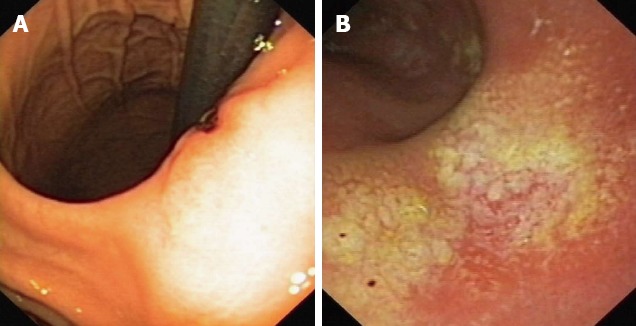
Results: Mean age of diagnosis for the entire cohort was 10 years (range, 2.5-17 years). Duration of treatment with zinc sulfate was 83.3 wk (range, 8-344 wk). Side effects, all of gastrointestinal origin, were observed in 21 patients (40%--9 males and 12 females), irrespective of the duration of therapy. Thirteen out of 21 patients were over the age of 10 years. The most common ATP7B mutation was p.H1069Q. Esophagogastroduodenoscopy, performed in 7 patients (33.3%) suffering from persistent and severe abdominal pain, revealed gastrointestinal ulcerations or erosions with negative Helicobacter pylori tests in all subjects investigated. The above mentioned 7 patients were treated with proton pump inhibitors. Three of those experienced resolution of symptoms, whereas proton-pump inhibitors failed to alleviate symptoms of the remaining four children and conversion of therapy to D-penicillamine was needed.
Conclusion: Zinc sulphate appears to cause significant gastrointestinal side effects, which children on therapy for Wilson's disease should be closely monitored for.
Keywords: Abdominal pain; Gastrointestinal ulcer; Therapy; Wilson’s disease; Zinc.
Figures
References
-
- Fosmire GJ. Zinc toxicity. Am J Clin Nutr. 1990;51:225–227. - PubMed
-
- Hoffman HN, Phyliky RL, Fleming CR. Zinc-induced copper deficiency. Gastroenterology. 1988;94:508–512. - PubMed
-
- Broun ER, Greist A, Tricot G, Hoffman R. Excessive zinc ingestion. A reversible cause of sideroblastic anemia and bone marrow depression. JAMA. 1990;264:1441–1443. - PubMed
-
- Yuzbasiyan-Gurkan V, Brewer GJ, Abrams GD, Main B, Giacherio D. Treatment of Wilson’s disease with zinc. V. Changes in serum levels of lipase, amylase, and alkaline phosphatase in patients with Wilson’s disease. J Lab Clin Med. 1989;114:520–526. - PubMed
-
- Brewer GJ, Yuzbasiyan-Gurkan V, Johnson V. Treatment of Wilson’s disease with zinc. IX: Response of serum lipids. J Lab Clin Med. 1991;118:466–470. - PubMed
Publication types
MeSH terms
Substances
LinkOut - more resources
Full Text Sources
Other Literature Sources
Medical
