


Fetal malnutrition and long-term outcomes
- PMID: 23887100
- PMCID: PMC5081104
- DOI: 10.1159/000348384
Fetal malnutrition and long-term outcomes
Abstract
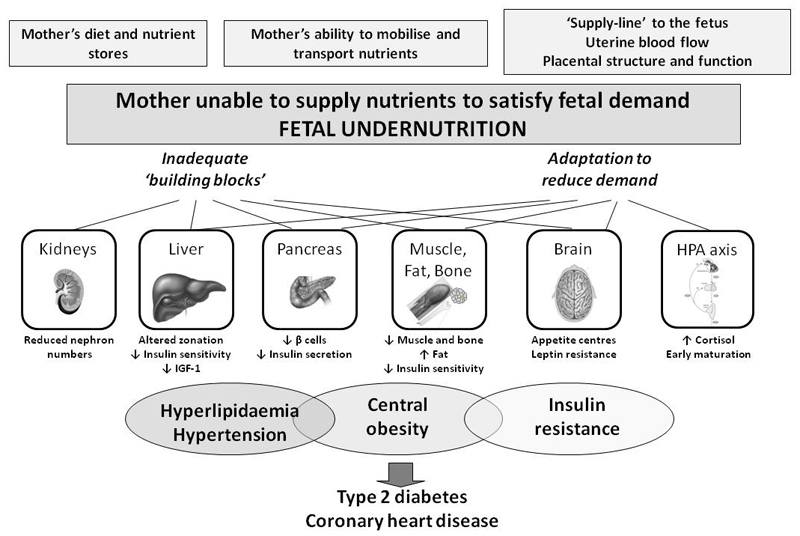
Epidemiological studies have shown that lower birthweight is associated with a wide range of adverse outcomes in later life, including poorer 'human capital' (shorter stature, lower cognitive performance), increased risk factors for later disease (higher blood pressure and reduced glucose tolerance, and lung, kidney and immune function), clinical disease (diabetes, coronary heart disease, chronic lung and kidney disease), and increased all-cause and cardiovascular mortality. Higher birthweight is associated with an increased risk of cancer and (if caused by gestational diabetes) obesity and diabetes. The 'developmental origins of health and disease' hypothesis proposes that fetal nutrition has permanent effects on growth, structure and metabolism ('programming'). This is supported by studies in animals showing that maternal under- and overnutrition during pregnancy can produce similar abnormalities in the adult offspring. Common chronic diseases could potentially be prevented by achieving optimal fetal nutrition, and this could have additional benefits for survival and human capital. Recent follow-up of children born after randomized nutritional interventions in pregnancy provides weak evidence of beneficial effects on growth, vascular function, lipid concentrations, glucose tolerance and insulin resistance. Animal studies indicate that epigenetic phenomena may be an important mechanism underlying programming, and that nutritional interventions may need to start preconceptionally.
Copyright © 2013 Nestec Ltd., Vevey/S. Karger AG, Basel.
Figures
Comment in
-
Discussion on epidemiology of low birthweight and long-term outcomes of fetal malnutrition.Nestle Nutr Inst Workshop Ser. 2013;74:26-30. doi: 10.1159/000348390. Epub 2013 Jul 18. Nestle Nutr Inst Workshop Ser. 2013. PMID: 23887101 No abstract available.
References
-
- Ravelli G-P, Stein ZA, Susser MW. Obesity in young men after famine exposure in utero and early infancy. New Eng J Med. 1976;295:349–53. - PubMed
-
- Phillips DIW. Programming of the stress response: a fundamental mechanism underlying the long-term effects of the fetal environment? J Intern Med. 2007;261:453–60. - PubMed
MeSH terms
Grants and funding
LinkOut - more resources
Full Text Sources
Other Literature Sources
Medical
