


Sirolimus-FKBP12.6 impairs endothelial barrier function through protein kinase C-α activation and disruption of the p120-vascular endothelial cadherin interaction
- PMID: 23887639
- PMCID: PMC3827918
- DOI: 10.1161/ATVBAHA.113.301659
Sirolimus-FKBP12.6 impairs endothelial barrier function through protein kinase C-α activation and disruption of the p120-vascular endothelial cadherin interaction
Abstract
Objective: Sirolimus (SRL) is an immunosuppressant drug used to prevent rejection in organ transplantation and neointimal hyperplasia when delivered from drug-eluting stents. Major side effects of SRL include edema and local collection of intimal lipid deposits at drug-eluting stent sites, suggesting that SRL impairs endothelial barrier function (EBF). The aim of this study was to address the role of SRL on impaired EBF and the potential mechanisms involved.
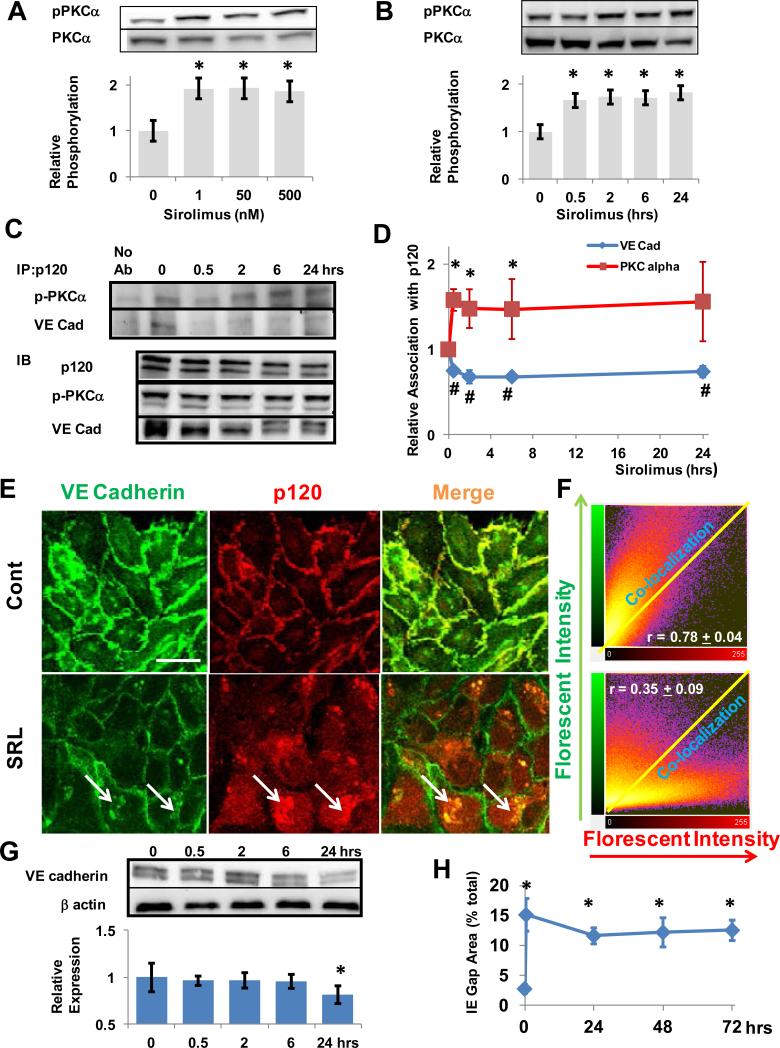
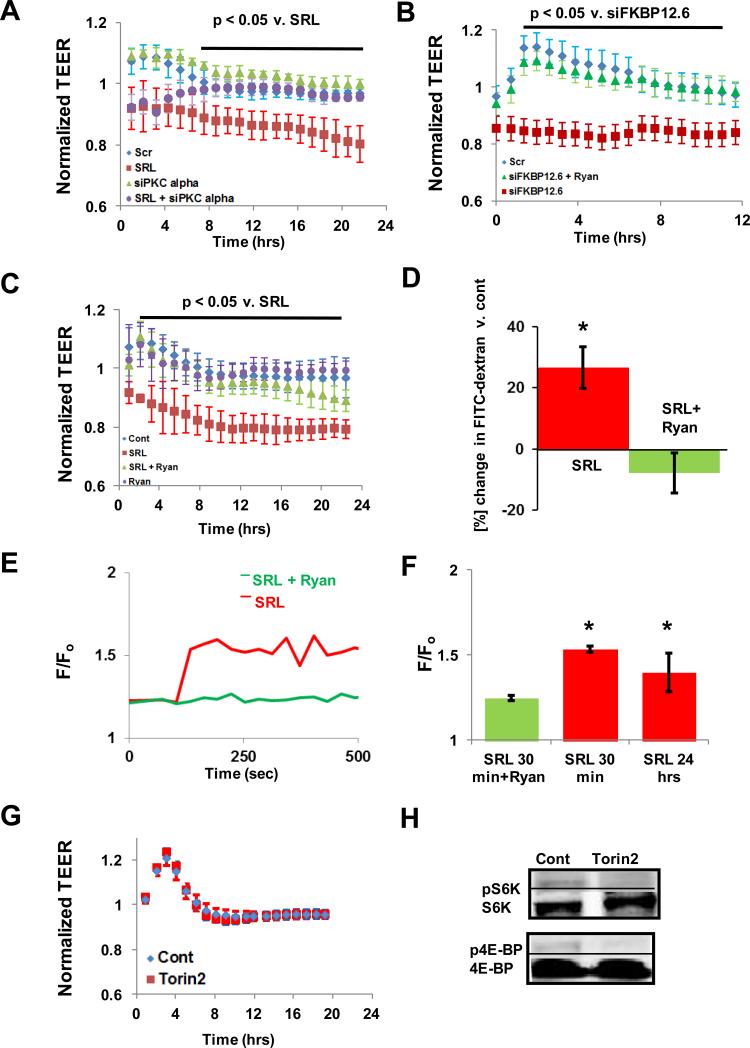
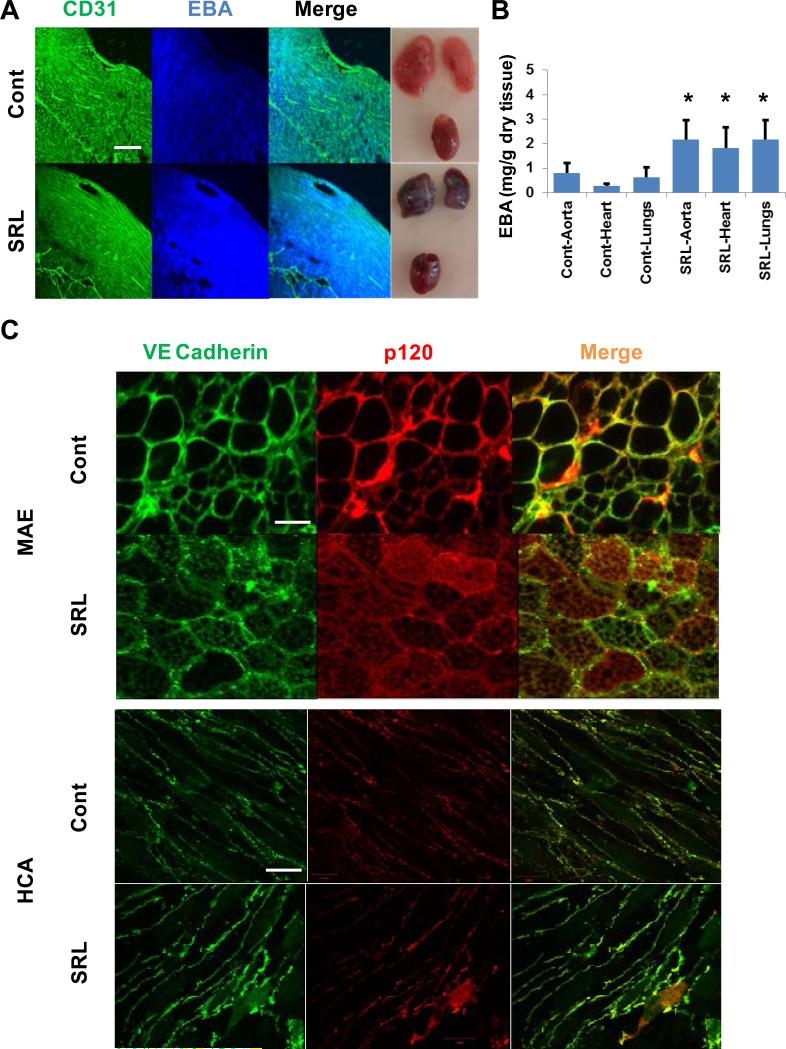
Approach and results: Cultured human aortic endothelial cells (HAECs) and intact human and mouse endothelium was examined to determine the effect of SRL, which binds FKBP12.6 to inhibit the mammalian target of rapamycin, on EBF. EBF, measured by transendothelial electrical resistance, was impaired in HAECs when treated with SRL or small interfering RNA for FKBP12.6 and reversed when pretreated with ryanodine, a stabilizer of ryanodine receptor 2 intracellular calcium release channels. Intracellular calcium increased in HAECs treated with SRL and normalized with ryanodine pretreatment. SRL-treated HAECs demonstrated increases in protein kinase C-α phosphorylation, a calcium sensitive serine/threonine kinase important in vascular endothelial (VE) cadherin barrier function through its interaction with p120-catenin (p120). Immunostaining of HAECs, human coronary and mouse aortic endothelium treated with SRL showed disruption of p120-VE cadherin interaction treated with SRL. SRL impairment of HAEC EBF was reduced with protein kinase C-α small interfering RNA. Mice treated with SRL demonstrated increased vascular permeability by Evans blue albumin extravasation in the lungs, heart, and aorta.
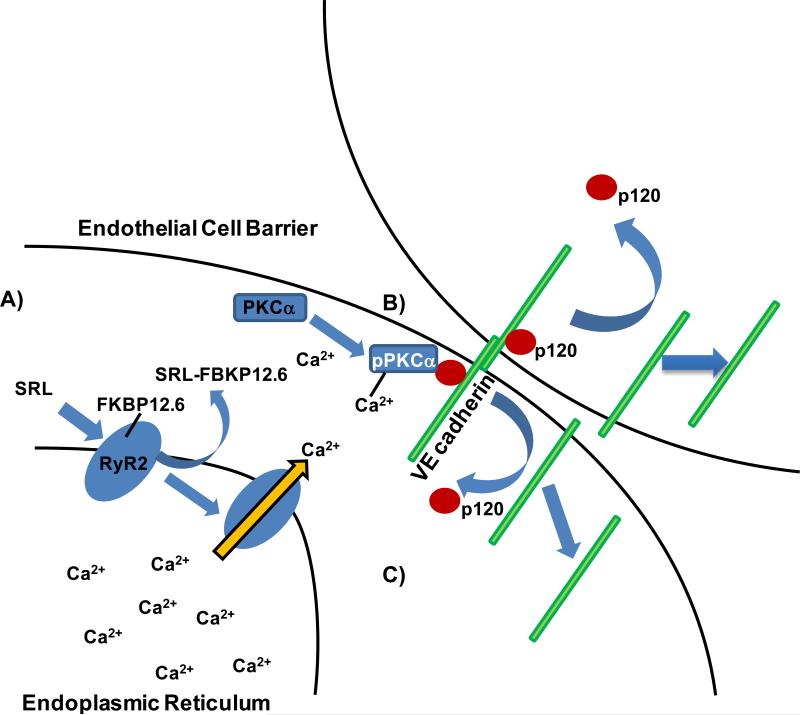
Conclusions: SRL-FKBP12.6 impairs EBF by activation of protein kinase C-α and downstream disruption of the p120-VE cadherin interaction in vascular endothelium. These data suggest this mechanism may be an important contributor of SRL side effects related to impaired EBF.
Keywords: PKC; endothelium; sirolimus.
Figures
References
-
- van Nieuw Amerongen GP, Vermeer MA, Negre-Aminou P, Lankelma J, Emeis JJ, van Hinsbergh VW. Simvastatin improves disturbed endothelial barrier function. Circulation. 2000;102:2803–2809. - PubMed
-
- Mehta D, Malik AB. Signaling mechanisms regulating endothelial permeability. Physiological reviews. 2006;86:279–367. - PubMed
-
- Gonzalez-Vilchez F, Vazquez de Prada JA, Almenar L, et al. Withdrawal of proliferation signal inhibitors due to adverse events in the maintenance phase of heart transplantation. The Journal of heart and lung transplantation : the official publication of the International Society for Heart Transplantation. 2012;31:288–295. - PubMed
-
- Park SJ, Kang SJ, Virmani R, Nakano M, Ueda Y. In-stent neoatherosclerosis: A final common pathway of late stent failure. Journal of the American College of Cardiology. 2012;59:2051–2057. - PubMed
Publication types
MeSH terms
Substances
Grants and funding
LinkOut - more resources
Full Text Sources
Other Literature Sources
Molecular Biology Databases
Miscellaneous
