Marchiafava-Bignami disease: a rare entity with a poor outcome
- PMID: 23887763
- PMCID: PMC4031867
- DOI: 10.1590/s0103-507x2013000100013
Marchiafava-Bignami disease: a rare entity with a poor outcome
Abstract
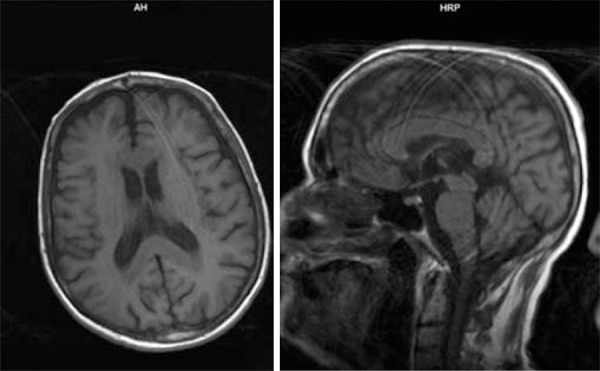
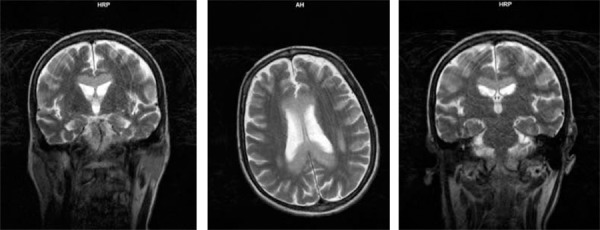
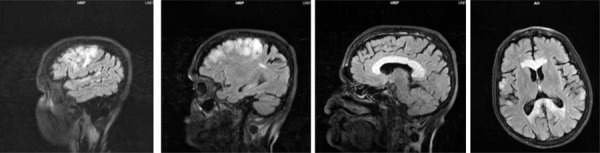
Marchiafava-Bignami disease is a rare affliction characterized by primary degeneration of the corpus callosum associated with chronic consumption of ethanol. The disease may occasionally occur in patients who are not alcoholics but are chronically malnourished. A complex deficiency of group B vitamins is the main etiopathogenic hypothesis, and many patients improve after the administration of these compounds. However, a good response is not always observed. The definitive diagnosis of Marchiafava-Bignami disease can be problematic and is based on features of neuroimaging studies, especially magnetic resonance imaging. Its treatment is still controversial and shows variable results. Because nutritional factors are implicated, as in Wernicke's encephalopathy, some authors claim that replacement of B vitamins is beneficial. The present article is a case report of a severe acute form of Marchiafava-Bignami disease in an alcohol-dependent male patient who improved after the administration of parenteral B vitamins. As a consequence of his neurological and immunologic conditions, he developed multiple pulmonary infections and had a protracted course in the intensive care unit. He eventually died of sepsis associated with an uncommon fungus, Rhodotorula mucilaginosa. The present article reports the clinical and neuroimaging data from this patient and contains a review of Marchiafava-Bignami disease and Rhodotorula infections in the intensive care unit.
A doença de Marchiafava-Bignami é uma entidade rara, caracterizada por uma degeneração primária do corpo caloso, associada com o consumo crônico do etanol. A doença pode, ocasionalmente, ocorrer em pacientes não etilistas cronicamente desnutridos. Uma deficiência de vitaminas do complexo B é considerada como a hipótese etiopatogênica principal, uma vez que muitos pacientes obtiveram uma melhora após a administração desses compostos. Algumas vezes, entretanto, tal resposta terapêutica não foi observada. O diagnóstico definitivo da doença de Marchiafava-Bignami pode ser problemático e depende das características de estudos de neuroimagem, especialmente a ressonância magnética. Seu tratamento, dessa forma, é ainda controverso, com resultados variáveis. Como estão implicados fatores nutricionais, analogamente à encefalopatia de Wernicke, alguns autores recomendam a reposição de vitaminas do complexo B, particularmente da B1. O presente artigo relata a forma aguda da doença de Marchiafava-Bignami em um paciente masculino dependente do álcool, que apresentou discreta melhora após a administração parenteral das vitaminas do complexo B. Como consequência de suas más condições neurológicas e imunológicas, ele desenvolveu infecções pulmonares múltiplas e permaneceu, por longo tempo, na unidade de terapia intensiva. Seu óbito ocorreu por sepse causada por um fungo raro, o Rhodotorula mucilaginosa. O artigo é um relato clínico da evolução desse paciente, com a apresentação de seus dados de neuroimagem, acompanhada por uma revisão sobre doença de Marchiafava-Bignami e sobre as infecções por Rhodotorula dentro da perspectiva da unidade de cuidado intensivo.
Conflict of interest statement
Figures
References
-
- Marchiafava E, Bignami A. Sopra un alterazione del corpo calloso osservata in soggetti alcoolisti. Riv Patol Nerv. 1903;8:544–549. (Ita).
-
- Celik Y, Temizoz O, Genchellac H, Cakir B, Asil T. A non-alcoholic patient with acute Marchiafava-Bignami disease associated with gynecologic malignancy: paraneoplastic Marchiafava-Bignami disease? Clin Neurol Neurosurg. 2007;109(6):505–508. - PubMed
-
- Rusche-Skolarus LE, Lucey BP, Vo KD, Snider BJ. Transient encephalopathy in a postoperative non-alcoholic female with Marchiafava-Bignami disease. Clin Neurol Neurosurg. 2007;109(8):713–715. - PubMed
-
- Helenius J, Tatlisumak T, Soinne L, Valanne L, Kaste M. Marchiafava-Bignami disease: two cases with favourable outcome. Eur J Neurol. 2001;8(3):269–272. - PubMed
-
- Heinrich A, Runge U, Khaw AV. Clinicoradiologic subtypes of Marchiafava-Bignami disease. J Neurol. 2004;251(9):1050–1059. - PubMed
Publication types
MeSH terms
Substances
LinkOut - more resources
Full Text Sources
Other Literature Sources
Medical
Research Materials