


Neurobiology of placebo effects: expectations or learning?
- PMID: 23887819
- PMCID: PMC4090967
- DOI: 10.1093/scan/nst079
Neurobiology of placebo effects: expectations or learning?
Abstract
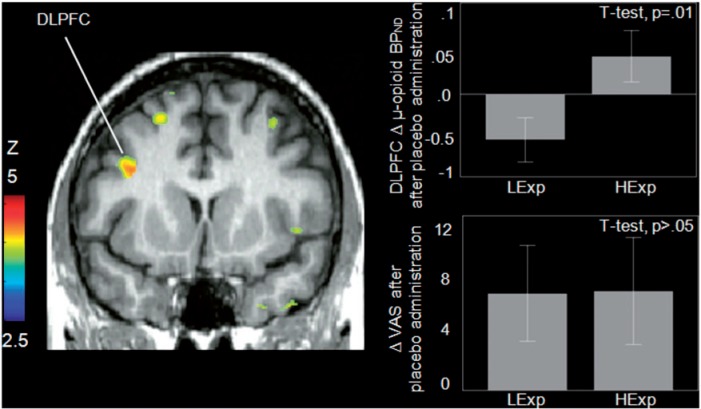
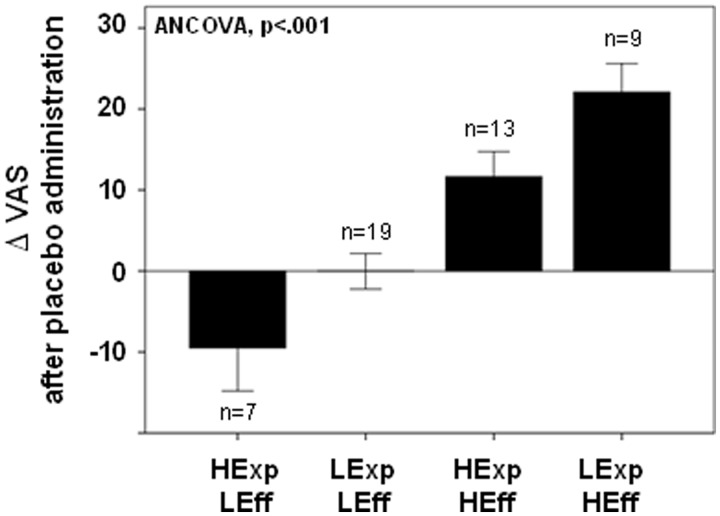
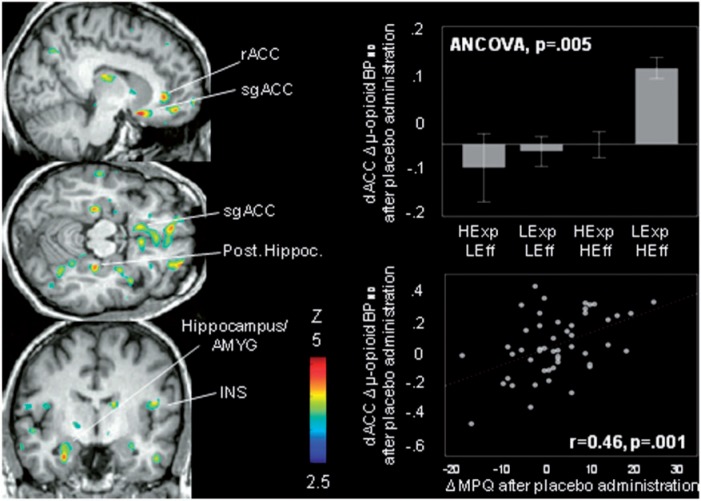
Contemporary learning theories suggest that conditioning is heavily dependent on the processing of prediction errors, which signal a discrepancy between expected and observed outcomes. This line of research provides a framework through which classical theories of placebo effects, expectations and conditioning, can be reconciled. Brain regions related to prediction error processing [anterior cingulate cortex (ACC), orbitofrontal cortex or the nucleus accumbens] overlap with those involved in placebo effects. Here we examined the possibility that the magnitude of objective neurochemical responses to placebo administration would depend on individual expectation-effectiveness comparisons. We show that such comparisons and not expectations per se predict behavioral placebo responses and placebo-induced activation of µ-opioid receptor-mediated neurotransmission in regions relevant to error detection (e.g. ACC). Expectations on the other hand were associated with greater µ-opioid system activation in the dorsolateral prefrontal cortex but not with greater behavioral placebo responses. The results presented aid the elucidation of molecular and neural mechanisms underlying the relationship between expectation-effectiveness associations and the formation of placebo responses, shedding light on the individual differences in learning and decision making. Expectation and outcome comparisons emerge as a cognitive mechanism that beyond reward associations appears to facilitate the formation and sustainability of placebo responses.
Keywords: expectations; placebo analgesia; prediction error signal and learning; µ-opioid receptor.
© The Author (2013). Published by Oxford University Press. For Permissions, please email: journals.permissions@oup.com.
Figures
References
-
- Ader R, Cohen N. Behaviorally conditioned immunosuppression. Psychosomatic Medicine. 1975;37(4):333–40. - PubMed
-
- Amador N, Schlag-Rey M, Schlag J. Reward-predicting and reward-detecting neuronal activity in the primate supplementary eye field. Journal of Neurophysiology. 2000;84(4):2166–70. - PubMed
-
- Amaral DG, Cowan WM. Subcortical afferents to the hippocampal formation in the monkey. Journal of Comparative Neurology. 1980;189(4):573–91. - PubMed
-
- Atlas LY, Wager TD. How expectations shape pain. Neuroscience Letters. 2012;520(2):140–8. - PubMed
-
- Behrens TE, Woolrich MW, Walton ME, Rushworth MF. Learning the value of information in an uncertain world. Nature Neuroscience. 2007;10(9):1214–21. - PubMed
Publication types
MeSH terms
Substances
Grants and funding
LinkOut - more resources
Full Text Sources
Other Literature Sources
Medical
