


Reprogramming of intestinal glucose metabolism and glycemic control in rats after gastric bypass
- PMID: 23888041
- PMCID: PMC4068965
- DOI: 10.1126/science.1235103
Reprogramming of intestinal glucose metabolism and glycemic control in rats after gastric bypass
Abstract
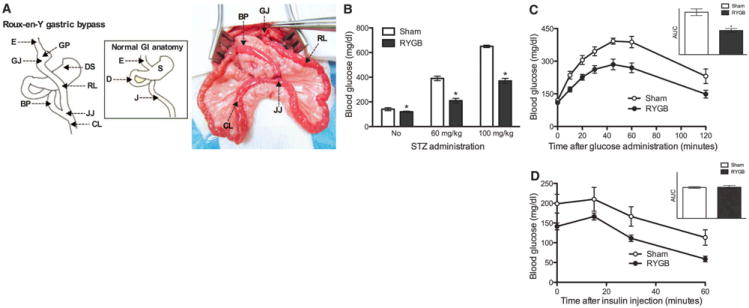
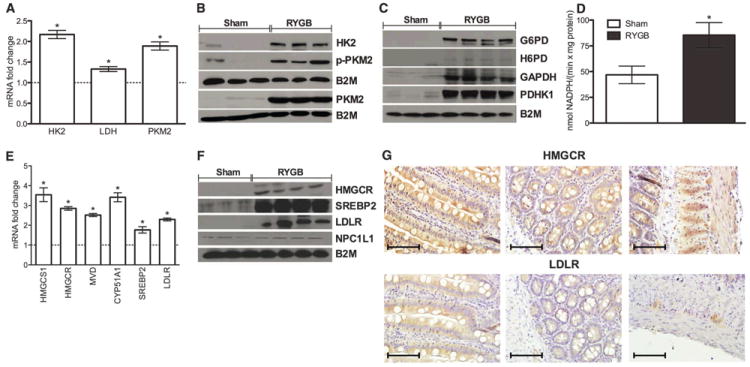
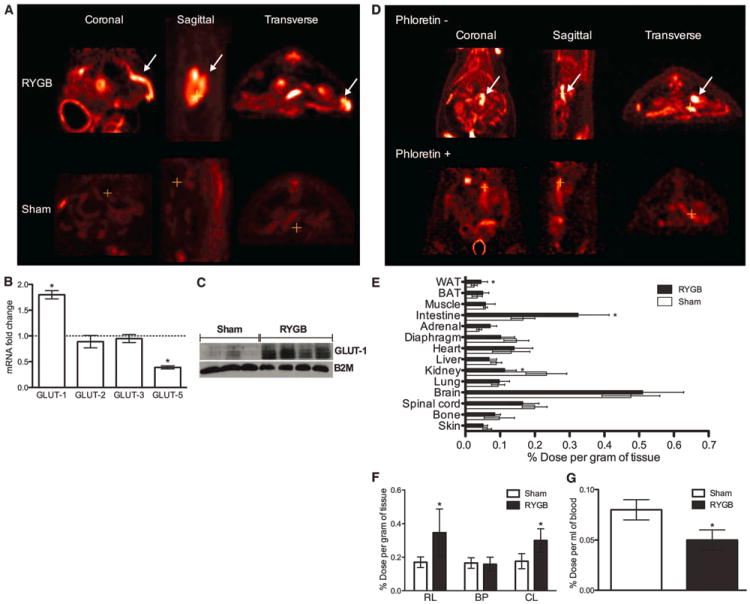
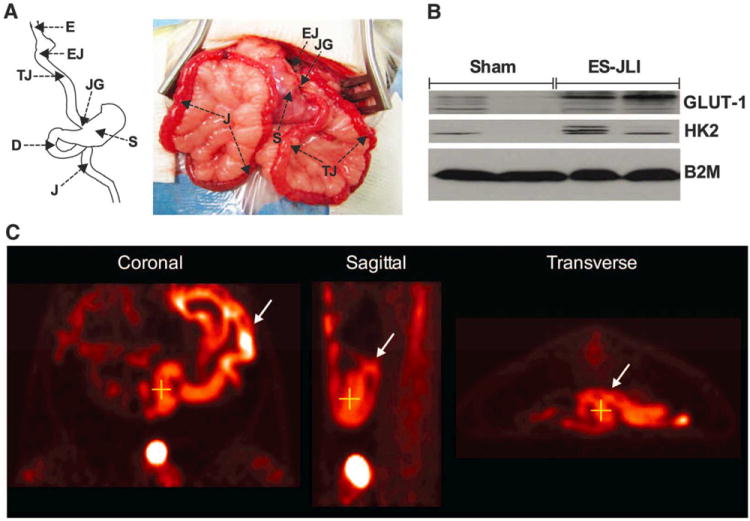
The resolution of type 2 diabetes after Roux-en-Y gastric bypass (RYGB) attests to the important role of the gastrointestinal tract in glucose homeostasis. Previous studies in RYGB-treated rats have shown that the Roux limb displays hyperplasia and hypertrophy. Here, we report that the Roux limb of RYGB-treated rats exhibits reprogramming of intestinal glucose metabolism to meet its increased bioenergetic demands; glucose transporter-1 is up-regulated, basolateral glucose uptake is enhanced, aerobic glycolysis is augmented, and glucose is directed toward metabolic pathways that support tissue growth. We show that reprogramming of intestinal glucose metabolism is triggered by the exposure of the Roux limb to undigested nutrients. We demonstrate by positron emission tomography-computed tomography scanning and biodistribution analysis using 2-deoxy-2-[18F]fluoro-D-glucose that reprogramming of intestinal glucose metabolism renders the intestine a major tissue for glucose disposal, contributing to the improvement in glycemic control after RYGB.
Figures
Comment in
-
Medicine. Why does gastric bypass surgery work?Science. 2013 Jul 26;341(6144):351-2. doi: 10.1126/science.1242673. Science. 2013. PMID: 23888026 No abstract available.
-
Surgery: T2DM remission after RYGB-a 'gutsy' move.Nat Rev Endocrinol. 2013 Oct;9(10):564. doi: 10.1038/nrendo.2013.158. Epub 2013 Aug 13. Nat Rev Endocrinol. 2013. PMID: 23938283 No abstract available.
References
Publication types
MeSH terms
Substances
Grants and funding
LinkOut - more resources
Full Text Sources
Other Literature Sources
Medical
Research Materials
