


Gene expression changes with age in skin, adipose tissue, blood and brain
- PMID: 23889843
- PMCID: PMC4054017
- DOI: 10.1186/gb-2013-14-7-r75
Gene expression changes with age in skin, adipose tissue, blood and brain
Abstract
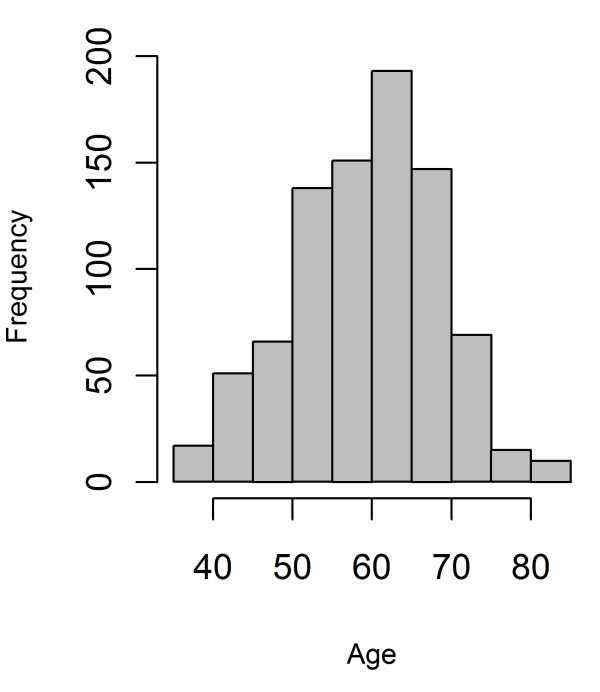
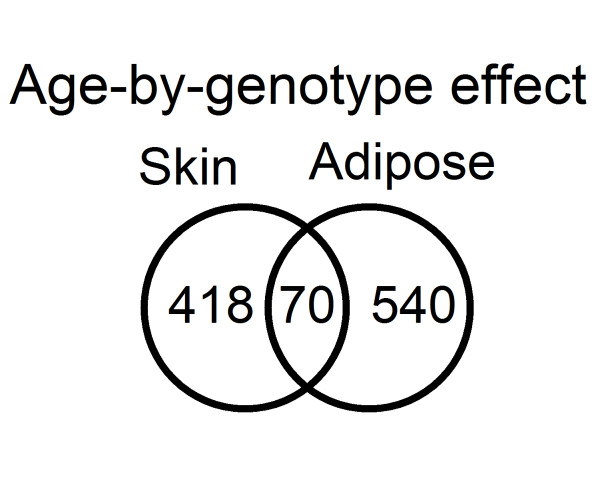
Background: Previous studies have demonstrated that gene expression levels change with age. These changes are hypothesized to influence the aging rate of an individual. We analyzed gene expression changes with age in abdominal skin, subcutaneous adipose tissue and lymphoblastoid cell lines in 856 female twins in the age range of 39-85 years. Additionally, we investigated genotypic variants involved in genotype-by-age interactions to understand how the genomic regulation of gene expression alters with age.
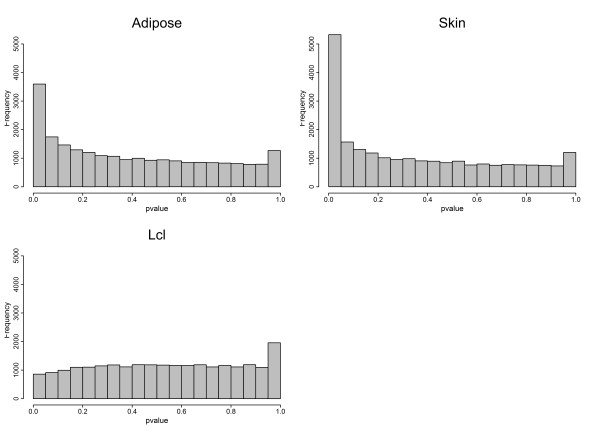
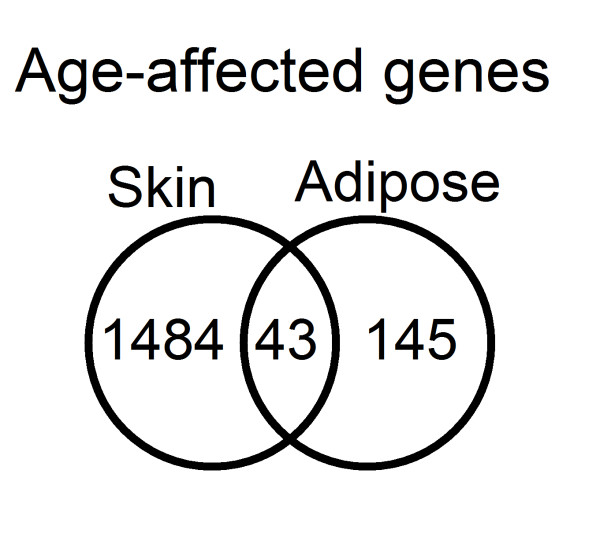
Results: Using a linear mixed model, differential expression with age was identified in 1,672 genes in skin and 188 genes in adipose tissue. Only two genes expressed in lymphoblastoid cell lines showed significant changes with age. Genes significantly regulated by age were compared with expression profiles in 10 brain regions from 100 postmortem brains aged 16 to 83 years. We identified only one age-related gene common to the three tissues. There were 12 genes that showed differential expression with age in both skin and brain tissue and three common to adipose and brain tissues.
Conclusions: Skin showed the most age-related gene expression changes of all the tissues investigated, with many of the genes being previously implicated in fatty acid metabolism, mitochondrial activity, cancer and splicing. A significant proportion of age-related changes in gene expression appear to be tissue-specific with only a few genes sharing an age effect in expression across tissues. More research is needed to improve our understanding of the genetic influences on aging and the relationship with age-related diseases.
Figures
References
-
- Trabzuni D, Wray S, Vandrovcova J, Ramasamy A, Walker R, Smith C, Luk C, Gibbs JR, Dillman A, Hernandez DG, Arepalli S, Singleton AB, Cookson MR, Pittman AM, de Silva R, Weale ME, Hardy J, Ryten M. MAPT expression and splicing is differentially regulated by brain region: relation to genotype and implication for tauopathies. Hum Mol Genet. 2012;14:4094–4103. doi: 10.1093/hmg/dds238. - DOI - PMC - PubMed
Publication types
MeSH terms
Associated data
- Actions
Grants and funding
LinkOut - more resources
Full Text Sources
Other Literature Sources
Medical
