


Multi-task connectivity reveals flexible hubs for adaptive task control
- PMID: 23892552
- PMCID: PMC3758404
- DOI: 10.1038/nn.3470
Multi-task connectivity reveals flexible hubs for adaptive task control
Abstract
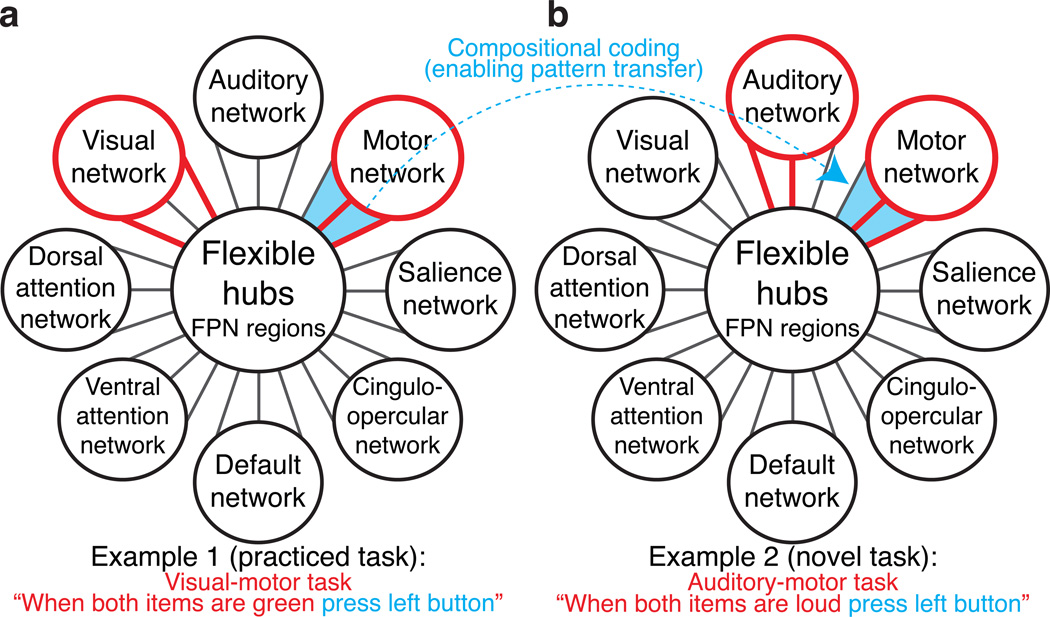
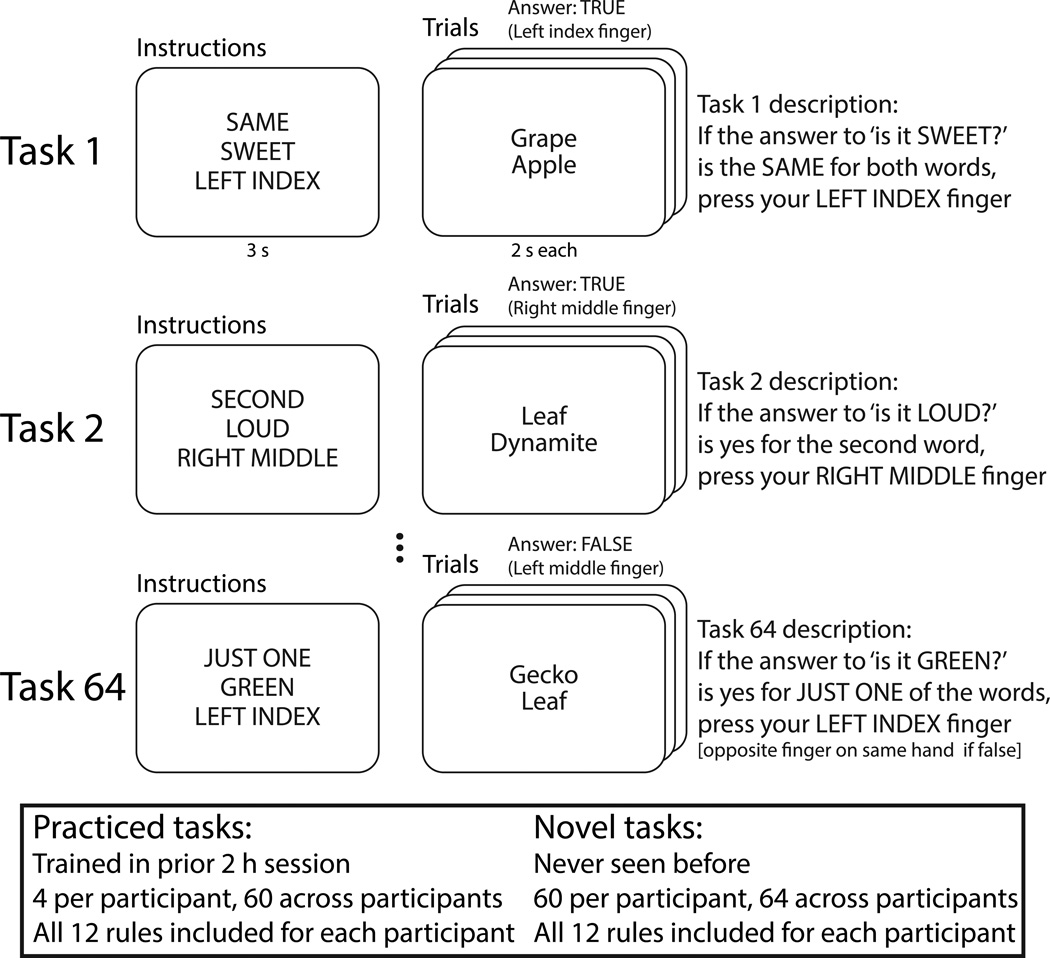
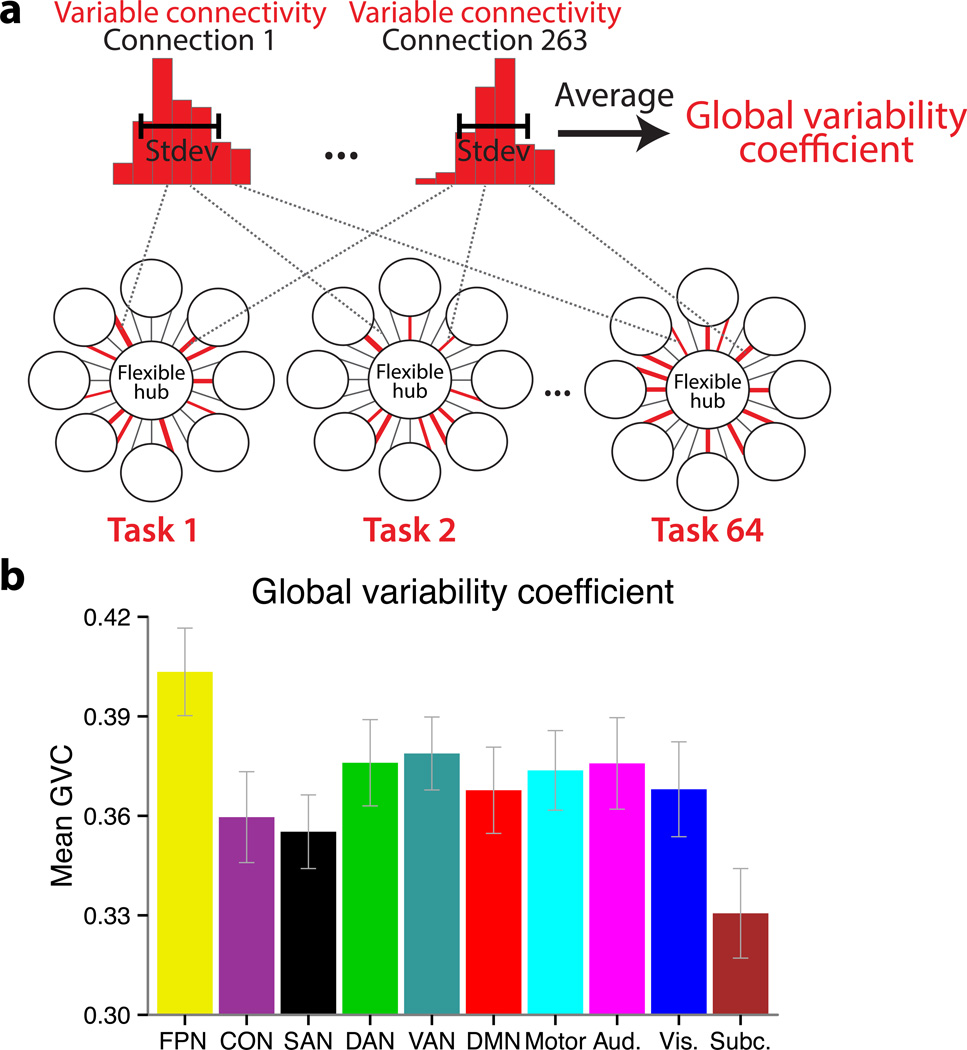
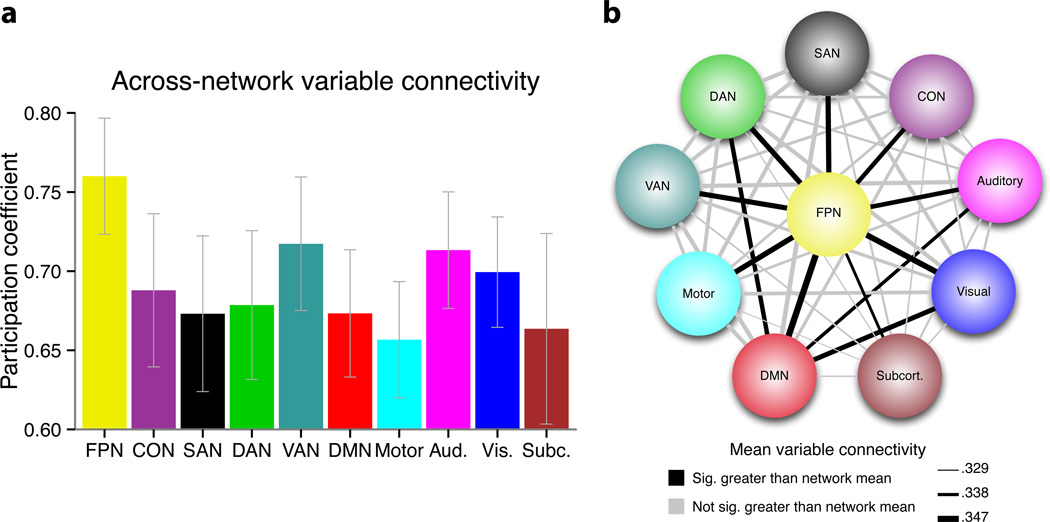
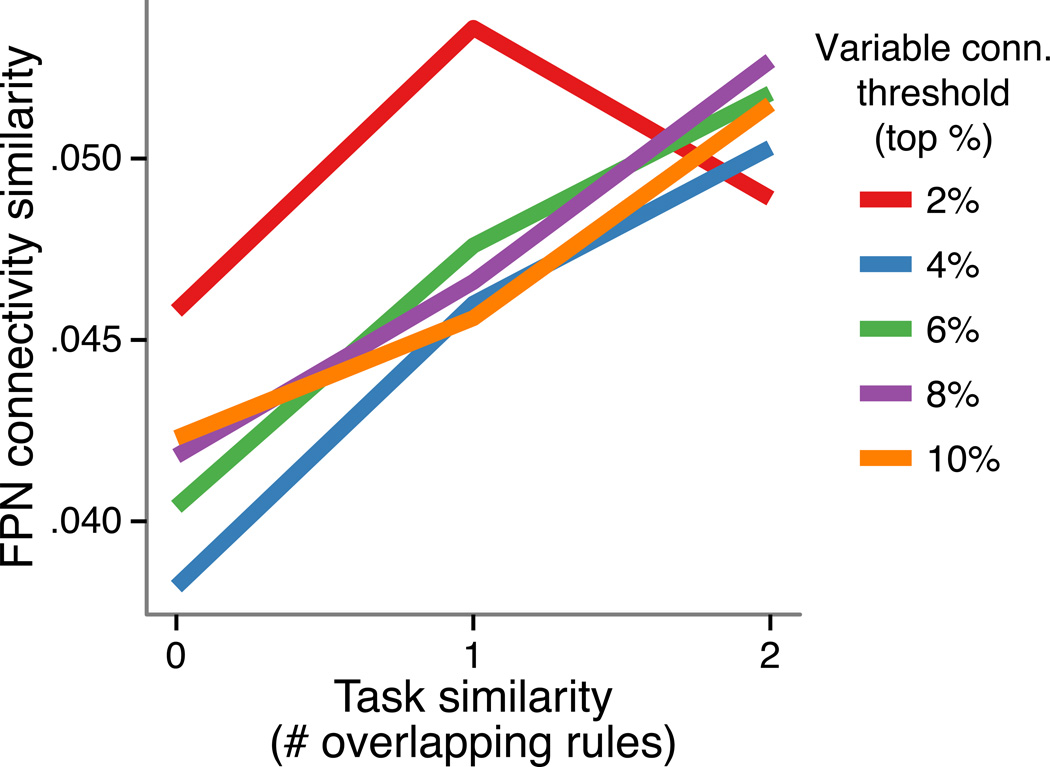
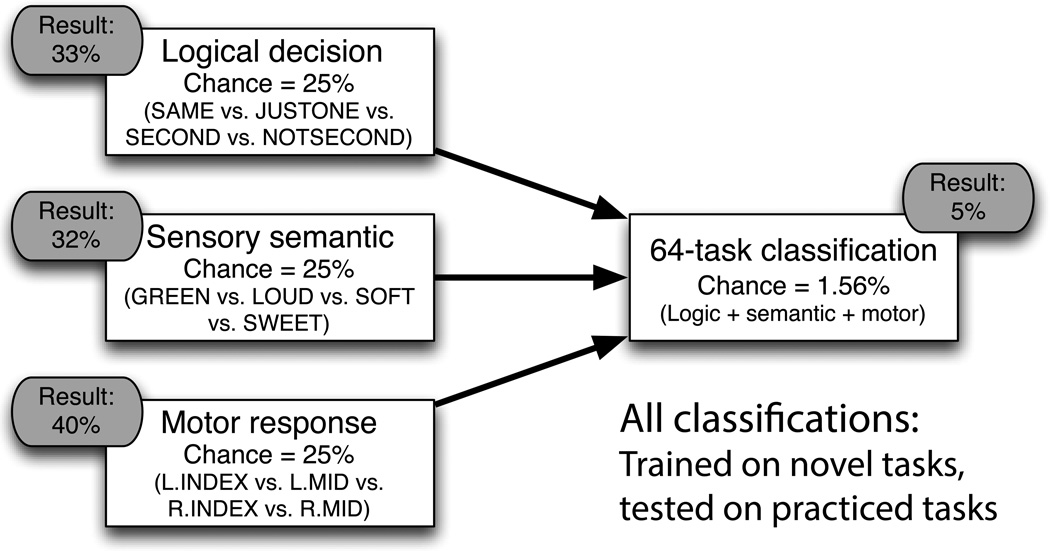
Extensive evidence suggests that the human ability to adaptively implement a wide variety of tasks is preferentially a result of the operation of a fronto-parietal brain network (FPN). We hypothesized that this network's adaptability is made possible by flexible hubs: brain regions that rapidly update their pattern of global functional connectivity according to task demands. Using recent advances in characterizing brain network organization and dynamics, we identified mechanisms consistent with the flexible hub theory. We found that the FPN's brain-wide functional connectivity pattern shifted more than those of other networks across a variety of task states and that these connectivity patterns could be used to identify the current task. Furthermore, these patterns were consistent across practiced and novel tasks, suggesting that reuse of flexible hub connectivity patterns facilitates adaptive (novel) task performance. Together, these findings support a central role for fronto-parietal flexible hubs in cognitive control and adaptive implementation of task demands.
Figures
Comment in
-
Fronto-parietal network: flexible hub of cognitive control.Trends Cogn Sci. 2013 Dec;17(12):602-3. doi: 10.1016/j.tics.2013.10.001. Epub 2013 Oct 12. Trends Cogn Sci. 2013. PMID: 24129332 Free PMC article.
References
-
- Duncan J. The multiple-demand (MD) system of the primate brain: mental programs for intelligent behaviour. Trends Cogn Sci (Regul Ed) 2010;14:172–179. - PubMed
-
- Cole MW, Schneider W. The cognitive control network: Integrated cortical regions with dissociable functions. NeuroImage. 2007;37:343–360. - PubMed
Publication types
MeSH terms
Substances
Grants and funding
LinkOut - more resources
Full Text Sources
Other Literature Sources
