


Inflammation and thrombosis in cardiovascular disease
- PMID: 23892572
- PMCID: PMC4086917
- DOI: 10.1097/MOH.0b013e328364219d
Inflammation and thrombosis in cardiovascular disease
Abstract
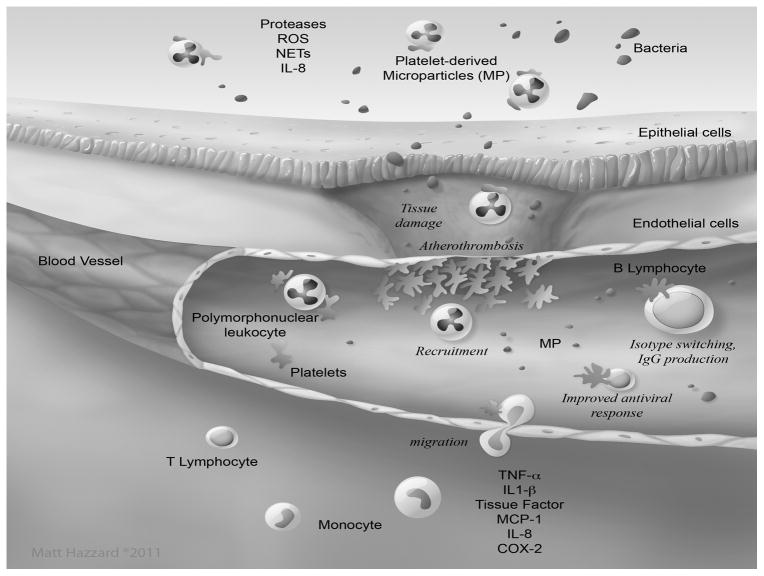
Purpose of review: This article will summarize recent observations that provide mechanistic insight into the molecular and cellular links between inflammation and thrombosis in the context of cardiovascular and other thromboinflammatory disease states.
Recent findings: Several disease conditions are characterized by a thromboinflammatory state in which interactions of blood cells and components with the vascular wall perpetuate both thrombotic and inflammatory pathways. Targeting these pathways may be of benefit in inflammatory conditions and cardiovascular disease.
Summary: Ongoing clinical trials should provide additional insight into the hypothesis that the thromboinflammatory state contributes to adverse clinical outcomes.
Conflict of interest statement
The authors report no conflicts of interest.
Figures
References
-
- Smyth SS, McEver RP, Weyrich AS, et al. Platelet functions beyond hemostasis. Journal of thrombosis and haemostasis: JTH. 2009;7:1759–1766. - PubMed
-
- Eltzschig HK, Sitkovsky MV, Robson SC. Purinergic signaling during inflammation. The New England journal of medicine. 2013;368:1260. This article reviews the role of ATP and ADP in inflammation. - PubMed
-
- Duerschmied D, Suidan GL, Demers M, et al. Platelet serotonin promotes the recruitment of neutrophils to sites of acute inflammation in mice. Blood. 2013;121:1008–1015. This work demonstrated the serotonin released from platelet dense granules promotes neutrophil rolling and recruitment along inflammed endothelium. - PMC - PubMed
Publication types
MeSH terms
Substances
Grants and funding
LinkOut - more resources
Full Text Sources
Other Literature Sources
Medical
