


Biological soliton in multicellular movement
- PMID: 23893301
- PMCID: PMC3725511
- DOI: 10.1038/srep02272
Biological soliton in multicellular movement
Abstract
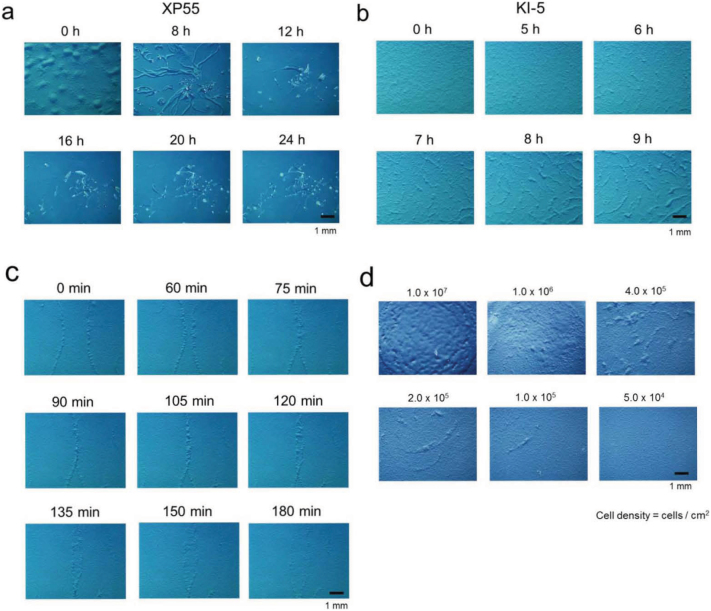
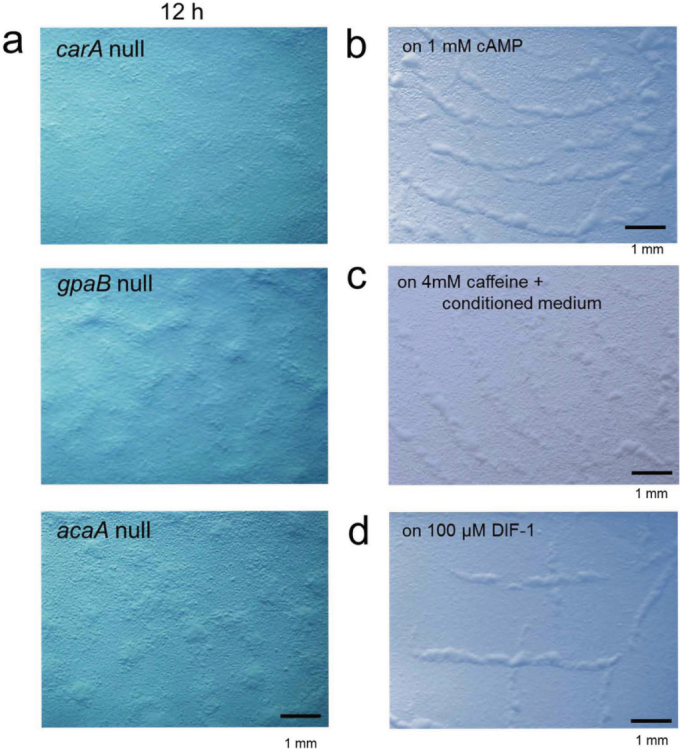
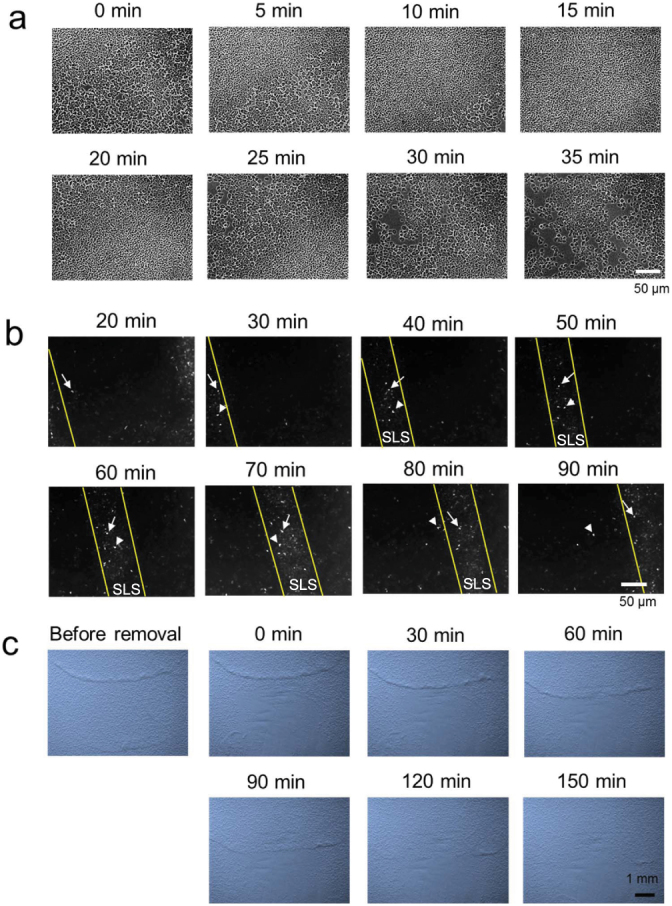
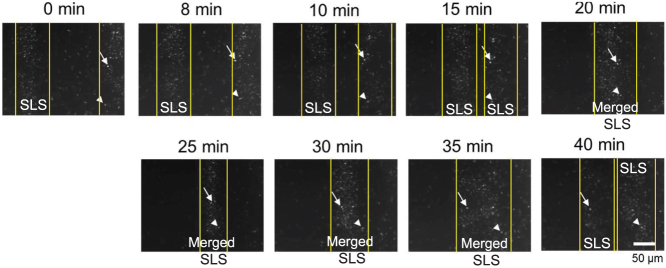
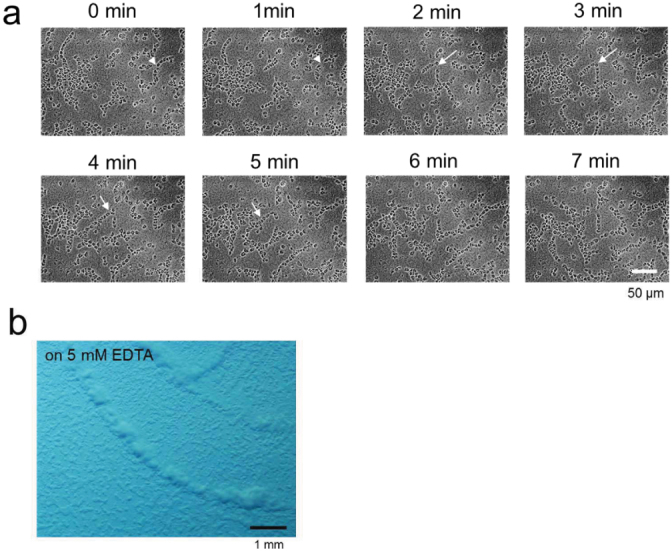
Solitons have been observed in various physical phenomena. Here, we show that the distinct characteristics of solitons are present in the mass cell movement of non-chemotactic mutants of the cellular slime mould Dictyostelium discoideum. During starvation, D. discoideum forms multicellular structures that differentiate into spore or stalk cells and, eventually, a fruiting body. Non-chemotactic mutant cells do not form multicellular structures; however, they do undergo mass cell movement in the form of a pulsatile soliton-like structure (SLS). We also found that SLS induction is mediated by adhesive cell-cell interactions. These observations provide novel insights into the mechanisms of biological solitons in multicellular movement.
Figures
References
-
- Lakshmanan M. Solitons, tsunamis and oceanographical applications of. in Extreme Environmental Events (ed Meyers, R. A.) 873–888 Springer, (2011).
-
- Hasegawa A. An historical review of application of optical solitons for high speed communications. Chaos 10, 475–485 (2000). - PubMed
-
- Sinkala Z. Soliton/exciton transport in proteins. J. Theor. Biol. 241, 919–927 (2006). - PubMed
-
- Yakushevich L. V. Is DNA a nonlinear dynamical system where solitary conformational waves are possible? J. Biosci. 26, 305–313 (2001). - PubMed
MeSH terms
Substances
LinkOut - more resources
Full Text Sources
Other Literature Sources
Molecular Biology Databases
