


Proteogenomic analysis of a thermophilic bacterial consortium adapted to deconstruct switchgrass
- PMID: 23894306
- PMCID: PMC3716776
- DOI: 10.1371/journal.pone.0068465
Proteogenomic analysis of a thermophilic bacterial consortium adapted to deconstruct switchgrass
Abstract
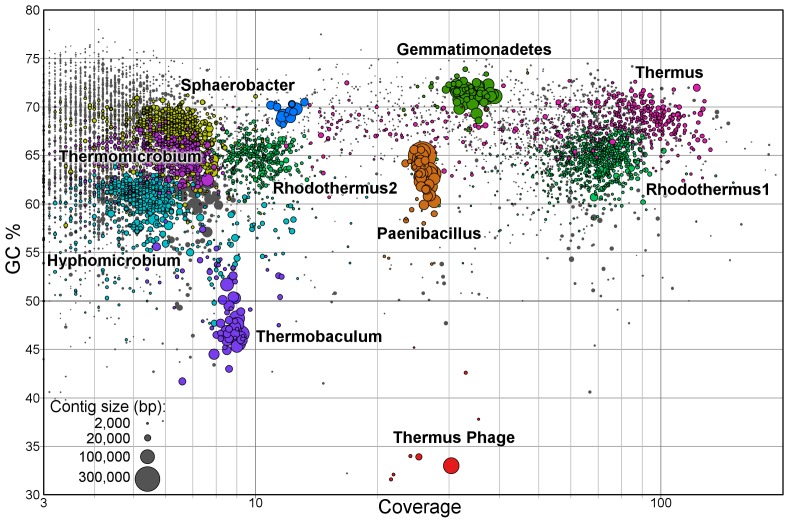
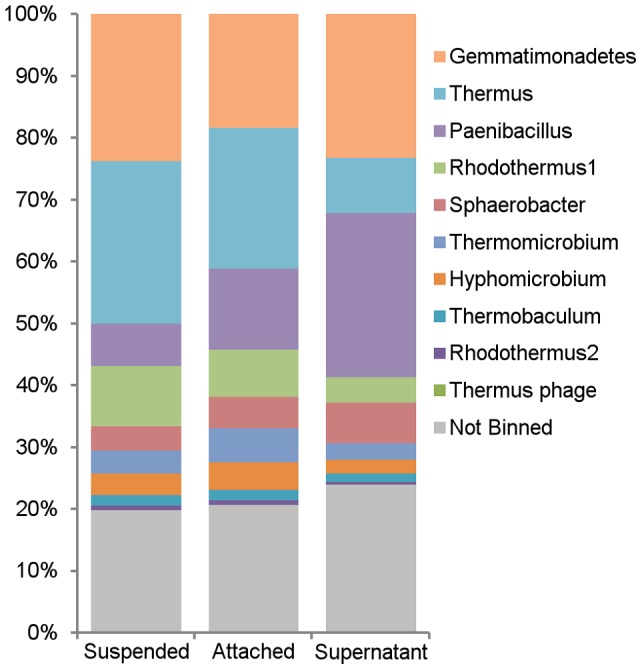
Thermophilic bacteria are a potential source of enzymes for the deconstruction of lignocellulosic biomass. However, the complement of proteins used to deconstruct biomass and the specific roles of different microbial groups in thermophilic biomass deconstruction are not well-explored. Here we report on the metagenomic and proteogenomic analyses of a compost-derived bacterial consortium adapted to switchgrass at elevated temperature with high levels of glycoside hydrolase activities. Near-complete genomes were reconstructed for the most abundant populations, which included composite genomes for populations closely related to sequenced strains of Thermus thermophilus and Rhodothermus marinus, and for novel populations that are related to thermophilic Paenibacilli and an uncultivated subdivision of the little-studied Gemmatimonadetes phylum. Partial genomes were also reconstructed for a number of lower abundance thermophilic Chloroflexi populations. Identification of genes for lignocellulose processing and metabolic reconstructions suggested Rhodothermus, Paenibacillus and Gemmatimonadetes as key groups for deconstructing biomass, and Thermus as a group that may primarily metabolize low molecular weight compounds. Mass spectrometry-based proteomic analysis of the consortium was used to identify >3000 proteins in fractionated samples from the cultures, and confirmed the importance of Paenibacillus and Gemmatimonadetes to biomass deconstruction. These studies also indicate that there are unexplored proteins with important roles in bacterial lignocellulose deconstruction.
Conflict of interest statement
Figures
References
-
- Blanch HW, Adams PD, Andrews-cramer KM, Frommer WB, Simmons BA, et al. (2008) Addressing the need for alternative transportation fuels: The Joint BioEnergy Institute. ACS Chem Biol 3: 17–20. - PubMed
-
- Simmons BA, Loque D, Blanch HW (2008) Next-generation biomass feedstocks for biofuel production. Genome biology 9: 242 doi:10.1186/gb-2008-9-12-242 - DOI - PMC - PubMed
-
- Lynd LR, Weimer PJ, Van Zyl WH, Pretorius IS (2002) Microbial cellulose utilization: fundamentals and biotechnology. Microbiology and molecular biology reviews 66: 506 doi:10.1128/MMBR.66.3.506 - DOI - PMC - PubMed
-
- Bouws H, Wattenberg A, Zorn H (2008) Fungal secretomes–nature's toolbox for white biotechnology. Applied microbiology and biotechnology 80: 381–388 doi:10.1007/s00253-008-1572-5 - DOI - PubMed
-
- Datta S, Holmes B, Park JI, Chen Z, Dibble DC, et al. (2010) Ionic liquid tolerant hyperthermophilic cellulases for biomass pretreatment and hydrolysis. Green Chemistry 12: 338 doi:10.1039/b916564a - DOI
Publication types
MeSH terms
Substances
LinkOut - more resources
Full Text Sources
Other Literature Sources
Molecular Biology Databases
