. 2013 Jul 19;8(7):e68638.
doi: 10.1371/journal.pone.0068638. Print 2013.

Proteolysis controls endogenous substance P levels

Affiliations

Proteolysis controls endogenous substance P levels

Andrew J Mitchell et al. PLoS One. .

Abstract

Substance P (SP) is a prototypical neuropeptide with roles in pain and inflammation. Numerous mechanisms regulate endogenous SP levels, including the differential expression of SP mRNA and the controlled secretion of SP from neurons. Proteolysis has long been suspected to regulate extracellular SP concentrations but data in support of this hypothesis is scarce. Here, we provide evidence that proteolysis controls SP levels in the spinal cord. Using peptidomics to detect and quantify endogenous SP fragments, we identify the primary SP cleavage site as the C-terminal side of the ninth residue of SP. If blocking this pathway increases SP levels, then proteolysis controls SP concentration. We performed a targeted chemical screen using spinal cord lysates as a proxy for the endogenous metabolic environment and identified GM6001 (galardin, ilomastat) as a potent inhibitor of the SP(1-9)-producing activity present in the tissue. Administration of GM6001 to mice results in a greater-than-three-fold increase in the spinal cord levels of SP, which validates the hypothesis that proteolysis controls physiological SP levels.


Conflict of interest statement

Competing Interests: The authors have declared that no competing interests exist.

Figures

Figure 1
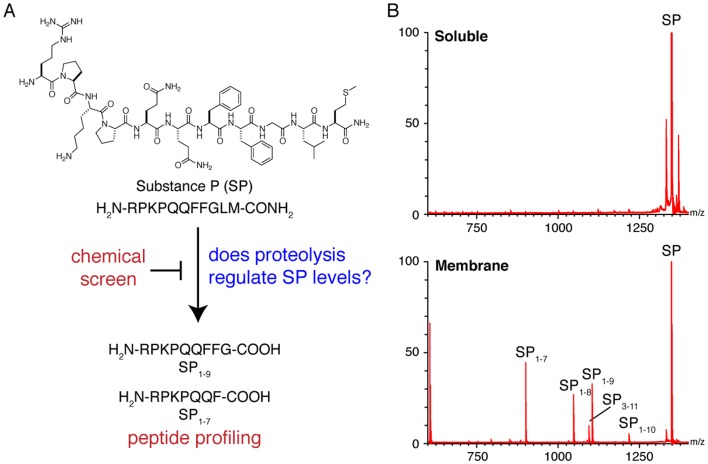
Figure 1. C-terminal processing is the primary mode of SP degradation.
A) An integrated approach that combines chemical screening and peptide profiling provides a new strategy to determine whether proteolysis plays a role in the regulation of endogenous SP levels. B) Initial experiments begin in tissue lysates and the data clearly shows that SP is processed by membrane proteases to generate a series of C-terminally truncated fragments, while the soluble proteome has little impact on SP processing.
Figure 2
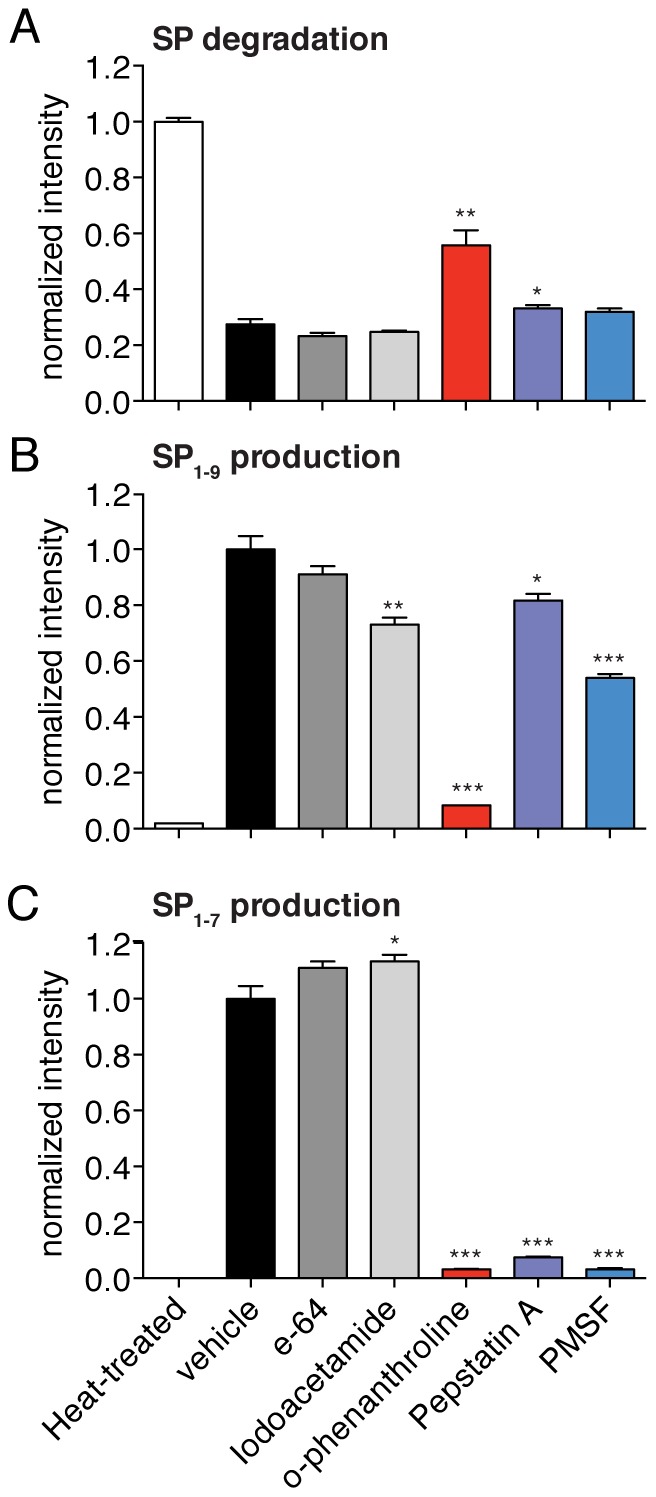
Figure 2. Metallopeptidase inhibitors potently block SP degradation in spinal cord lysates.
A) Different class-selective inhibitors were tested for their ability to slow SP degradation in spinal cord membrane lysates. The most effective compound at inhibiting SP degradation in this assay is O-phenanthroline, a metalloprotease inhibitor. B) O-phenanthroline was also the most potent inhibitor of SP1–9 production in these experiments. C) Multiple class-selective inhibitors regulate SP1-7 production including O-phenanthroline, pepstatin A and PMSF. (Statistical significance calculated by a Student's t-test; p-value <0.05, *; p-value <0.01, **; p-value <0.001, ***, N = 4).
Figure 3
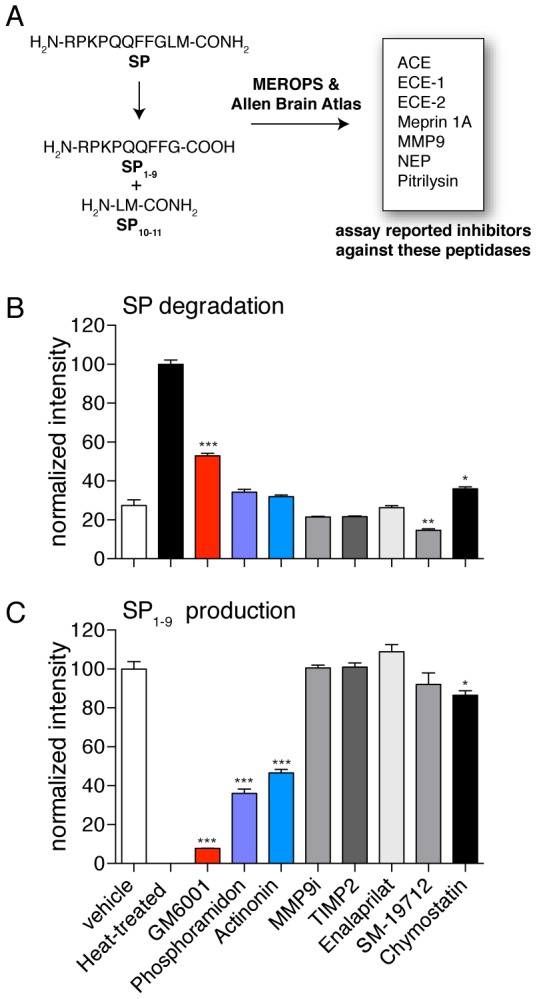
Figure 3. GM6001 is significantly more effective than other metallopeptidase inhibitors at preventing SP degradation and conversion of SP to SP1–9.
A) Utilizing the MEROPS and Allen Brain Map databases a number of candidate metallopeptidases in the nervous system that are capable of cleaving SP to produce SP1–9 are identified. Inhibitors against these peptidases were then used in lysates to evaluate their affect on SP degradation and SP1–9 production. B) The matrix metalloprotease (MMP) inhibitor GM6001 was the most effective compound at preventing SP degradation. C) GM6001 is also the best inhibitor of SP1–9 production. (Statistical significance calculated by a Student's t-test; p-value <0.05, *; p-value <0.01, **; p-value <0.001, ***, N = 4).
Figure 4
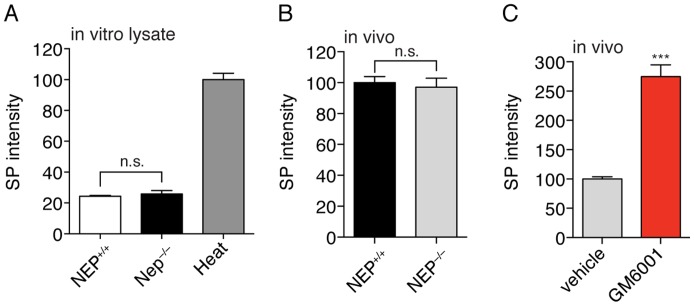
Figure 4. SP is regulated by proteolysis but not by NEP.
A) Phosphoramidon slows SP1–9 production in tissue lysates, which suggests that NEP might have a role in SP processing. Experiments in NEP+/+ and NEP–/– spinal cord lysates reveals no significant difference in SP degradation. B) Likewise, no difference in endogenous SP levels is observed in spinal cords from NEP+/+ and NEP–/– mice. C) Acute treatment of mice with GM6001 results in a 3-fold elevation of SP in the spinal cord to reveal a GM6001-sensitive pathway for SP regulation. (Statistical significance calculated by a Student's t-test; p-value <0.001, ***, N = 4).

References

    1. Ribeiro-da-Silva A, Hokfelt T (2000) Neuroanatomical localisation of substance P in the CNS and sensory neurons. Neuropeptides 34: 256–271. - PubMed
    1. Otsuka M, Yoshioka K (1993) Neurotransmitter functions of mammalian tachykinins. Physiological Reviews 73: 229–308. - PubMed
    1. Hall ME, Stewart JM (1983) Substance P and antinociception. Peptides 4: 31–35. - PubMed
    1. Hall ME, Stewart JM (1983) Substance P and behavior: opposite effects of N-terminal and C-terminal fragments. Peptides 4: 763–768. - PubMed
    1. Yeomans D, Proudfit H (1992) Antinociception induced by microinjection of substance P into the A7 catecholamine cell group in the rat. Neuroscience 49: 681–691. - PubMed

Publication types

LinkOut - more resources