


National surveillance study on carbapenem non-susceptible Klebsiella pneumoniae in Taiwan: the emergence and rapid dissemination of KPC-2 carbapenemase
- PMID: 23894478
- PMCID: PMC3722148
- DOI: 10.1371/journal.pone.0069428
National surveillance study on carbapenem non-susceptible Klebsiella pneumoniae in Taiwan: the emergence and rapid dissemination of KPC-2 carbapenemase
Abstract
Objectives: The global spread and increasing incidence of carbapenem non-susceptible Klebsiella pneumoniae (CnSKP) has made its treatment difficult, increasing the mortality. To establish nationwide data on CnSKP spread and carbapenem-resistance mechanisms, we conducted a national surveillance study in Taiwanese hospitals.
Methods: We collected 100 and 247 CnSKP isolates in 2010 and 2012, respectively. The tests performed included antibiotic susceptibility tests; detection of carbapenemase, extended-spectrum β-lactamases (ESBL), and AmpC β-lactamases genes; outer membrane porin profiles; and genetic relationship with pulsed-field gel electrophoresis and multilocus sequence type.
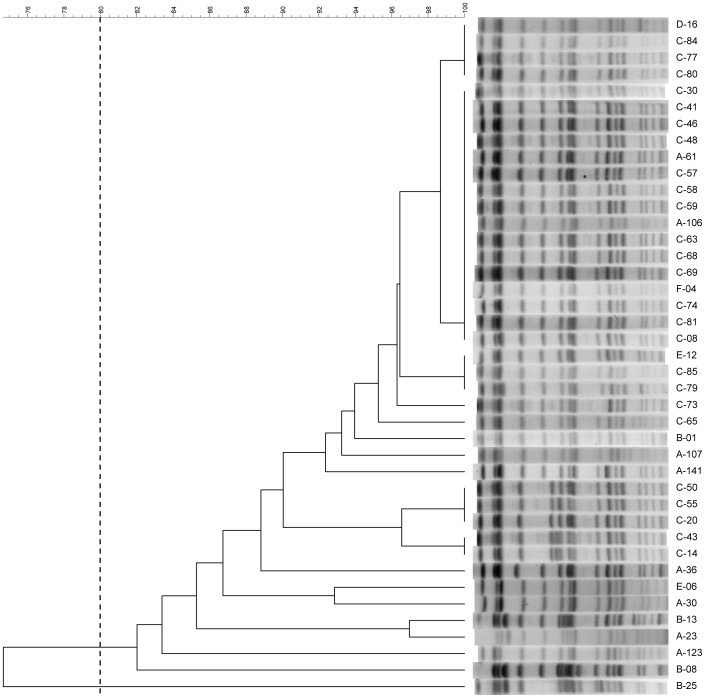
Results: The resistance rate of CnSKP isolates to cefazolin, cefotaxime, cefoxitin, ceftazidime, and ciprofloxacin was over 90%. Susceptibility rate to tigecycline and colistin in 2010 was 91.0% and 83.0%, respectively; in 2012, it was 91.9% and 87.9%, respectively. In 2010, carbapenemase genes were detected in only 6.0% of isolates (4 bla IMP-8 and 2 bla VIM-1). In 2012, carbapenemase genes were detected in 22.3% of isolates (41 bla KPC-2, 7 bla VIM-1, 6 bla IMP-8, and 1 bla NDM-1). More than 95% of isolates exhibited either OmpK35 or OmpK36 porin loss or both. Impermeability due to porin mutation coupled with AmpC β-lactamases or ESBLs were major carbapenem-resistance mechanisms. Among 41 KPC-2-producing K. pneumoniae isolates, all were ST11 with 1 major pulsotype.
Conclusions: In 2010 and 2012, the major mechanisms of CnSKP in Taiwan were the concomitance of AmpC with OmpK35/36 loss. KPC-2-KP dissemination with the same ST11 were observed in 2012. The emergence and rapid spread of KPC-2-KP is becoming an endemic problem in Taiwan. The identification of NDM-1 K. pneumoniae case is alarming.
Conflict of interest statement
Figures
References
-
- Siu LK, Yeh KM, Lin JC, Fung CP, Chang FY (2012) Klebsiella pneumoniae liver abscess: a new invasive syndrome. Lancet Infect Dis 12: 881–887. - PubMed
-
- Patel G, Huprikar S, Factor SH, Jenkins SG, Calfee DP (2008) Outcomes of carbapenem-resistant Klebsiella pneumoniae infection and the impact of antimicrobial and adjunctive therapies. Infect Control Hosp Epidemiol 29: 1099–1106. - PubMed
-
- Annual report of Taiwan Nosocomial Infection Surveillance Systems, 2011. Available: http://www.kmuh.org.tw/info/admin/actboard/data/20125112222508.pdf. Accessed 2013 Apr 06.
Publication types
MeSH terms
Substances
LinkOut - more resources
Full Text Sources
Other Literature Sources
Medical
Molecular Biology Databases
Miscellaneous
