


Testing two models describing how methylome-wide studies in blood are informative for psychiatric conditions
- PMID: 23895651
- PMCID: PMC3904748
- DOI: 10.2217/epi.13.36
Testing two models describing how methylome-wide studies in blood are informative for psychiatric conditions
Abstract
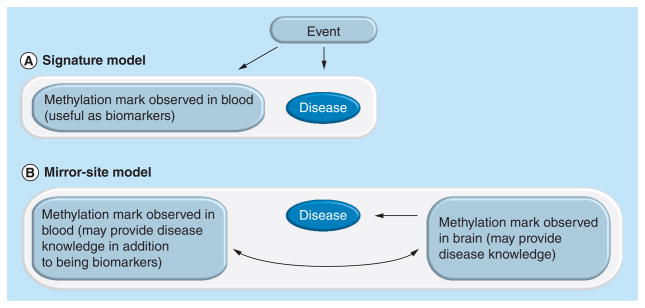
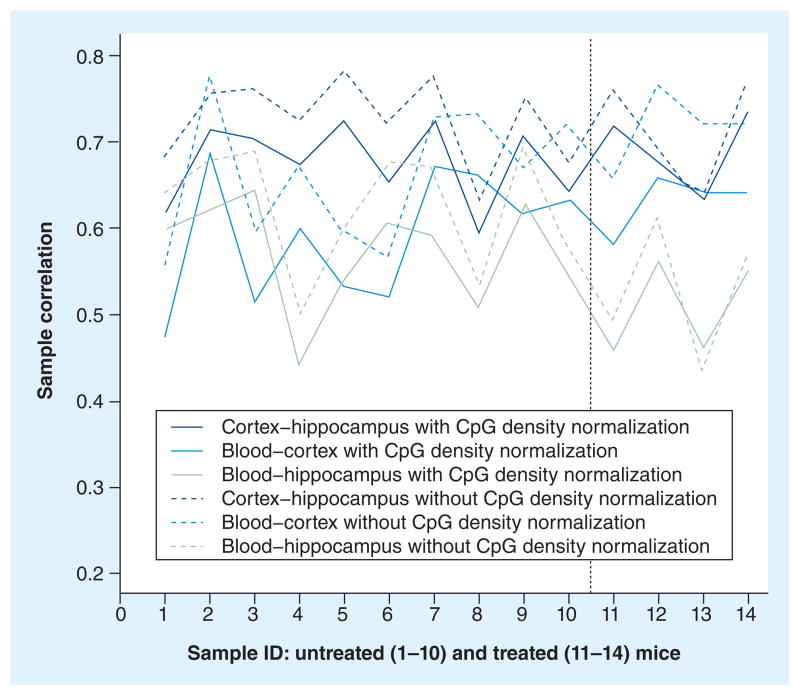
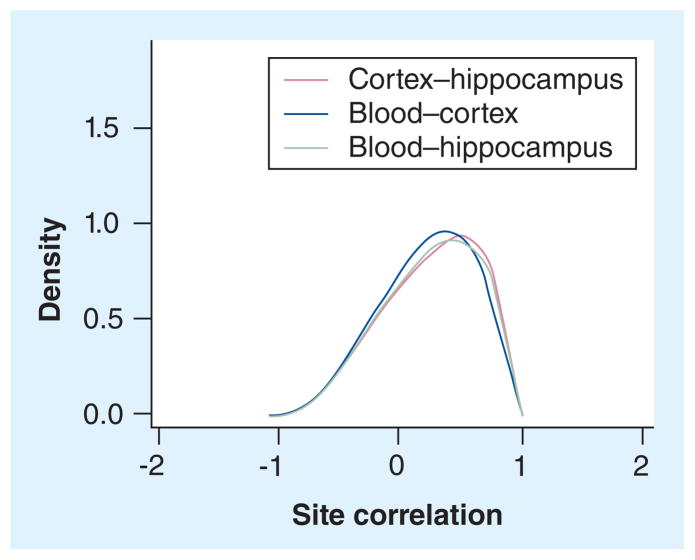
Aim: As the primary relevant tissue (brain) for psychiatric disorders is commonly not available, we aimed to investigate whether blood can be used as a proxy in methylation studies on the basis of two models. In the 'signature' model methylation-disease associations occur because a disease-causing factor affected methylation in the blood. In the 'mirror-site' model the methylation status in the blood is correlated with the corresponding disease-causing site in the brain. MATERIALS, METHODS & RESULTS: Methyl-binding domain enrichment and next-generation sequencing of the blood, cortex and hippocampus from four haloperidol-treated and ten untreated C57BL/6 mice revealed high levels of correlation in methylation across tissues. Despite the treatment inducing a large number of methylation changes, this correlation remains high.
Conclusion: Our results show that, consistent with the signature model, factors that affect brain processes (i.e., haloperidol) leave biomarker signatures in the blood and, consistent with the mirror-site model, the methylation status of many sites in the blood mirror those in the brain.
Figures
References
-
- Laird PW. Principles and challenges of genomewide DNA methylation analysis. Nat Rev Genet. 2010;11(3):191–203. - PubMed
-
- Reik W, Dean W, Walter J. Epigenetic reprogramming in mammalian development. Science. 2001;293(5532):1089–1093. - PubMed
-
- Petronis A. Epigenetics as a unifying principle in the aetiology of complex traits and diseases. Nature. 2010;465(7299):721–727. - PubMed
-
- Feinberg AP. Phenotypic plasticity and the epigenetics of human disease. Nature. 2007;447(7143):433–440. - PubMed
Website
-
- University of California. Santa Cruz genome browser. http://genome.ucsc.edu. - PubMed
Publication types
MeSH terms
Substances
Grants and funding
LinkOut - more resources
Full Text Sources
Other Literature Sources
Research Materials
