Review
. 2013 Aug;5(4):439-52.
doi: 10.2217/epi.13.37.

Combining genomic and proteomic approaches for epigenetics research

Affiliations
Review

Combining genomic and proteomic approaches for epigenetics research

Yumiao Han et al. Epigenomics. 2013 Aug.

Abstract

Epigenetics is the study of changes in gene expression or cellular phenotype that do not change the DNA sequence. In this review, current methods, both genomic and proteomic, associated with epigenetics research are discussed. Among them, chromatin immunoprecipitation (ChIP) followed by sequencing and other ChIP-based techniques are powerful techniques for genome-wide profiling of DNA-binding proteins, histone post-translational modifications or nucleosome positions. However, mass spectrometry-based proteomics is increasingly being used in functional biological studies and has proved to be an indispensable tool to characterize histone modifications, as well as DNA-protein and protein-protein interactions. With the development of genomic and proteomic approaches, combination of ChIP and mass spectrometry has the potential to expand our knowledge of epigenetics research to a higher level.


Figures
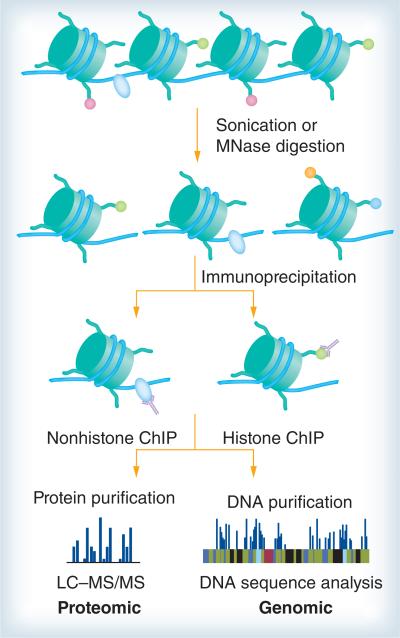
Figure 1
Figure 1. Combination of chromatin immunoprecipitation and mass spectrometry
After cell lysis, the chromatin is sheared by sonication or enzymatic digestion, and specific DNA sequences associated with a particular protein are subjected to precipitation with specfic antibodies. Subsequently, the purified DNA products are analyzed by various molecular techniques to determine the genomic localization of DNA. In addition, proteins are separated by affinity purification, then analyzed by MS. ChIP: Chromatin immunoprecipitation; LC-MS: Liquid chromotography-mass spectrometry; MS: Mass spectrometry.
Figure 2
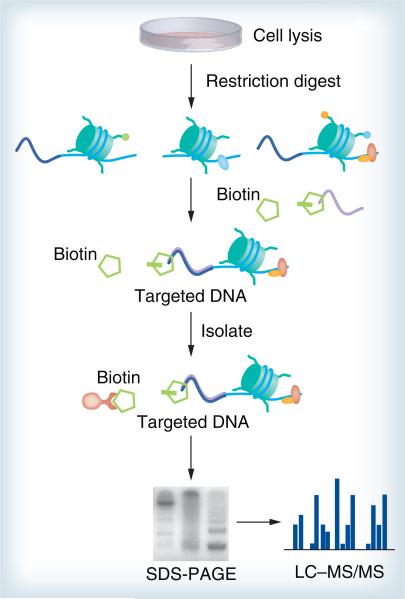
Figure 2. Proteomics of isolated chromatin
After cell lysis and restriction digestion, the targeted loci are captured by primers that bind to a specific genomic region. An enzymatic step incorporates biotin labels only to chromosomal fragments that contain the targeted sequence and streptavidin-coated magnetic particles isolate the targeted chromatin. Proteins associated with the isolated regions are separated by SDS-PAGE and then analyzed by MS. LC–MS: Liquid chromotography–mass spectrometry; MS: Mass spectrometry.
Figure 3
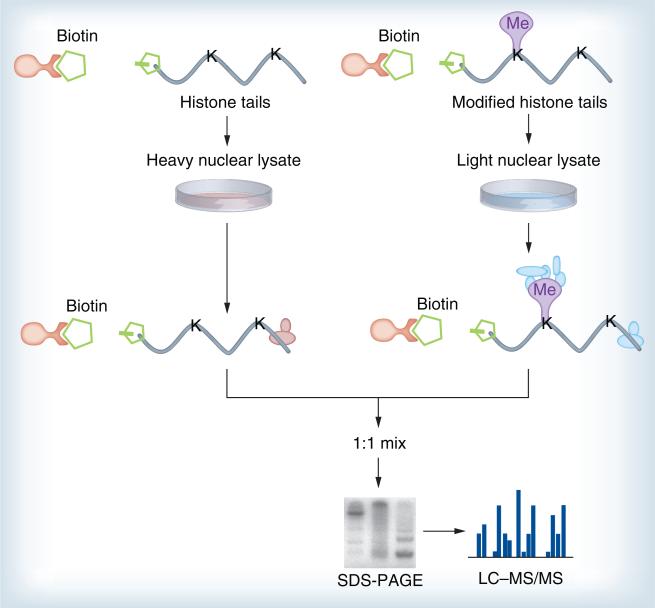
Figure 3. Affinity purification of histone tails
Histone tails can be used as baits for affinity purification, enabling the identification of proteins binding to particular histone modifications. The unmodified or modified peptides were immobilized on beads and treated with nuclear extracts from metabolically labeled cells. The beads were then washed to remove nonspecifically associated proteins and pooled. Associated proteins were eluted and mixed in a 1:1 ratio, resolved with SDS-PAGE gel, then the entire lane was in-gel digested and analyzed by LC–MS/MS. LC–MS: Liquid chromotography–mass spectrometry; MS: Mass spectrometry.
Figure 4
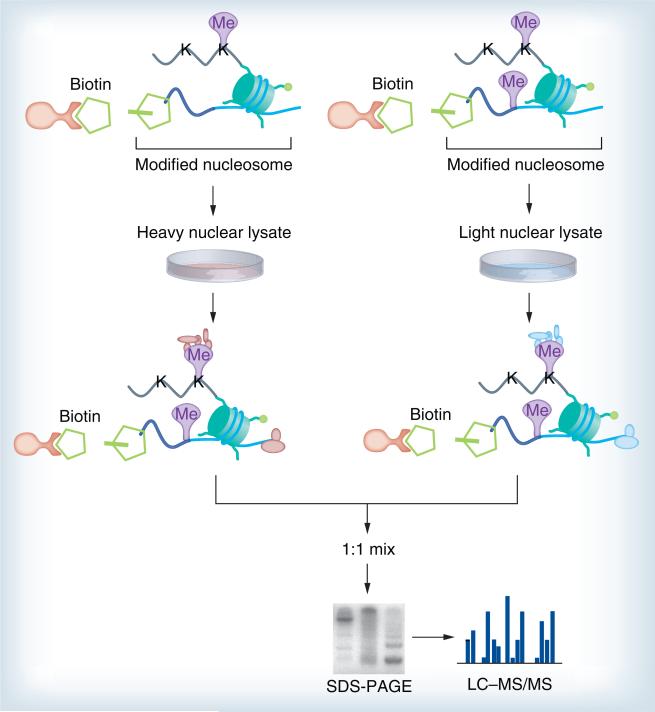
Figure 4. Stable isotope labeling by amino acids in cell culture nucleosome affinity purification
First, chemically modified histones are prepared, assembled into nucleosomes with biotinylated DNA and finally immobilized on streptavidin beads. The recombinant nucleosomes containing methylated or unmethylated DNA are treated with nuclear extracts from metabolically labeled cells. The beads are washed and combined, and the bound proteins are eluted and mixed in a 1:1 ratio, resolved with SDS-PAGE gel, in-gel digested and analyzed by MS. LC–MS: Liquid chromotography–mass spectrometry; MS: Mass spectrometry.

References

    1. Esteller M. Epigenetics in cancer. N. Engl. J. Med. 2008;358:1148–1159. - PubMed
    1. Berger SL, Kouzarides T, Shiekhattar R, Shilatifard A. An operational definition of epigenetics. Gene Dev. 2009;23:781–783. - PMC - PubMed
    1. Suzuki MM, Bird A. DNA methylation landscapes: provocative insights from epigenomics. Nat. Rev. Genet. 2008;9:465–476. - PubMed
    1. Goldberg AD, Allis CD, Bernstein E. Epigenetics: a landscape takes shape. Cell. 2007;128:635. - PubMed
    1. Nakao M. Epigenetics: interaction of DNA methylation and chromatin. Gene. 2001;278:25–31. - PubMed

Publication types

LinkOut - more resources