


Prehospital stroke care: new prospects for treatment and clinical research
- PMID: 23897876
- PMCID: PMC3776535
- DOI: 10.1212/WNL.0b013e31829e0fdd
Prehospital stroke care: new prospects for treatment and clinical research
Abstract
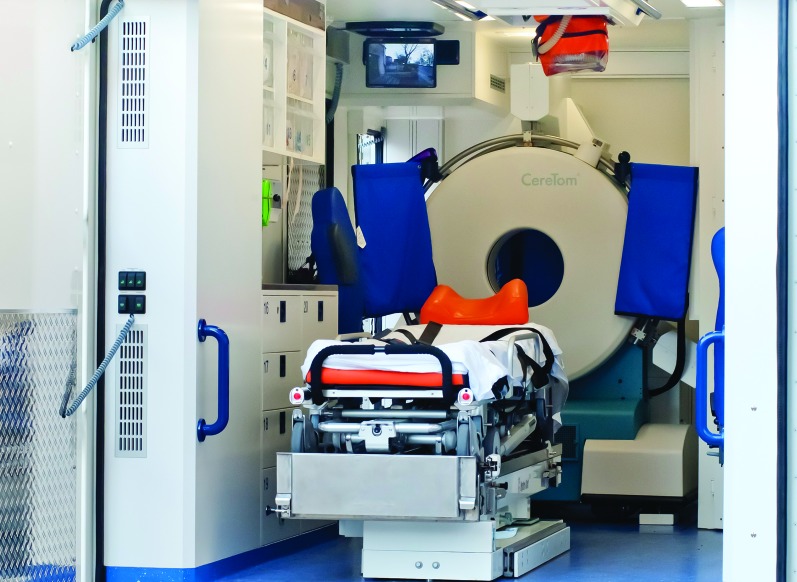
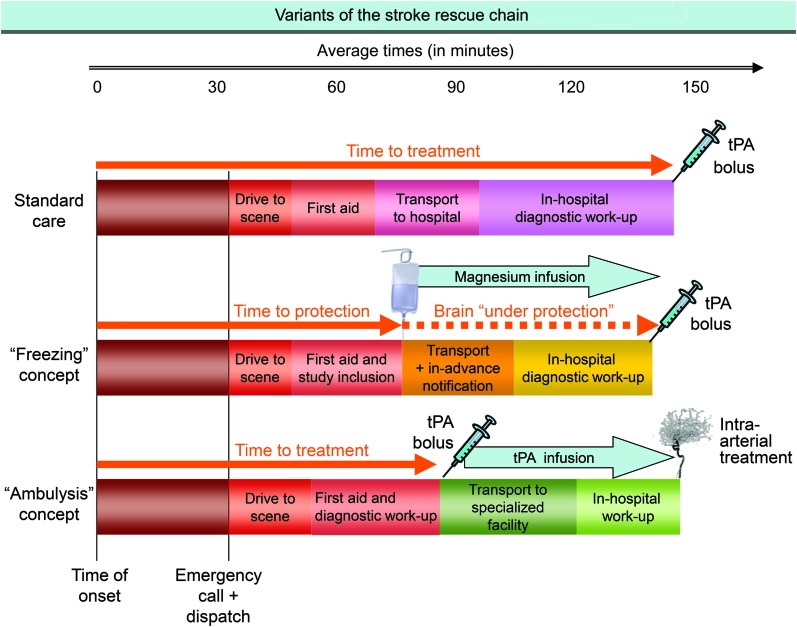
Brain cells die rapidly after stroke and any effective treatment must start as early as possible. In clinical routine, the tight time-outcome relationship continues to be the major limitation of therapeutic approaches: thrombolysis rates remain low across many countries, with most patients being treated at the late end of the therapeutic window. In addition, there is no neuroprotective therapy available, but some maintain that this concept may be valid if administered very early after stroke. Recent innovations have opened new perspectives for stroke diagnosis and treatment before the patient arrives at the hospital. These include stroke recognition by dispatchers and paramedics, mobile telemedicine for remote clinical examination and imaging, and integration of CT scanners and point-of-care laboratories in ambulances. Several clinical trials are now being performed in the prehospital setting testing prehospital delivery of neuroprotective, antihypertensive, and thrombolytic therapy. We hypothesize that these new approaches in prehospital stroke care will not only shorten time to treatment and improve outcome but will also facilitate hyperacute stroke research by increasing the number of study participants within an ultra-early time window. The potentials, pitfalls, and promises of advanced prehospital stroke care and research are discussed in this review.
Figures
References
-
- The National Institute of Neurological Disorders and Stroke rt-PA Stroke Study Group. Tissue plasminogen activator for acute ischemic stroke. N Engl J Med 1995;333:1581–1587 - PubMed
-
- Lees KR, Bluhmki E, von Kummer R, et al. Time to treatment with intravenous alteplase and outcome in stroke: an updated pooled analysis of ECASS, ATLANTIS, NINDS, and EPITHET trials. Lancet 2010;375:1695–1703 - PubMed
-
- Hacke W, Kaste M, Bluhmki E, et al. Thrombolysis with alteplase 3 to 4.5 hours after acute ischemic stroke. N Engl J Med 2008;359:1317–1329 - PubMed
-
- Leys D, Ringelstein EB, Kaste M, Hacke W. Facilities available in European hospitals treating stroke patients. Stroke 2007;38:2985–2991 - PubMed
Publication types
MeSH terms
LinkOut - more resources
Full Text Sources
Other Literature Sources
Medical
