. 2013 Jun;25(6):2341-55.
doi: 10.1105/tpc.113.112409. Epub 2013 Jun 28.

Natural variation in maize aphid resistance is associated with 2,4-dihydroxy-7-methoxy-1,4-benzoxazin-3-one glucoside methyltransferase activity

Affiliations

Natural variation in maize aphid resistance is associated with 2,4-dihydroxy-7-methoxy-1,4-benzoxazin-3-one glucoside methyltransferase activity

Lisa N Meihls et al. Plant Cell. 2013 Jun.

Abstract

Plants differ greatly in their susceptibility to insect herbivory, suggesting both local adaptation and resistance tradeoffs. We used maize (Zea mays) recombinant inbred lines to map a quantitative trait locus (QTL) for the maize leaf aphid (Rhopalosiphum maidis) susceptibility to maize Chromosome 1. Phytochemical analysis revealed that the same locus was also associated with high levels of 2-hydroxy-4,7-dimethoxy-1,4-benzoxazin-3-one glucoside (HDMBOA-Glc) and low levels of 2,4-dihydroxy-7-methoxy-1,4-benzoxazin-3-one glucoside (DIMBOA-Glc). In vitro enzyme assays with candidate genes from the region of the QTL identified three O-methyltransferases (Bx10a-c) that convert DIMBOA-Glc to HDMBOA-Glc. Variation in HDMBOA-Glc production was attributed to a natural CACTA family transposon insertion that inactivates Bx10c in maize lines with low HDMBOA-Glc accumulation. When tested with a population of 26 diverse maize inbred lines, R. maidis produced more progeny on those with high HDMBOA-Glc and low DIMBOA-Glc. Although HDMBOA-Glc was more toxic to R. maidis than DIMBOA-Glc in vitro, BX10c activity and the resulting decline of DIMBOA-Glc upon methylation to HDMBOA-Glc were associated with reduced callose deposition as an aphid defense response in vivo. Thus, a natural transposon insertion appears to mediate an ecologically relevant trade-off between the direct toxicity and defense-inducing properties of maize benzoxazinoids.


Figures
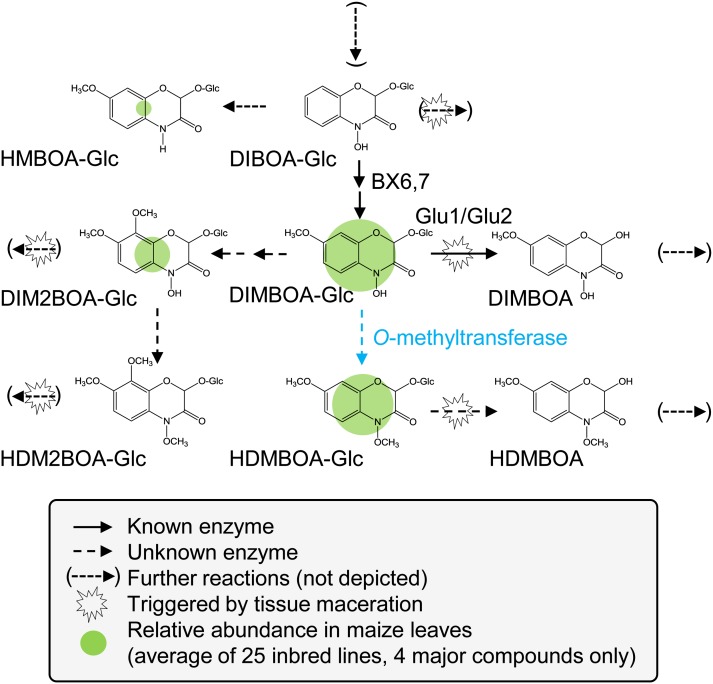
Figure 1.
Figure 1.
Selected Steps of Benzoxazinoid Metabolism in Maize. The major benzoxazinoids detected in the leaves of maize seedlings are DIMBOA-Glc, HDMBOA-Glc, DIM2BOA-Glc, and HMBOA-Glc. In contrast with DIMBOA-Glc, the biosynthetic steps leading to HDMBOA-Glc, DIM2BOA-Glc, and HMBOA-Glc are unknown. Upon tissue disruption by herbivores, the different glucosides are cleaved by β-glucosidases (Glu), leading to the release of active aglucones. The N-methoxyl group of HDMBOA decreases its stability and renders it more reactive than DIMBOA. [See online article for color version of this figure.]
Figure 2.
Figure 2.
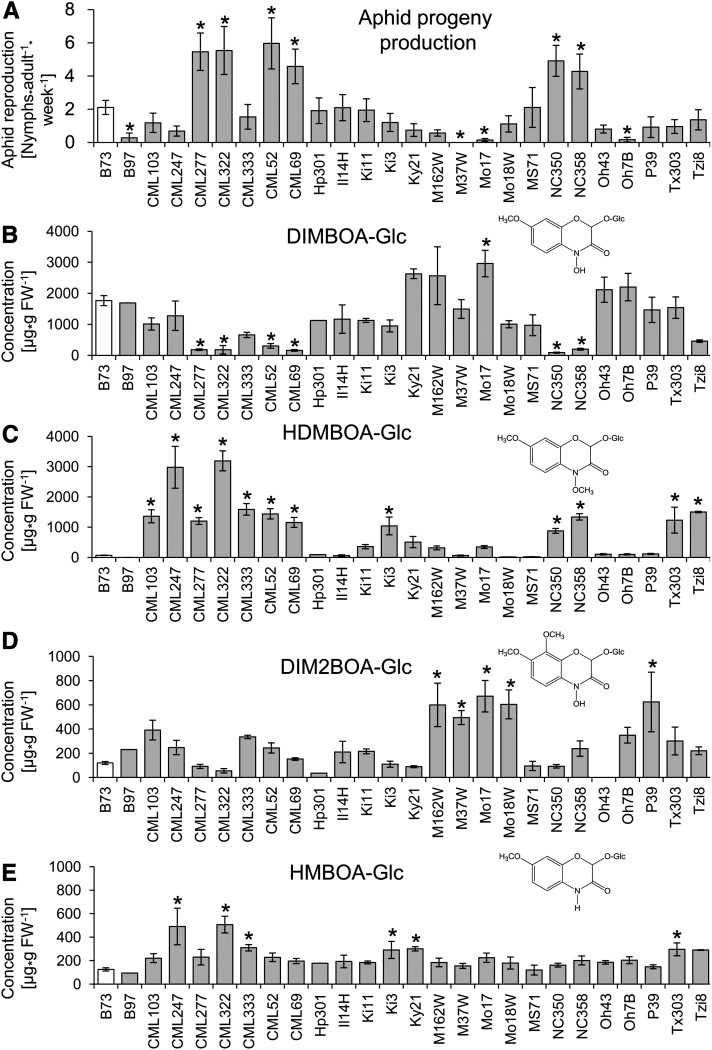
Aphid Reproduction on and Benzoxazinoid Content in Parental Lines of the Maize NAM Population. (A) The number of R. maidis progeny produced per adult aphid over 7 d is shown (mean ± se; n = 8; n = 18 for B73). Asterisks indicate significant differences relative to B73 (*P < 0.05, Dunnett’s test). (B) to (E) DIMBOA-Glc, HDMBOA-Glc, DIM2BOA-Glc, and HMBOA-Glc abundance (mean ± se; n = 3 to 7, with the exception of single measurements for B97 and Hp301, for which no statistical calculations were done). Asterisks indicate significant differences relative to B73 (*P < 0.05, Dunnett’s test). FW, fresh weight.
Figure 3.
Figure 3.
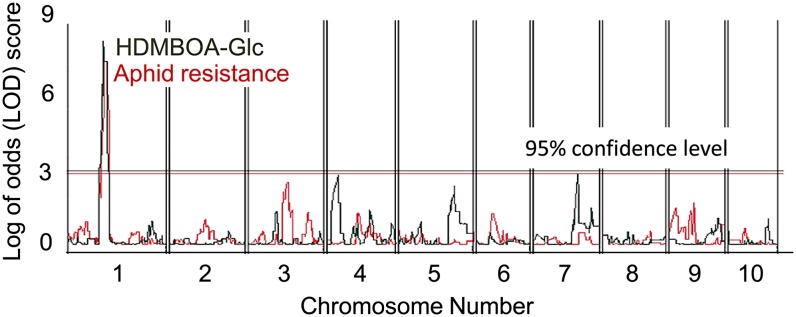
QTL for Aphid Resistance and HDMBOA-Glc Content Colocalize on Maize Chromosome 1 in the B73 × CML322 Recombinant Inbred Line Population. [See online article for color version of this figure.]
Figure 4.
Figure 4.
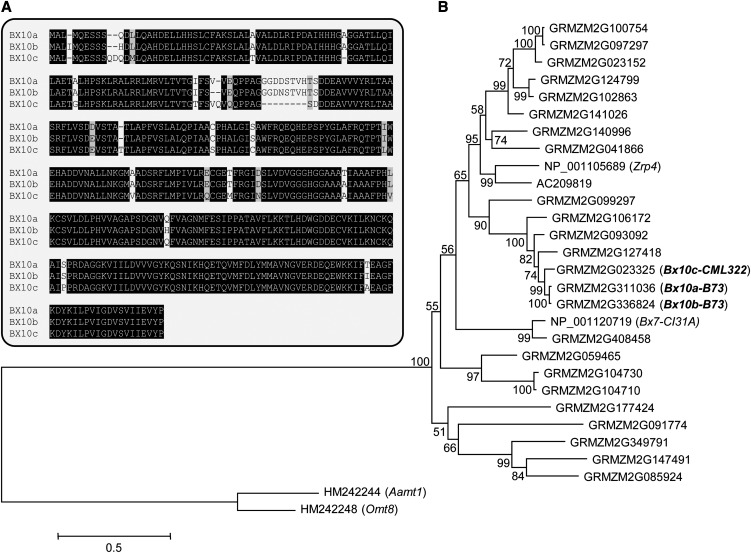
Sequence Alignment and Rooted Phylogenetic Tree with the Three Maize O-Methyltransferases Contained within the HDMBOA-Glc QTL. (A) Protein sequence alignment (ClustalW) of the three O-methyltransferase homologs GRMZM2G311036, GRMZM2G336824, and GRMZM2G023325 (Bx10a-c). (B) Rooted phylogenetic tree of putative maize Omt genes similar to Bx10a-c. The tree was inferred using the maximum likelihood method and n = 1000 replicates for bootstrapping. Bootstrap values are shown next to each node. The tree is drawn to scale, with branch lengths measured in the number of substitutions per site. The maize genes Aamt1 and Omt8 were used as an outgroup. Sequences used for the alignment are shown in Supplemental Data Set 1 online.
Figure 5.
Figure 5.
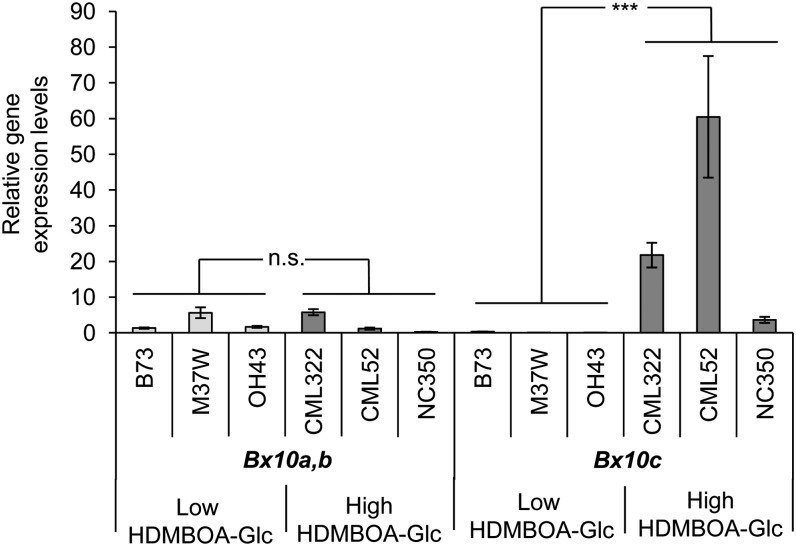
Bx10c Is Expressed in the High HDMBOA-Glc Lines CML322, CML52, and NC350 but Not in the Low HDMBOA-Glc Lines B73, M37W, and Oh43. Gene expression of uninfested plants was measured using qRT-PCR relative to actin (means ± se; n = 6). Asterisks indicate significant differences in expression levels between high and low HDMBOA-Glc genotypes (t test, ***P < 0.001; n.s., not significant).
Figure 6.
Figure 6.
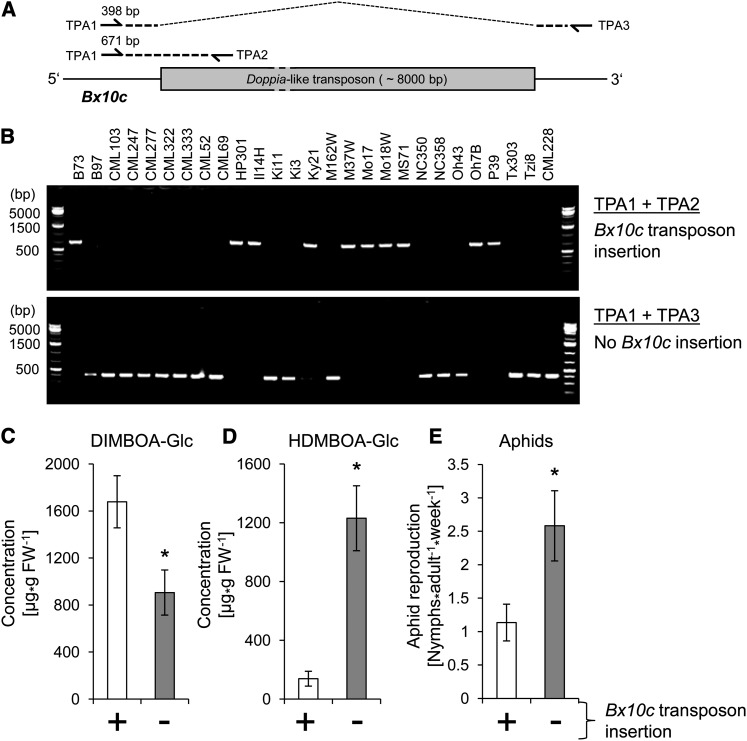
A Doppia-Like Transposon in Bx10c Is Associated with Reduced HDMBOA-Glc Production and Increased Aphid Resistance in the NAM Parental Lines. (A) Strategy for PCR analysis to amplify fragments that are specific for either the insertion or the deletion allele. (B) Detection of the transposon knockout and functional alleles of Bx10c by PCR using primers TPA1, TPA2, and TPA3 (described in Supplemental Table 2 online). (C) to (E) Comparison of DIMBOA-Glc content, HDMBOA-Glc content, and aphid reproduction in NAM parental lines, with and without the transposon insertion (mean ± se; n = 10 or 17). Asterisks indicate significant differences (*P < 0.05; two-tailed Student’s t test). FW, fresh weight.
Figure 7.
Figure 7.
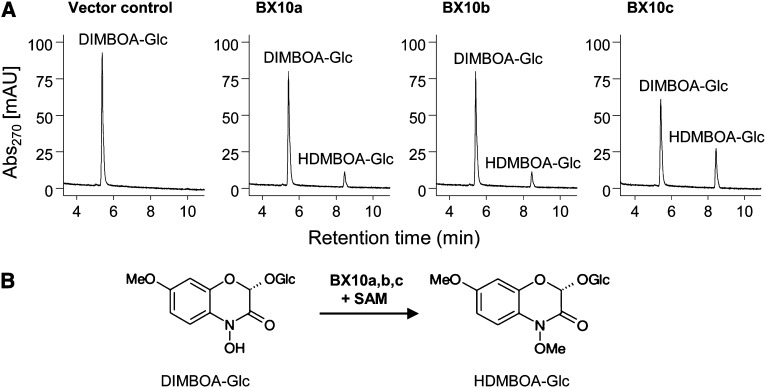
BX10a-c Are Functional DIMBOA-Glc O-Methyltransferases That Produce HDMBOA-Glc. (A) Equal amounts of purified recombinant BX10a, BX10b, and BX10c as well as a control without enzyme were incubated with the substrate DIMBOA-Glc and the cosubstrate S-adenosyl-l-Met. Products were extracted with methanol and analyzed by HPLC-UV. mAU: milli absorbance unit. (B) Schematic representation of the reaction catalyzed by BX10 in the presence of the cosubstrate S-adenosyl-l-Met (SAM).
Figure 8.
Figure 8.
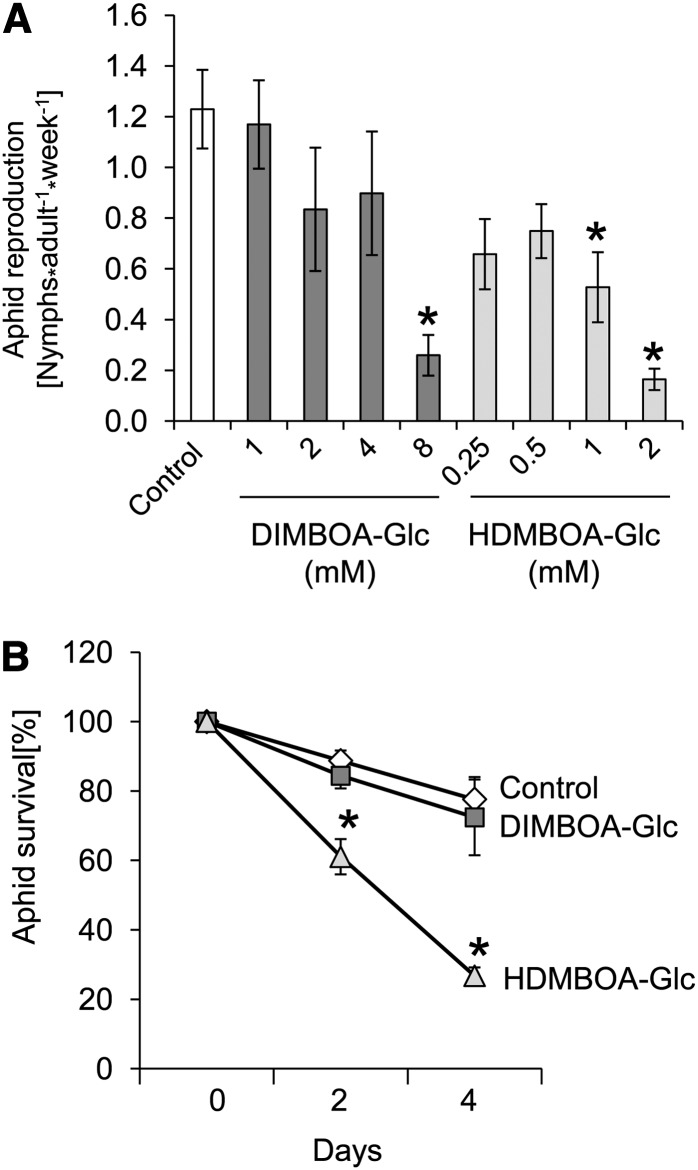
HDMBOA-Glc Reduces Aphid Performance in Vitro More Strongly Than DIMBOA-Glc. (A) Aphid progeny production on diet with benzoxazinoids. Progeny per adult aphid were counted after 2 d on diet containing the indicated concentrations of DIMBOA-Glc and HDMBOA-Glc (mean ± se; n = 6; n = 12 for controls). Asterisks indicate significant differences (*P < 0.05, Dunnett’s test relative to control samples). (B) Adult aphid survival on diet with benzoxazinoids. Diet contained no benzoxazinoids (control; diamonds), 2 mM DIMBOA-Glc (squares), or 2 mM HDMBOA-Glc (triangles) (mean ± se; n = 6; n = 12 for controls). Asterisks indicate significant differences (*P < 0.05, Dunnett’s test relative to control samples).
Figure 9.
Figure 9.
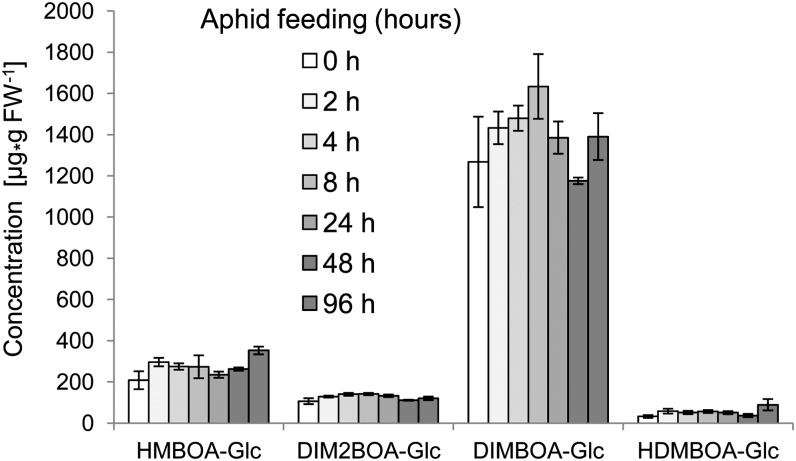
Aphids Do Not Induce Benzoxazinoid Biosynthesis in Maize. Accumulation of benzoxazinoids in B73 after 0, 2, 4, 8, 24, 48, and 96 h of aphid feeding (mean ± se; n = 5). No significant differences were detected (*P > 0.05; Dunnett’s test relative to 0-h control time point). FW, fresh weight.
Figure 10.
Figure 10.
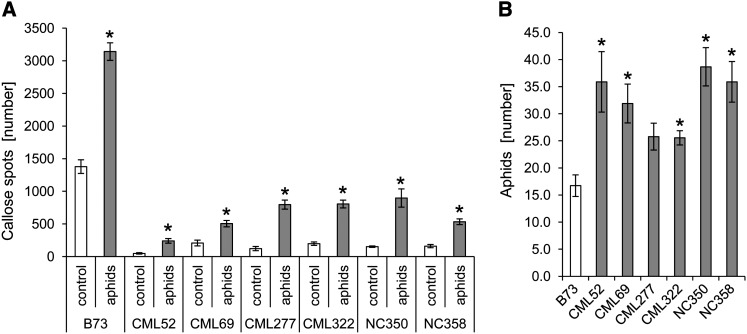
Aphid-Induced Callose Formation Is Reduced in Maize Inbred Lines with Low DIMBOA-Glc and High HDMBOA-Glc Concentrations. (A) Number of callose spots in maize leaves with and without aphid feeding (mean ± se; n = 4 [controls], n = 18 [B73 + aphids], and n = 9 [other inbred lines + aphids]). Asterisks indicate significant differences relative to control for each genotype (P < 0.05; two-tailed Student’s t tests). (B) Number of aphids present 3 d after 10 aphids were caged on a leaf blade (mean ± se; n = 18 [B73], and n = 9 [other inbred lines]). Asterisks indicate significant differences (*P < 0.06; two-tailed t test compared with B73 control, with Bonferroni correction for multiple comparisons).

References

    1. Ahmad S., Veyrat N., Gordon-Weeks R., Zhang Y.H., Martin J., Smart L., Glauser G., Erb M., Flors V., Frey M., Ton J. (2011). Benzoxazinoid metabolites regulate innate immunity against aphids and fungi in maize. Plant Physiol. 157: 317–327 - PMC - PubMed
    1. Bass H.W., OBrian G.R., Boston R.S. (1995). Cloning and sequencing of a second ribosome-inactivating protein gene from maize (Zea mays L.). Plant Physiol. 107: 661–662 - PMC - PubMed
    1. Bercury S.D., Panavas T., Irenze K., Walker E.L. (2001). Molecular analysis of the Doppia transposable element of maize. Plant Mol. Biol. 47: 341–351 - PubMed
    1. Botha C.E.J., Matsiliza B. (2004). Reduction in transport in wheat (Triticum aestivum) is caused by sustained phloem feeding by the Russian wheat aphid (Diuraphis noxia). S. Afr. J. Bot. 70: 249–254
    1. Brooks T.D., Willcox M.C., Williams W.P., Buckley P.M. (2005). Quantitative trait loci conferring resistance to fall armyworm and southwestern corn borer leaf feeding damage. Crop Sci. 45: 2430–2434

Publication types

MeSH terms