


Break-induced replication occurs by conservative DNA synthesis
- PMID: 23898170
- PMCID: PMC3746906
- DOI: 10.1073/pnas.1309800110
Break-induced replication occurs by conservative DNA synthesis
Abstract
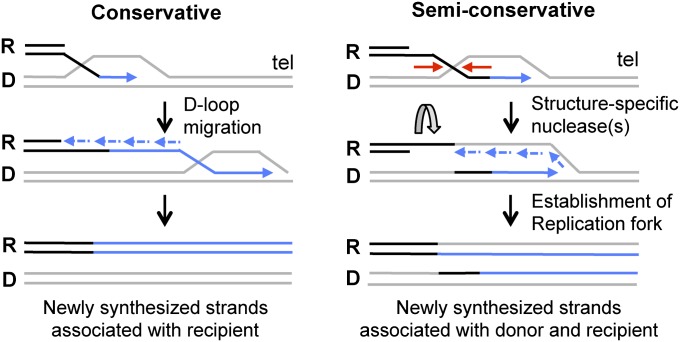
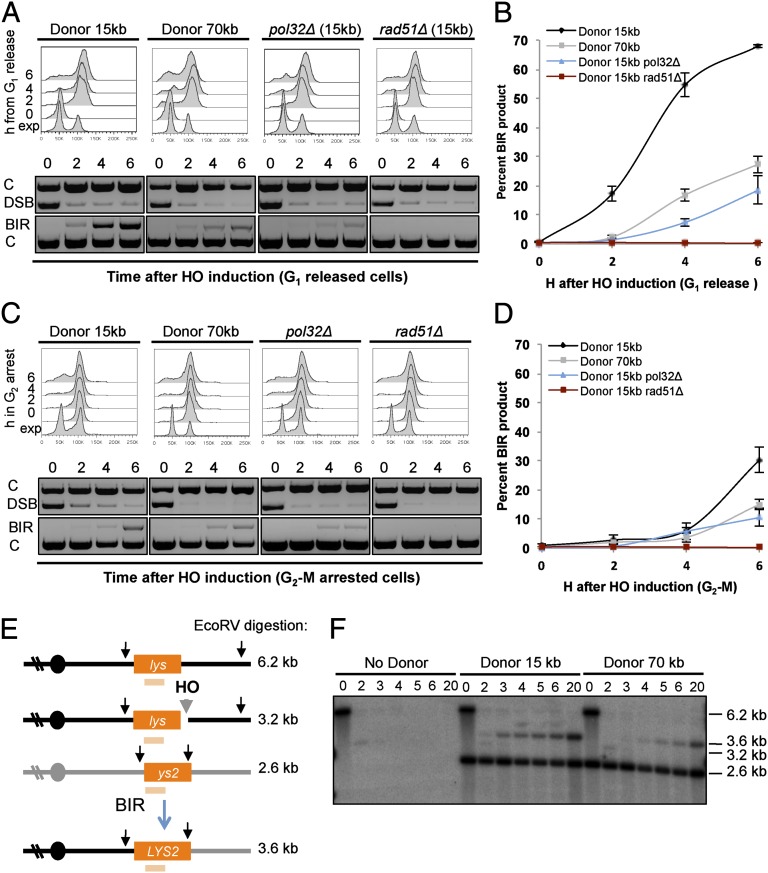
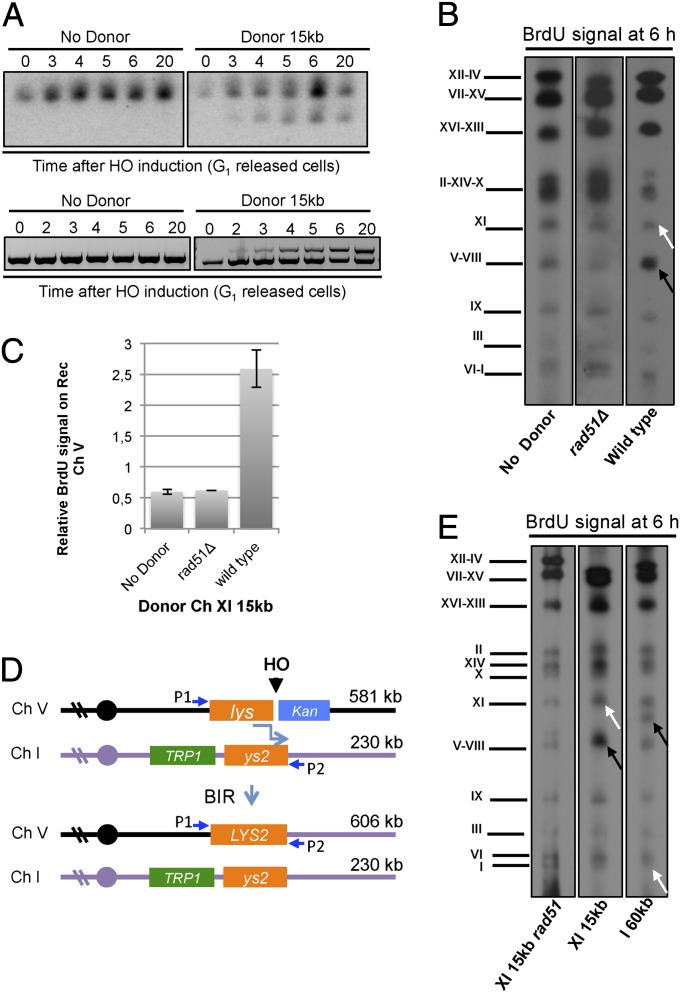
Break-induced replication (BIR) refers to recombination-dependent DNA synthesis initiated from one end of a DNA double-strand break and can extend for more than 100 kb. BIR initiates by Rad51-catalyzed strand invasion, but the mechanism for DNA synthesis is not known. Here, we used BrdU incorporation to track DNA synthesis during BIR and found that the newly synthesized strands segregate with the broken chromosome, indicative of a conservative mode of DNA synthesis. Furthermore, we show the frequency of BIR is reduced and product formation is progressively delayed when the donor is placed at an increasing distance from the telomere, consistent with replication by a migrating D-loop from the site of initiation to the telomere.
Keywords: Pol32; cell cycle; translocation.
Conflict of interest statement
The authors declare no conflict of interest.
Figures

References
-
- Szostak JW, Orr-Weaver TL, Rothstein RJ, Stahl FW. The double-strand-break repair model for recombination. Cell. 1983;33(1):25–35. - PubMed
Publication types
MeSH terms
Substances
Grants and funding
LinkOut - more resources
Full Text Sources
Other Literature Sources
Research Materials
