


Transcutaneous electrical nerve stimulation reduces pain, fatigue and hyperalgesia while restoring central inhibition in primary fibromyalgia
- PMID: 23900134
- PMCID: PMC3972497
- DOI: 10.1016/j.pain.2013.07.043
Transcutaneous electrical nerve stimulation reduces pain, fatigue and hyperalgesia while restoring central inhibition in primary fibromyalgia
Abstract
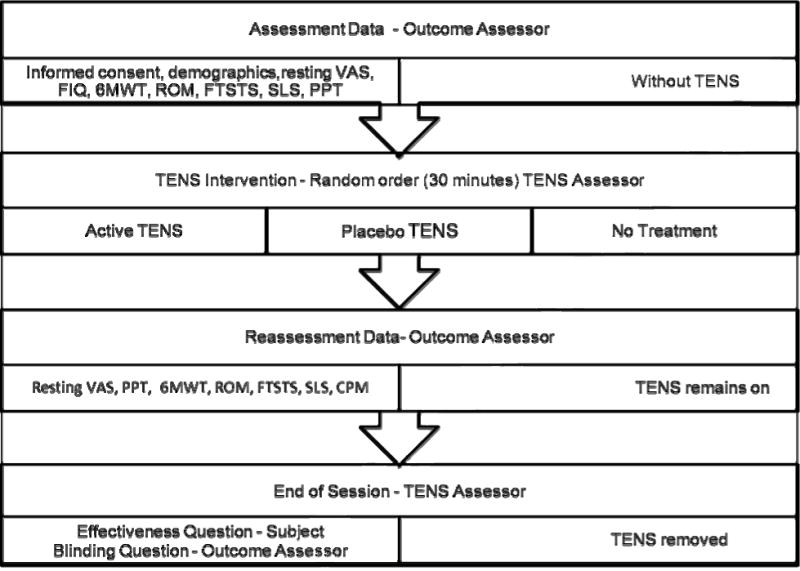
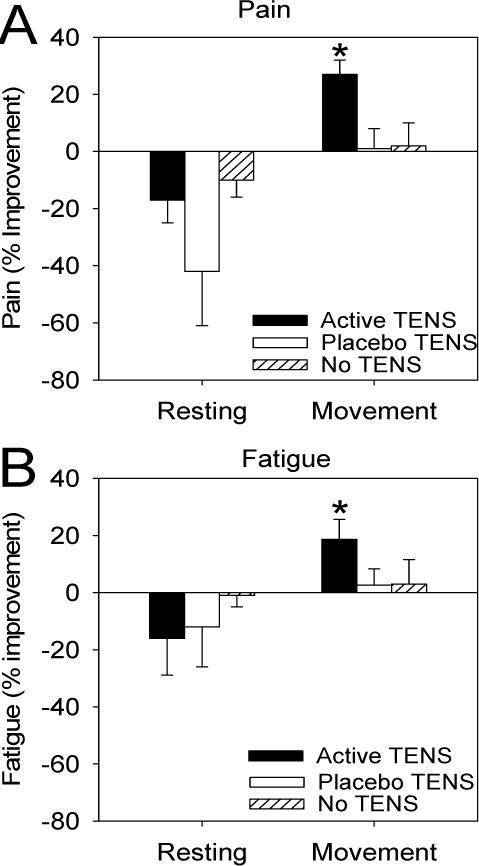
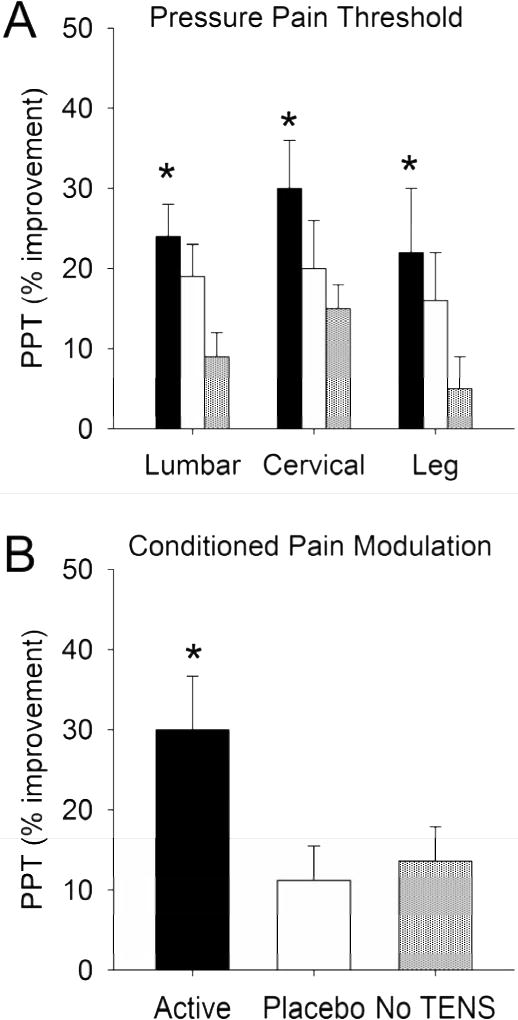
Because transcutaneous electrical nerve stimulation (TENS) works by reducing central excitability and activating central inhibition pathways, we tested the hypothesis that TENS would reduce pain and fatigue and improve function and hyperalgesia in people with fibromyalgia who have enhanced central excitability and reduced inhibition. The current study used a double-blinded randomized, placebo-controlled cross-over design to test the effects of a single treatment of TENS with people with fibromyalgia. Three treatments were assessed in random order: active TENS, placebo TENS and no TENS. The following measures were assessed before and after each TENS treatment: pain and fatigue at rest and in movement; pressure pain thresholds, 6-m walk test, range of motion; 5-time sit-to-stand test, and single-leg stance. Conditioned pain modulation was completed at the end of testing. There was a significant decrease in pain and fatigue with movement for active TENS compared to placebo and no TENS. Pressure pain thresholds increased at the site of TENS (spine) and outside the site of TENS (leg) when compared to placebo TENS or no TENS. During active TENS, conditioned pain modulation was significantly stronger compared to placebo TENS and no TENS. No changes in functional tasks were observed with TENS. Thus, the current study suggests TENS has short-term efficacy in relieving symptoms of fibromyalgia while the stimulator is active. Future clinical trials should examine the effects of repeated daily delivery of TENS, similar to the way in which TENS is used clinically on pain, fatigue, function, and quality of life in individuals with fibromyalgia.
Keywords: Analgesia; Chronic widespread pain; Electrical stimulation; Fatigue; Fibromyalgia; Hyperalgesia; Pain; Transcutaneous electrical nerve stimulation (TENS).
Copyright © 2013 International Association for the Study of Pain. Published by Elsevier B.V. All rights reserved.
Conflict of interest statement
Conflict of Interest: Dr. Sluka is a consultant for DJO, Inc. Dr. Rakel has received research support from DJO, Inc.
Figures
References
-
- Arnold LM, Russell IJ, Diri EW, Duan WR, Young JP, Jr, Sharma U, Martin SA, Barrett JA, Haig G. A 14-week, randomized, double-blinded, placebo-controlled monotherapy trial of pregabalin in patients with fibromyalgia. J Pain. 2008;9:792–805. - PubMed
-
- Aubin M, Marks R. The Efficacy of Short-term Treatment with Transcutaneous Electrical Nerve Stimulation for Osteo-arthritic Knee Pain. Physiotherapy. 1995;81:661.
-
- Bennett R. The Fibromyalgia Impact Questionnaire (FIQ): a review of its development, current version, operating characteristics and uses. Clin Exp Rheumatol. 2005;23:S154–62. - PubMed
-
- Bjordal JM, Johnson MI, Ljunggreen AE. Transcutaneous electrical nerve stimulation (TENS) can reduce postoperative analgesic consumption. A meta-analysis with assessment of optimal treatment parameters for postoperative pain. Eur J Pain. 2003;7:181–188. - PubMed
-
- Busch AJ, Thille P, Barber KA, Schachter CL, Bidonde J, Collacott BK. Best practice: E-Model–prescribing physical activity and exercise for individuals with fibromyalgia. Physiother Theory Pract. 2008;24:151–166. - PubMed
Publication types
MeSH terms
Grants and funding
LinkOut - more resources
Full Text Sources
Other Literature Sources
Medical
