


The neuroprotective effect of resveratrol on retinal ganglion cells after optic nerve transection
- PMID: 23901250
- PMCID: PMC3724955
The neuroprotective effect of resveratrol on retinal ganglion cells after optic nerve transection
Abstract
Purpose: This study aimed to investigate the neuroprotective effect of resveratrol in an optic nerve transection (ONT) model and to identify the neuroprotective mechanism of resveratrol in retinal ganglion cells (RGCs).
Methods: ONT and retrograde labeling were performed in Sprague-Dawley rats. Various concentrations of resveratrol were injected intravitreally immediately after ONT. The number of labeled RGCs was determined at 1 and 2 weeks after ONT. The effect of resveratrol and sirtinol (a sirtuin 1 inhibitor) co-injection was investigated. RGC-5 cells were cultured and treated with staurosporine to induce differentiation. 3-(4,5-Dimethylthiazol-2-yl)-2,5-diphenyltetrazolium bromide (MTT) assay was performed to evaluate the effect of resveratrol on RGC-5 cell survival under serum-free conditions. RGC-5 cells were cultured with sirtinol to investigate the neuroprotective mechanism of resveratrol.
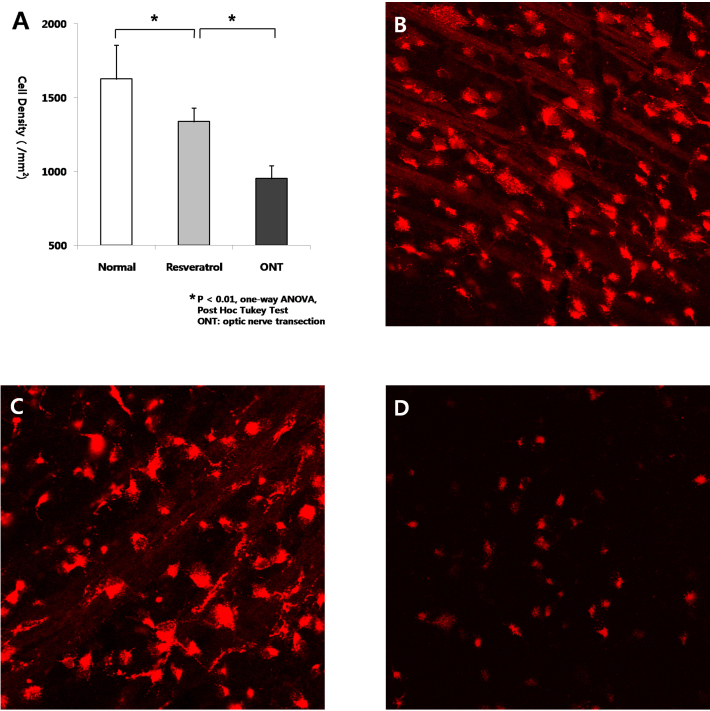
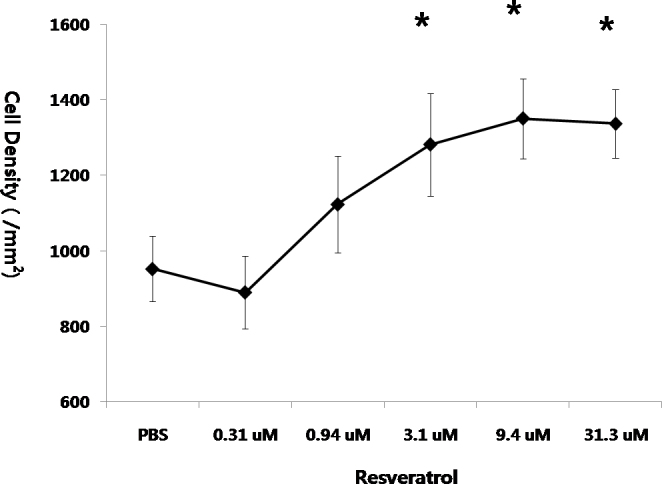
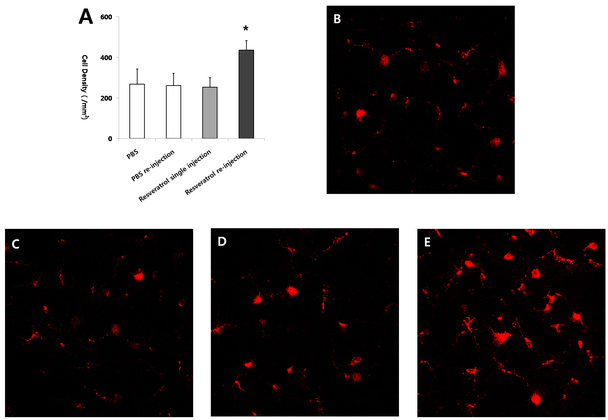
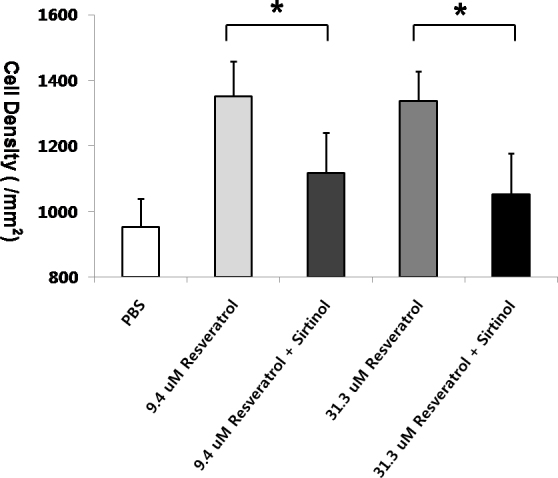
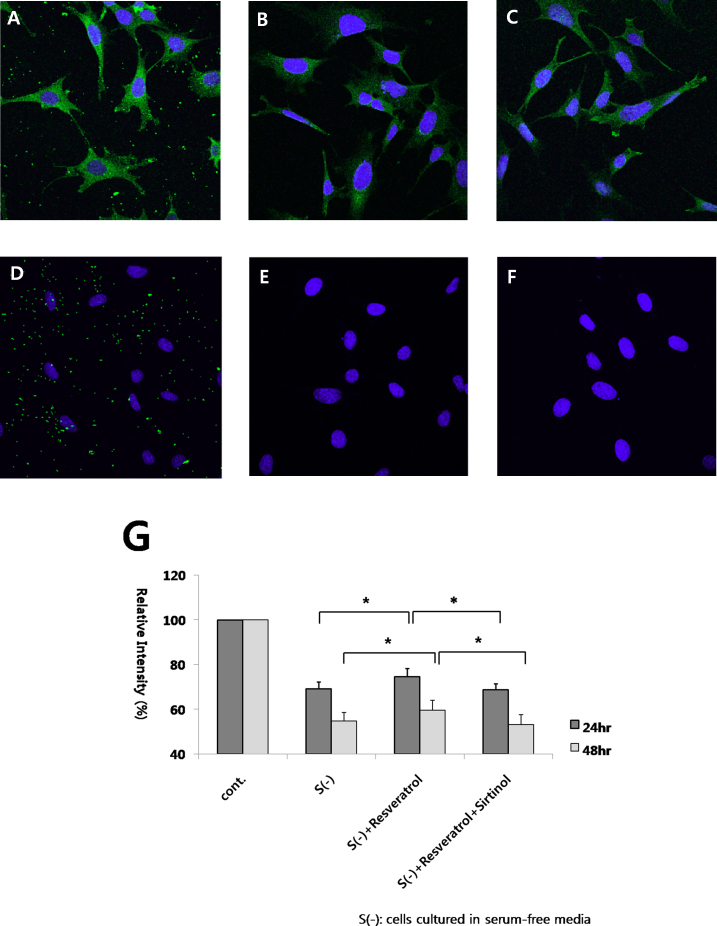
Results: A dose-response relationship was observed between resveratrol and RGC survival. A single intravitreal injection of resveratrol was neuroprotective in RGCs at 1 week after ONT (p<0.01). Repeated intravitreal injection of resveratrol showed a neuroprotective effect at 2 weeks after ONT (p<0.01). However, co-injection of resveratrol and sirtinol diminished the neuroprotective effect of resveratrol (p<0.05). The neuroprotective effect of resveratrol was observed in RGC-5 cells under serum-free conditions, and sirtinol diminished this neuroprotective effect.
Conclusions: Resveratrol exerts its neuroprotective effect on RGCs via activation of the sirtuin 1 pathway in an ONT model. This finding demonstrates the therapeutic potential of resveratrol in treating optic nerve diseases.
Figures
References
-
- Mey J, Thanos S. Intravitreal injections of neurotrophic factors support the survival of axotomized retinal ganglion cells in adult rats in vivo. Brain Res. 1993;602:304–17. - PubMed
-
- Weishaupt JH, Bähr M. Degeneration of axotomized retinal ganglion cells as a model for neuronal apoptosis in the central nervous system - molecular death and survival pathways. Restor Neurol Neurosci. 2001;19:19–27. - PubMed
-
- Kermer P, Ankerhold R, Klocker N, Krajewski S, Reed JC, Bahr M. Caspase-9: involvement in secondary death of axotomized rat retinal ganglion cells in vivo. Brain Res Mol Brain Res. 2000;85:144–50. - PubMed
-
- Kermer P, Klocker N, Labes M, Thomsen S, Srinivasan A, Bahr M. Activation of caspase-3 in axotomized rat retinal ganglion cells in vivo. FEBS Lett. 1999;453:361–4. - PubMed
Publication types
MeSH terms
Substances
LinkOut - more resources
Full Text Sources
Medical