


Cognitive behavior therapy for psychological distress in patients with recurrent miscarriage
- PMID: 23901302
- PMCID: PMC3720570
- DOI: 10.2147/PRBM.S44327
Cognitive behavior therapy for psychological distress in patients with recurrent miscarriage
Abstract
Objective: To examine the reduction of psychiatric symptoms using individual cognitive behavior therapy (CBT) for women who suffer from recurrent miscarriage (RM) and depression and/or anxiety.
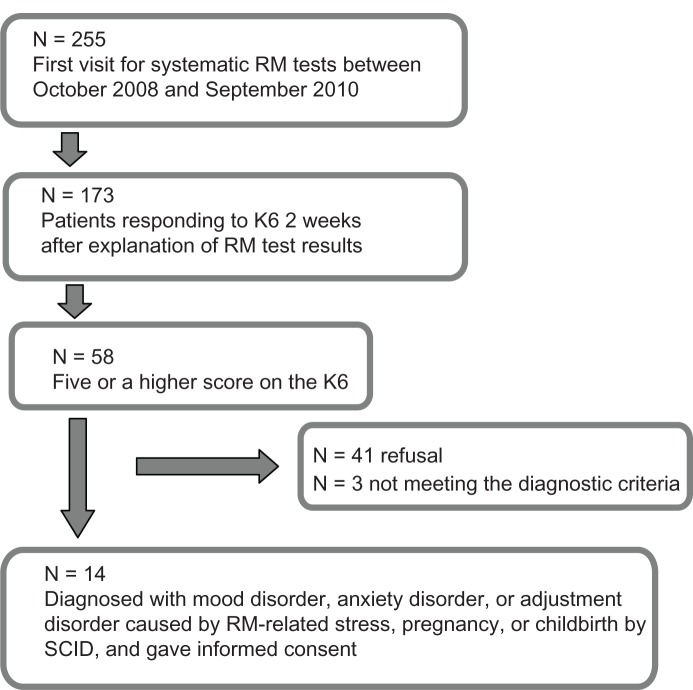
Methods: Patients with RM and a score of five or higher for K6, a self-report screening scale for depression/anxiety, were interviewed to find information about stressful situations, thoughts, and consequent behaviors that are common and potential causes of psychological distress among RM patients. We then performed individual CBT on 14 patients with RM and depression/anxiety, referring to a list from the interviews, and examined the effects of CBT by a paired t-test.
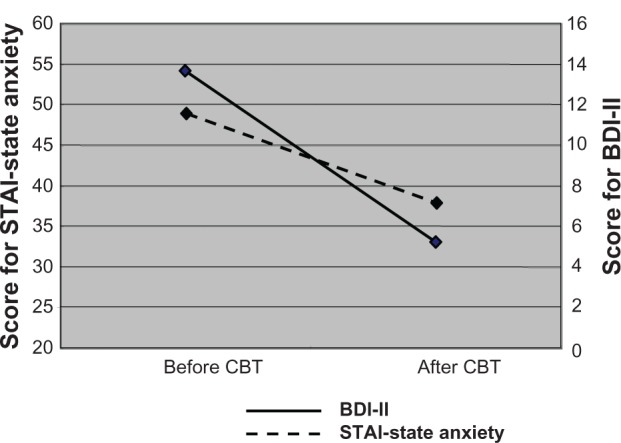
Results: Fourteen women received CBT. The mean number of intervention times was 8.9 sessions (standard deviation [SD], 4.6 sessions). The average Beck Depression Inventory-Second Edition and State-Trait Anxiety Inventory-state anxiety scores, self-report screening scales for depression/anxiety, decreased from 13.6 (SD, 8.2) and 49.0 (SD, 7.1) at baseline to 5.2 (SD, 4.4) and 38.0 (SD, 10.2) posttherapy, respectively. These changes were statistically significant.
Conclusion: The current preliminary open study confirmed that individual CBT was potentially useful for women with RM and depression and/or anxiety. This finding is the first step towards creating a comprehensive psychological support system for women with RM.
Keywords: anxiety; depression; psychological support; spontaneous abortion.
Figures
References
-
- Rai R, Regan L. Recurrent miscarriage. Lancet. 2006;368(9535):601–611. - PubMed
-
- Ministry of Health Labour and Welfare J. Ministry of Health, Labour and Welfare Annual Report 2011. Tokyo, Japan: 2012. http://www.mhlw.go.jp/toukei/youran/indexyk_1_2.html
-
- Craig M, Tata P, Regan L. Psychiatric morbidity among patients with recurrent miscarriage. J Psychosom Obstet Gynaecol. 2002;23(3):157–164. - PubMed
-
- Klock SC, Chang G, Hiley A, Hill J. Psychological distress among women with recurrent spontaneous abortion. Psychosomatics. 1997;38(5):503–507. - PubMed
-
- Boivin J. A review of psychosocial interventions in infertility. Soc Sci Med. 2003;57(12):2325–2341. - PubMed
LinkOut - more resources
Full Text Sources
Other Literature Sources
