


A randomized clinical trial comparing delivery of behavioral pediatric obesity treatment using standard and enhanced motivational approaches
- PMID: 23902797
- PMCID: PMC3785221
- DOI: 10.1093/jpepsy/jst054
A randomized clinical trial comparing delivery of behavioral pediatric obesity treatment using standard and enhanced motivational approaches
Abstract
Objective: To examine the efficacy of an adjunct motivational and autonomy-enhancing intervention (self-directed) for behavioral family-based pediatric obesity relative to the standard prescription of uniform behavioral skills use and interventionist goal assignment (prescribed).
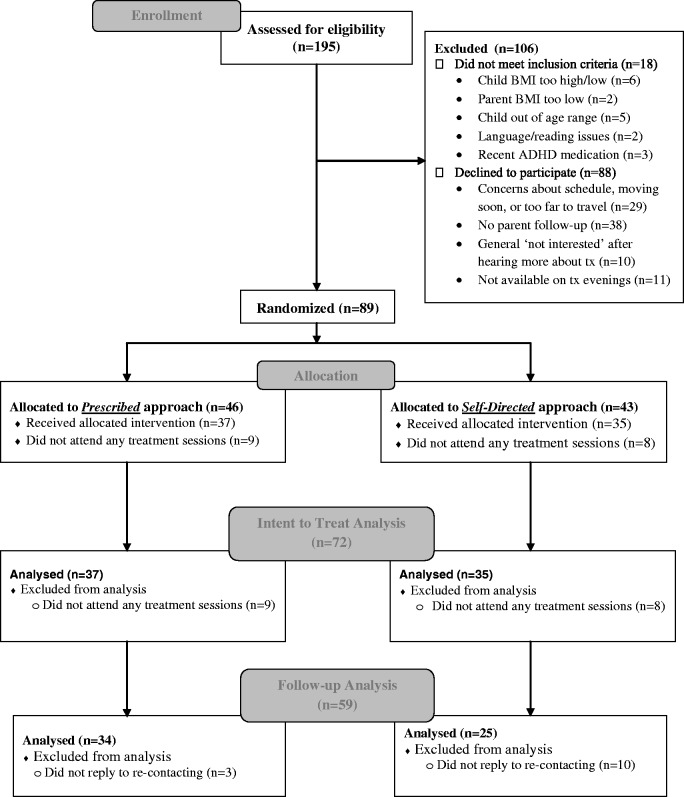
Methods: In this randomized clinical trial, 72 overweight/obese children and their parents/caregivers were assigned to either self-directed or prescribed intervention for 20 weeks, with approaches diverging after week 5. Anthropometric measurements from child and participating parent at baseline, posttreatment, and 3-month, 6-month, 1-year, and 2-year follow-ups were evaluated for change (n = 59 in follow-up analyses).
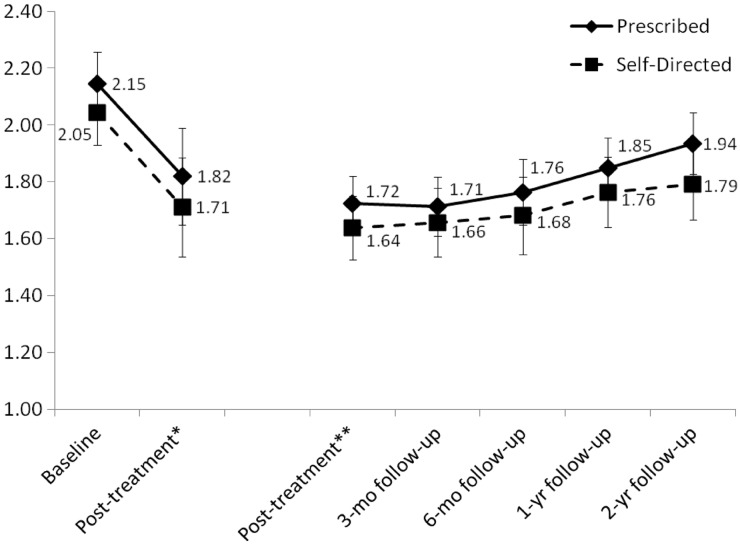
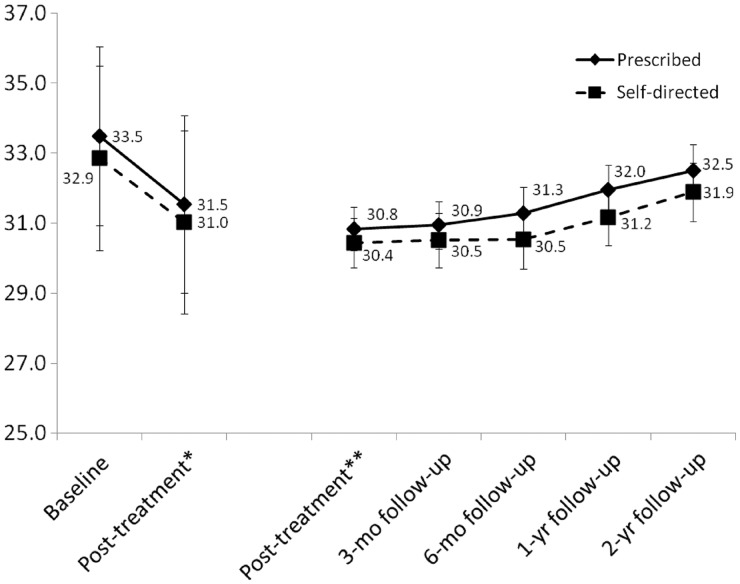
Results: The approaches demonstrated similar child body mass index (BMI) z-score and parent BMI change from baseline to posttreatment and throughout follow-up, with child and parent weight status lower than baseline at 2 years after treatment cessation.
Conclusions: An adjunct motivational and autonomy-enhancing approach to behavioral family-based pediatric obesity treatment is a viable alternative to the standard intervention approach.
Keywords: health promotion and prevention; obesity; weight management.
Figures
References
-
- American Academy of Pediatrics. Motivational interviewing: Healthy active living for families implementation guide. 2012. Retrieved from http://www.aap.org/en-us/advocacy-and-policy/aap-health-initiatives/HALF....
-
- Armstrong M J, Mottershead T A, Ronksley P E, Sigal R J, Campbell T S, Hemmelgarn B R. Motivational interviewing to improve weight loss in overweight and/or obese patients: A systematic review and meta-analysis of randomized controlled trials. Obesity Reviews. 2011;12(9):709–723. - PubMed
-
- Barton M. Screening for obesity in children and adolescents: US preventive services task force recommendation statement. Pediatrics. 2010;125(2):361–367. - PubMed
-
- Bodenheimer T, Lorig K, Holman H, Grumbach K. Patient self-management of chronic disease in primary care. Journal of the American Medical Association. 2002;288(19):2469–2475. - PubMed
-
- Epstein L H, Paluch R A, Gordy C C, Dorn J. Decreasing sedentary behaviors in treating pediatric obesity. Archives of Pediatrics & Adolescent Medicine. 2000;154(3):220–226. - PubMed
Publication types
MeSH terms
Grants and funding
LinkOut - more resources
Full Text Sources
Other Literature Sources
Medical
