


Chemerin is expressed mainly in pancreas and liver, is regulated by energy deprivation, and lacks day/night variation in humans
- PMID: 23904282
- PMCID: PMC3798003
- DOI: 10.1530/EJE-13-0098
Chemerin is expressed mainly in pancreas and liver, is regulated by energy deprivation, and lacks day/night variation in humans
Abstract
Objective: Chemerin is an adipocyte-secreted hormone and has recently been associated with obesity and the metabolic syndrome. Although studies in rodents have outlined the aspects of chemerin's function and expression, its physiology and expression patterns are still to be elucidated in humans.
Methods: To evaluate for any day/night variation in chemerin secretion, we analyzed hourly serum samples from six females in the fed state. To examine whether energy deprivation affects chemerin levels, and whether this could be mediated through leptin, we analyzed samples from the same subjects in the fasting state while administering either placebo or leptin. To evaluate for any potential dose-effect relationship between leptin and chemerin, we administered increasing metreleptin doses to five females. A tissue array was used to study the expression of chemerin in different human tissues. Ex vivo treatment of human fat explants from three subjects with leptin was carried out to evaluate for any direct effect of leptin on adipocyte chemerin secretion.
Results: Chemerin does not display a day/night variation, while acute energy deprivation resulted in a significant drop in circulating chemerin levels by ∼42%. The latter was unaltered by metreleptin administration, and leptin administration did not affect the secretion of chemerin by human adipose tissue studied ex vivo. Chemerin was expressed primarily in the pancreas and liver. Chemerin receptor showed increased expression in the lymph nodes and the spleen.
Conclusions: We outline for the first time chemerin expression and physiology in humans, which are different from those in mice.
Figures
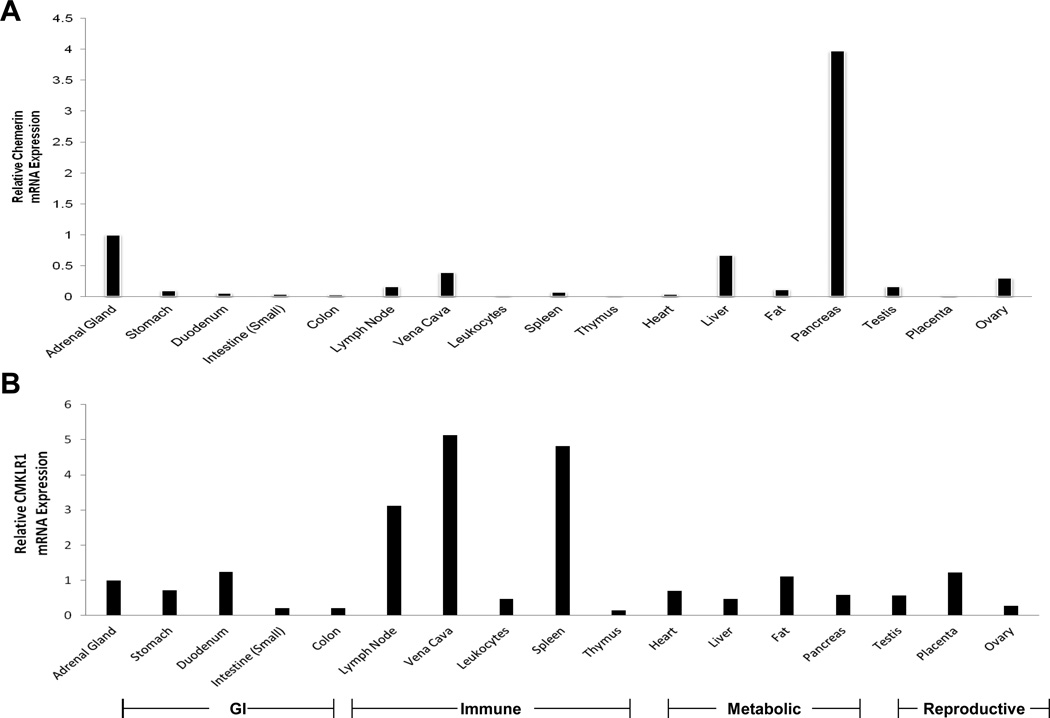
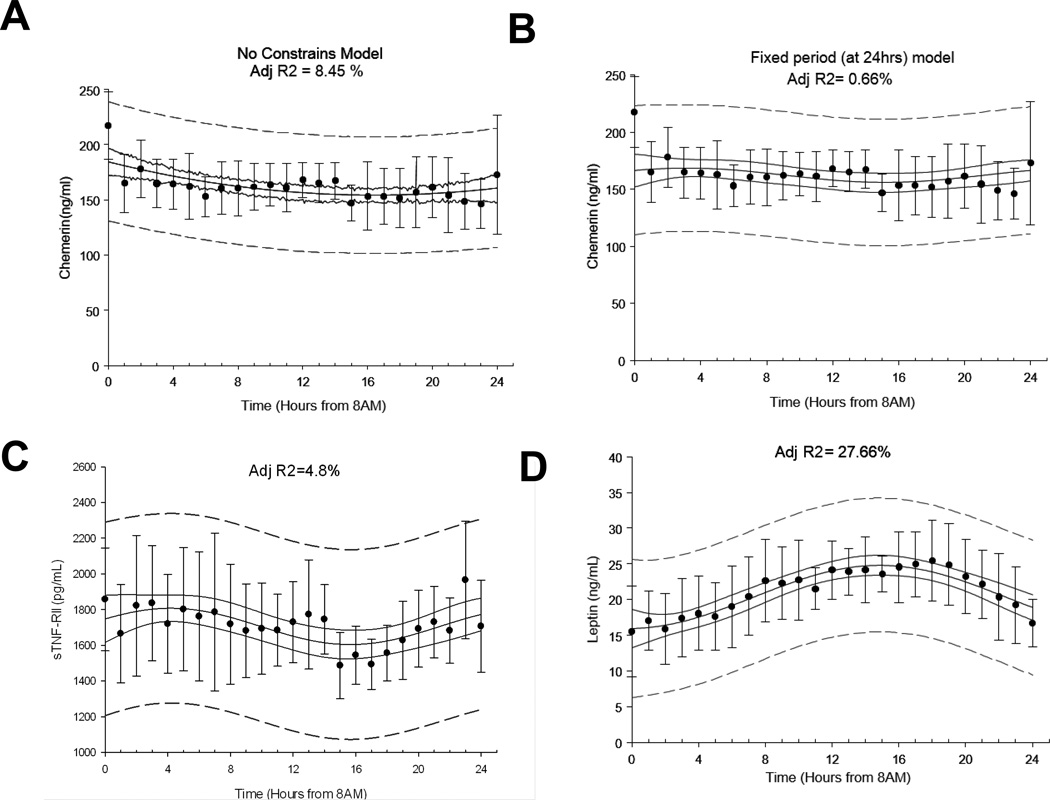
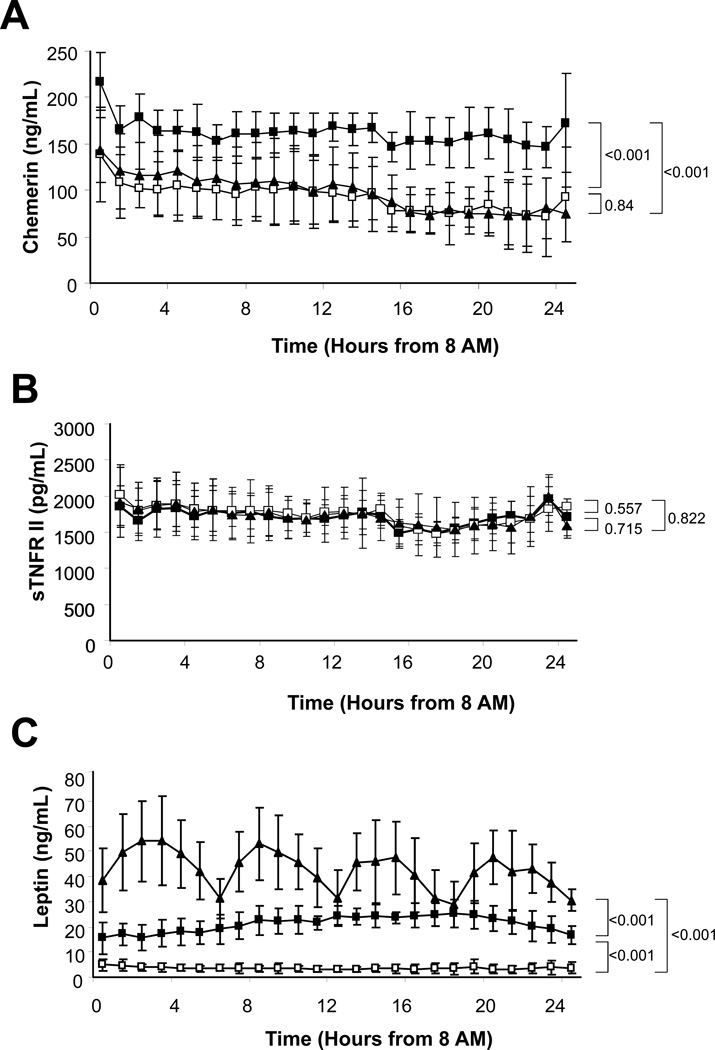
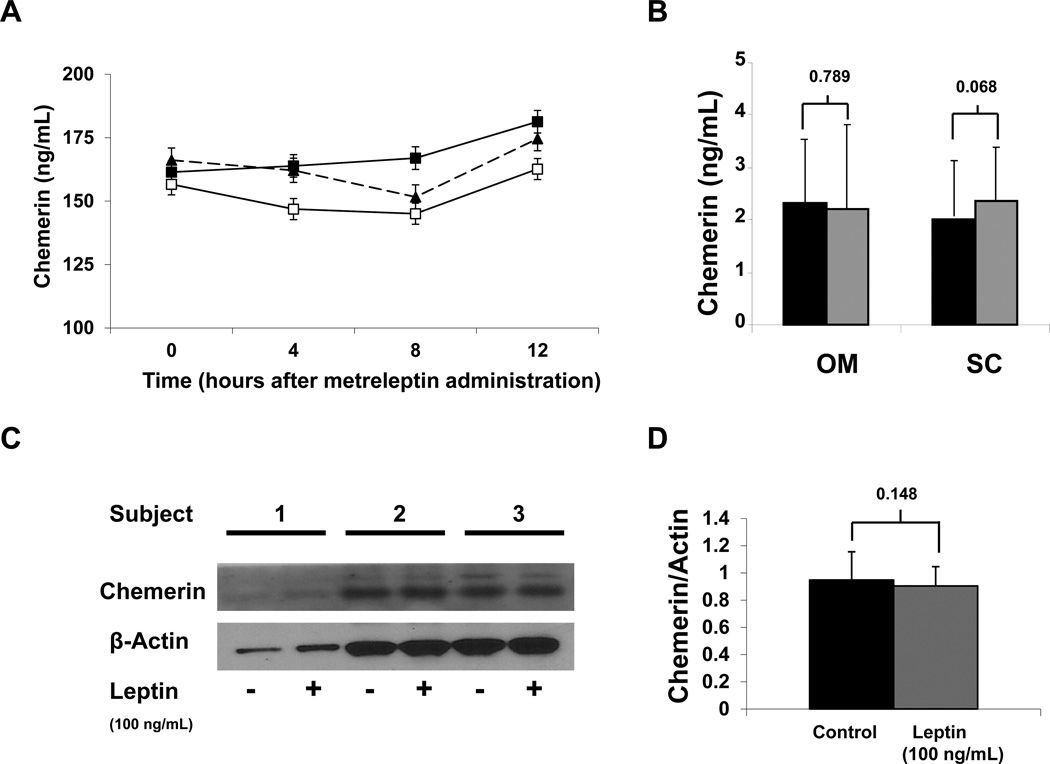
 ) or without (■)100 ng/mL leptin treatment for 20 hours in subcutaneous and omental adipose tissue. Chemerin protein expression (C – D) in subcutaneous adipose tissue after leptin treatment. (B–D) Results are the mean of 3 experiments. Data were analyzed by paired T-Test. Values are means +/− SD.
References
-
- Meder W, Wendland M, Busmann A, Kutzleb C, Spodsberg N, John H, Richter R, Schleuder D, Meyer M, Forssmann WG. Characterization of human circulating TIG2 as a ligand for the orphan receptor ChemR23. FEBS Lett. 2003;555:495–499. - PubMed
-
- Nagpal S, Patel S, Jacobe H, DiSepio D, Ghosn C, Malhotra M, Teng M, Duvic M, Chandraratna RA. Tazarotene-induced gene 2 (TIG2), a novel retinoid-responsive gene in skin. J Invest Dermatol. 1997;109:91–95. - PubMed
-
- Ernst MC, Sinal CJ. Chemerin: at the crossroads of inflammation and obesity. Trends Endocrinol Metab. 2010;21:660–667. - PubMed
-
- Parlee SD, Ernst MC, Muruganandan S, Sinal CJ, Goralski KB. Serum Chemerin Levels Vary with Time of Day and Are Modified by Obesity and Tumor Necrosis Factor-a. Endocrinology. 2010;151:2590–2602. - PubMed
-
- Kralisch S, Weise S, Sommer G, Lipfert J, Lossner U, Bluher M, Stumvoll M, Fasshauer M. Interleukin-1beta induces the novel adipokine chemerin in adipocytes in vitro. Regul Pept. 2009;154:102–106. - PubMed
Publication types
MeSH terms
Substances
Grants and funding
LinkOut - more resources
Full Text Sources
Other Literature Sources
Miscellaneous
