


P300 amplitude reduction is associated with early-onset and late-onset pathological substance use in a prospectively studied cohort of 14-year-old adolescents
- PMID: 23905780
- PMCID: PMC3872222
- DOI: 10.1111/psyp.12081
P300 amplitude reduction is associated with early-onset and late-onset pathological substance use in a prospectively studied cohort of 14-year-old adolescents
Abstract
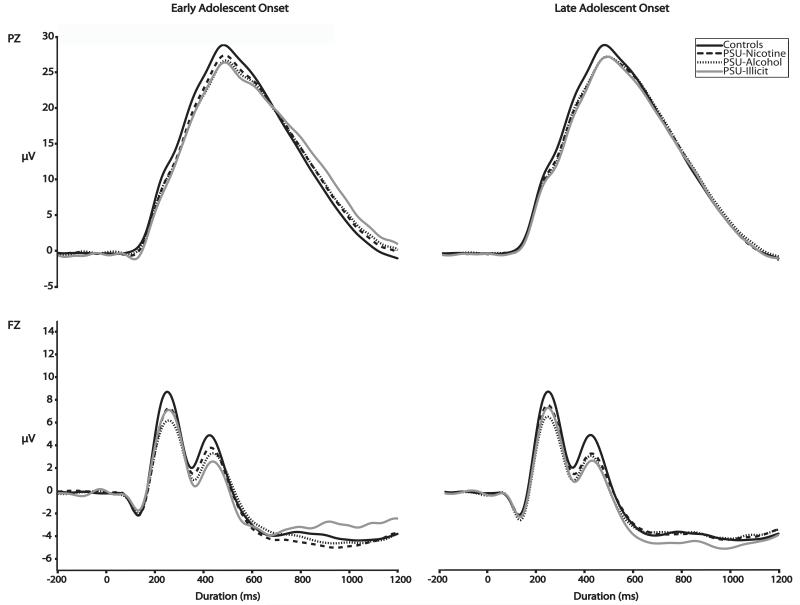
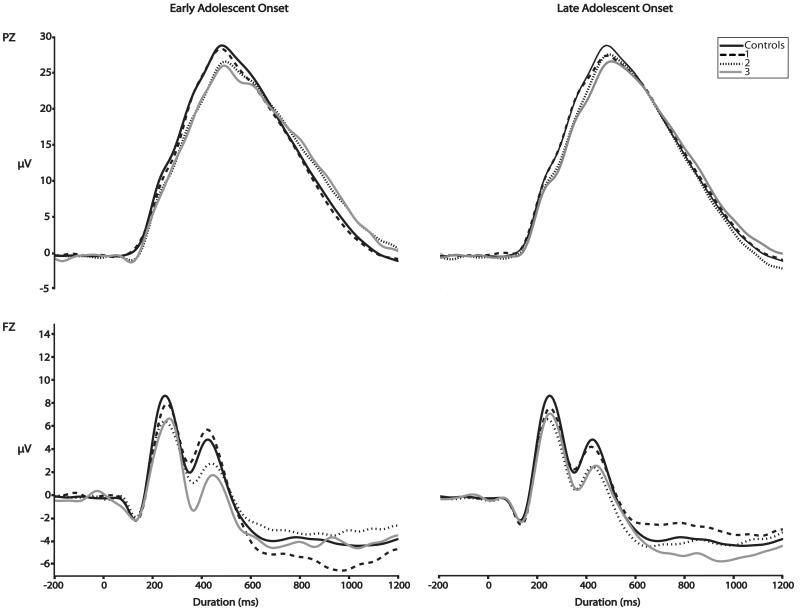
P3 amplitude reduction (P3AR) is associated with risk for adolescent-onset pathological substance use (PSU). In this longitudinal study, data from over 1,100 adolescent twins were used to examine P3AR in relation to early adolescent onset PSU (i.e., by age 14), late adolescent onset PSU (i.e., ages 14-18), misuse of different classes of substances (PSU-nicotine, PSU-alcohol, PSU-illicit), degree of PSU comorbidity, and gender differences. P3 amplitude was recorded at age 14 from two midline electrodes during a visual oddball paradigm. PSU was defined as meeting criteria for any symptom of a substance use disorder assessed using semistructured clinical interviews. P3AR was associated with degree of drug class comorbidity, early adolescent onset PSU for all three substance classes, and late adolescent onset PSU for alcohol and illicit PSU. Gender differences in P3AR were not statistically significant. These findings provide further evidence that P3AR indexes a nonspecific diathesis for adolescent-onset PSU.
Keywords: Children/Infants; EEG/ERP; Individual differences.
Copyright © 2013 Society for Psychophysiological Research.
Figures
References
-
- Anokhin AP, Vedeniapin AB, et al. The P300 brain potential is reduced in smokers. Psychopharmacology (Berl) 2000;149(4):409–413. - PubMed
-
- Bauer LO. Frontal P300 decrements, childhood conduct disorder, family history, and the prediction of relapse among abstinent cocaine abusers. Drug Alcohol Depend. 1997;44(1):1–10. - PubMed
-
- Begleiter H, Porjesz B, et al. Event-related brain potentials in boys at risk for alcoholism. Science. 1984;225(4669):1493–1496. - PubMed
-
- Berman SM, Whipple SC, et al. P3 in young boys as a predictor of adolescent substance use. Alcohol. 1993;10(1):69–76. - PubMed
-
- Blazei RW, Iacono WG, et al. Father-child transmission of antisocial behavior: the moderating role of father’s presence in the home. J Am Acad Child Adolesc Psychiatry. 2008;47(4):406–415. - PubMed
Publication types
MeSH terms
Grants and funding
LinkOut - more resources
Full Text Sources
Other Literature Sources
Medical
Miscellaneous
