


Mechanistic insights from the binding of substrate and carbocation intermediate analogues to aristolochene synthase
- PMID: 23905850
- PMCID: PMC3755762
- DOI: 10.1021/bi400691v
Mechanistic insights from the binding of substrate and carbocation intermediate analogues to aristolochene synthase
Abstract
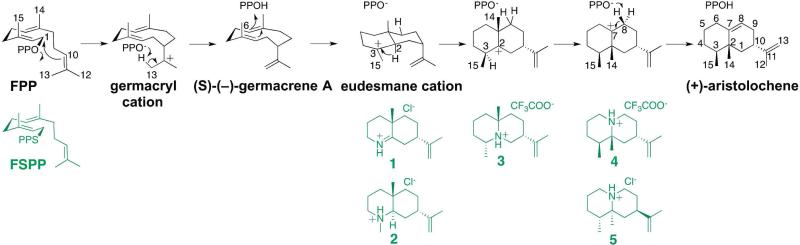
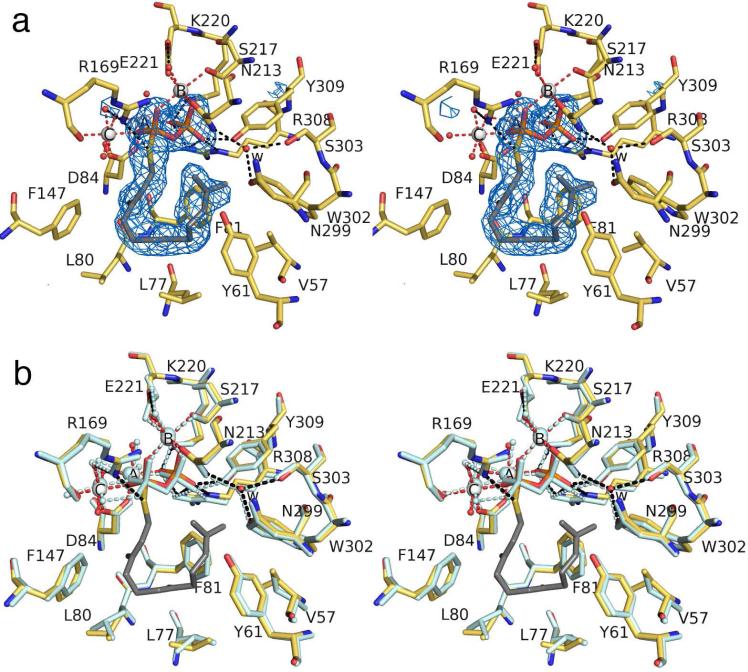
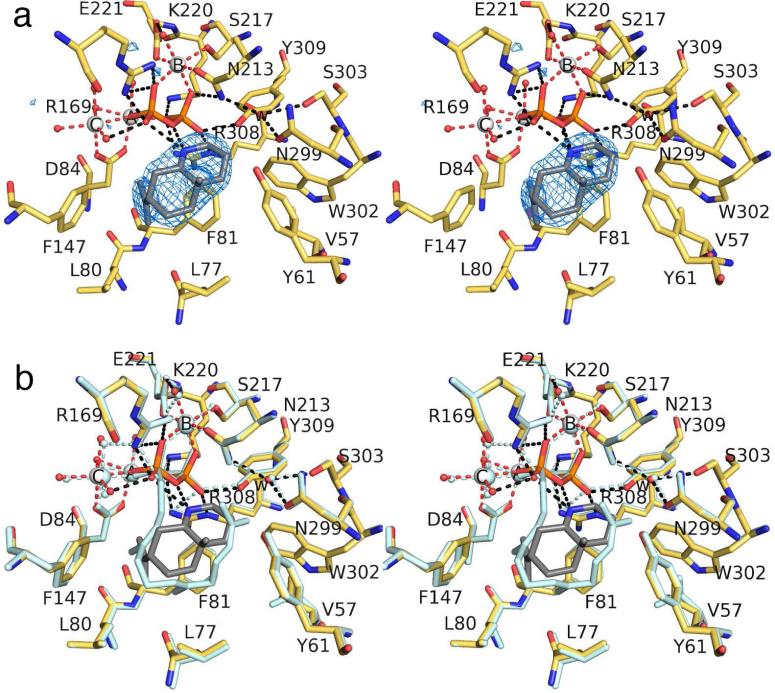
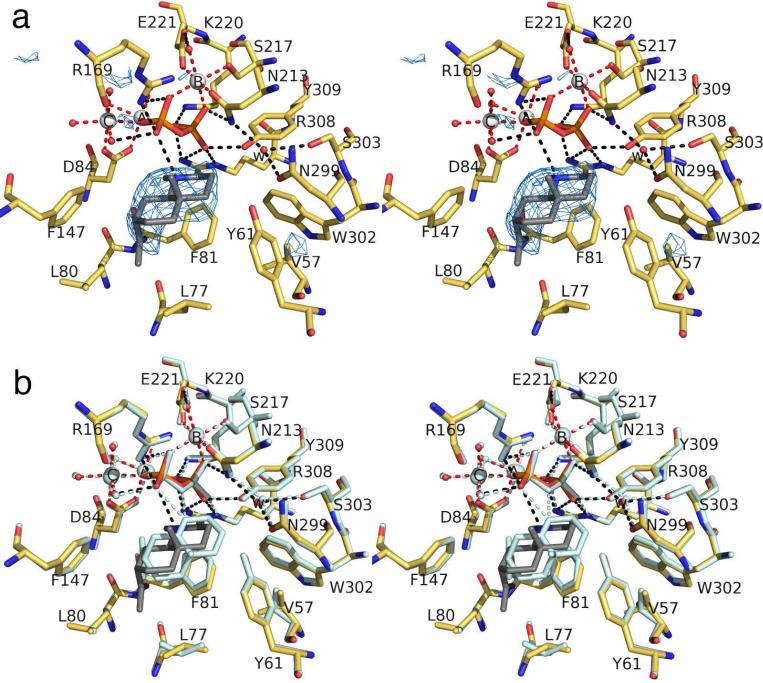
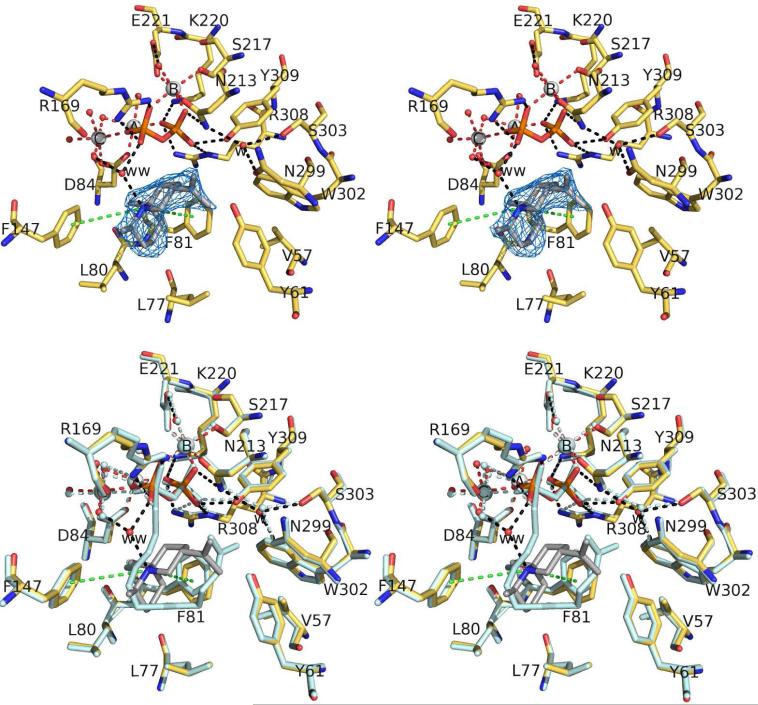
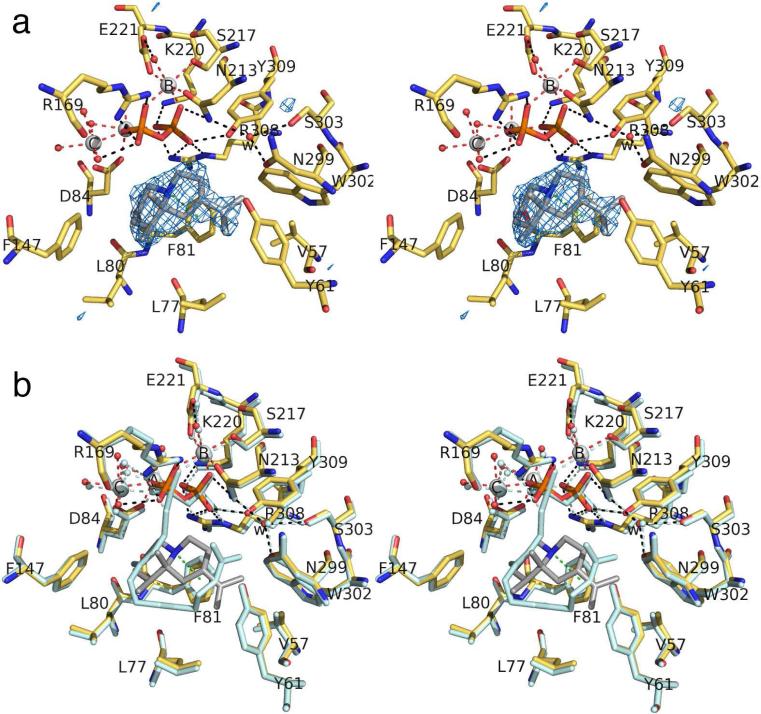
Aristolochene synthase, a metal-dependent sesquiterpene cyclase from Aspergillus terreus, catalyzes the ionization-dependent cyclization of farnesyl diphosphate (FPP) to form the bicyclic eremophilane (+)-aristolochene with perfect structural and stereochemical precision. Here, we report the X-ray crystal structure of aristolochene synthase complexed with three Mg(2+) ions and the unreactive substrate analogue farnesyl-S-thiolodiphosphate (FSPP), showing that the substrate diphosphate group is anchored by metal coordination and hydrogen bond interactions identical to those previously observed in the complex with three Mg(2+) ions and inorganic pyrophosphate (PPi). Moreover, the binding conformation of FSPP directly mimics that expected for productively bound FPP, with the exception of the precise alignment of the C-S bond with regard to the C10-C11 π system that would be required for C1-C10 bond formation in the first step of catalysis. We also report crystal structures of aristolochene synthase complexed with Mg(2+)3-PPi and ammonium or iminium analogues of bicyclic carbocation intermediates proposed for the natural cyclization cascade. Various binding orientations are observed for these bicyclic analogues, and these orientations appear to be driven by favorable electrostatic interactions between the positively charged ammonium group of the analogue and the negatively charged PPi anion. Surprisingly, the active site is sufficiently flexible to accommodate analogues with partially or completely incorrect stereochemistry. Although this permissiveness in binding is unanticipated, based on the stereochemical precision of catalysis that leads exclusively to the (+)-aristolochene stereoisomer, it suggests the ability of the active site to enable controlled reorientation of intermediates during the cyclization cascade. Taken together, these structures illuminate important aspects of the catalytic mechanism.
Figures


References
-
- Poulter CD, Rilling HC. The prenyl transfer reaction. Enzymic and mechanistic studies of the 1'-4 coupling reaction in the terpene biosynthetic pathway. Acc. Chem. Res. 1978;11:307–313.
-
- Cane DE. Isoprenoid biosynthesis. Stereochemistry of the cyclization of allylic pyrophosphates. Acc. Chem. Res. 1985;18:220–226.
-
- Cane DE. Enzymatic formation of sesquiterpenes. Chem. Rev. 1990;90:1089–1103.
-
- Wendt KU, Schulz GE. Isoprenoid biosynthesis: manifold chemistry catalyzed by similar enzymes. Structure. 1998;6:127–133. - PubMed
Publication types
MeSH terms
Substances
Grants and funding
LinkOut - more resources
Full Text Sources
Other Literature Sources
Research Materials
Miscellaneous
