


Enhancing pressure ulcer prevention using wound dressings: what are the modes of action?
- PMID: 23905962
- PMCID: PMC7951037
- DOI: 10.1111/iwj.12123
Enhancing pressure ulcer prevention using wound dressings: what are the modes of action?
Abstract
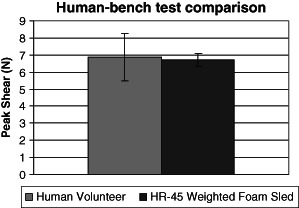
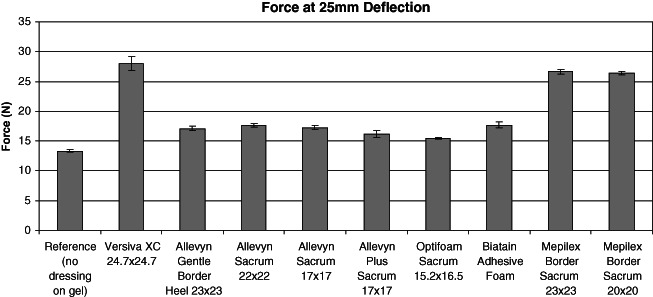
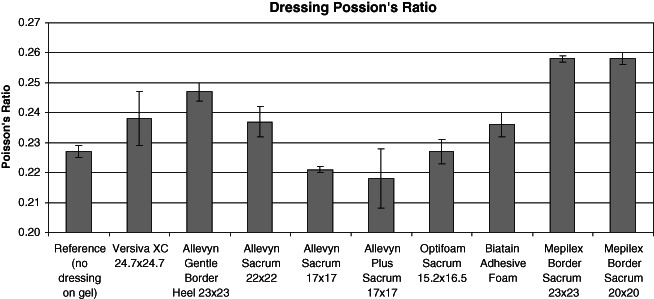
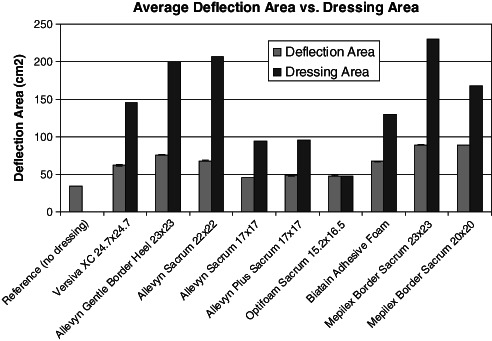
Recent clinical research has generated interest in the use of sacral wound dressings as preventive devices for patients at risk of ulceration. This study was conducted to identify the modes of action through which dressings can add to pressure ulcer prevention, for example, shear and friction force redistribution and pressure distribution. Bench testing was performed using nine commercially available dressings. The use of dressings can reduce the amplitude of shear stress and friction reaching the skin of patients at risk. They can also effectively redirect these forces to wider areas which minimises the mechanical loads upon skeletal prominences. Dressings can redistribute pressure based upon their effective Poisson ratio and larger deflection areas, providing greater load redistribution.
Keywords: Dressing prophylaxis; Force dispersion; In vitro force measurement; Point load deflection; Poisson's ratio; Pressure ulcer; Pressure ulcer prevention; Shear.
© 2013 The Authors. International Wound Journal © 2013 Medicalhelplines.com Inc and John Wiley & Sons Ltd.
Figures
References
-
- Brindle CT. Outliers to the Braden scale: identifying high risk ICU patients and the results of prophylactic dressing use. World Council Enterost Therap J 2009;30:11–8.
-
- Chaiken N. Reduction of sacral pressure ulcers in the intensive care unit using a silicone bordered foam dressing. J Wound Ostomy Continence Nurs 2012;39:143–5. - PubMed
-
- Walsh NS, Blanck AW, Smith L, Cross M, Andersson L, Polito C. Use of a sacral silicone border foam dressing as one component of a pressure ulcer prevention program in an intensive care unit setting. J Wound Ostomy Continence Nurs 2012;39:146–9. - PubMed
-
- Santamaria N, Gertz M, Sage S, McCann J, Freeman A, Vassiliou T, DeVincentis S, Ng AW, Manias E, Liu W, Knott J. A randomised controlled trial of the effectiveness of soft silicone foam multi‐layer dressings in the prevention of sacral and heel pressure ulcers in trauma and critically ill patients. Int Wound J 2013. DOI: 10.1111/iwj.12101. - DOI - PMC - PubMed
-
- Gawlitta D, Li W, Oomens CW, Baaijens FP, Bader DL, Bouten CV. The relative contributions of compression and hypoxia to development of muscle tissue damage: an in vitro study. Ann Biomed Eng 2007;35:273–84. - PubMed
MeSH terms
LinkOut - more resources
Full Text Sources
Other Literature Sources
Medical
