Review
. 2013 Sep;13(9):666-78.
doi: 10.1038/nri3494. Epub 2013 Aug 2.

MicroRNA-mediated regulation of T helper cell differentiation and plasticity

Affiliations
Review

MicroRNA-mediated regulation of T helper cell differentiation and plasticity

Dirk Baumjohann et al. Nat Rev Immunol. 2013 Sep.

Abstract

CD4(+) T helper (TH) cells regulate appropriate cellular and humoral immune responses to a wide range of pathogens and are central to the success of vaccines. However, their dysregulation can cause allergies and autoimmune diseases. The CD4(+) T cell population is characterized not only by a range of distinct cell subsets, such as TH1, TH2 and TH17 cells, regulatory T cells and T follicular helper cells--each with specific functions and gene expression programmes--but also by plasticity between the different TH cell subsets. In this Review, we discuss recent advances and emerging ideas about how microRNAs--small endogenously expressed oligonucleotides that modulate gene expression--are involved in the regulatory networks that determine TH cell fate decisions and that regulate their effector functions.


Figures
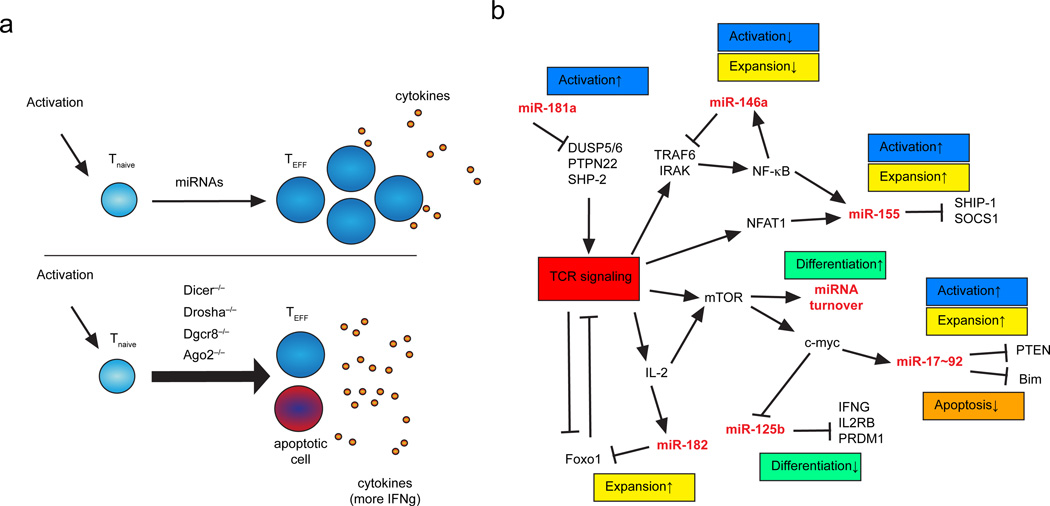
Figure 1
Figure 1. miRNA regulation of T helper cell activation
a | MicroRNAs are important regulators of effector T cell differentiation, including T cell activation, acquisition of effector functions such as cytokine production, and T cell proliferation (top panel). Genetic ablation of key molecules of the miRNA biogenesis pathway in CD4+ T cells underlines the importance of miRNAs for these processes (lower panel). Activation of microRNA-deficient CD4+ T cells results in increased and aberrant cytokine production, reduced cell proliferation. b | Mechanistic overview illustrating miRNA participation in regulatory networks that control T cell activation, expansion, and effector cell differentiation. Note that specific miRNAs are both regulated targets and upstream regulators of signaling pathways that govern T cell behavior. Selected miRNA target genes are indicated. TEFF, effector T cell; Tnaive, naïve T cell.
Figure 2
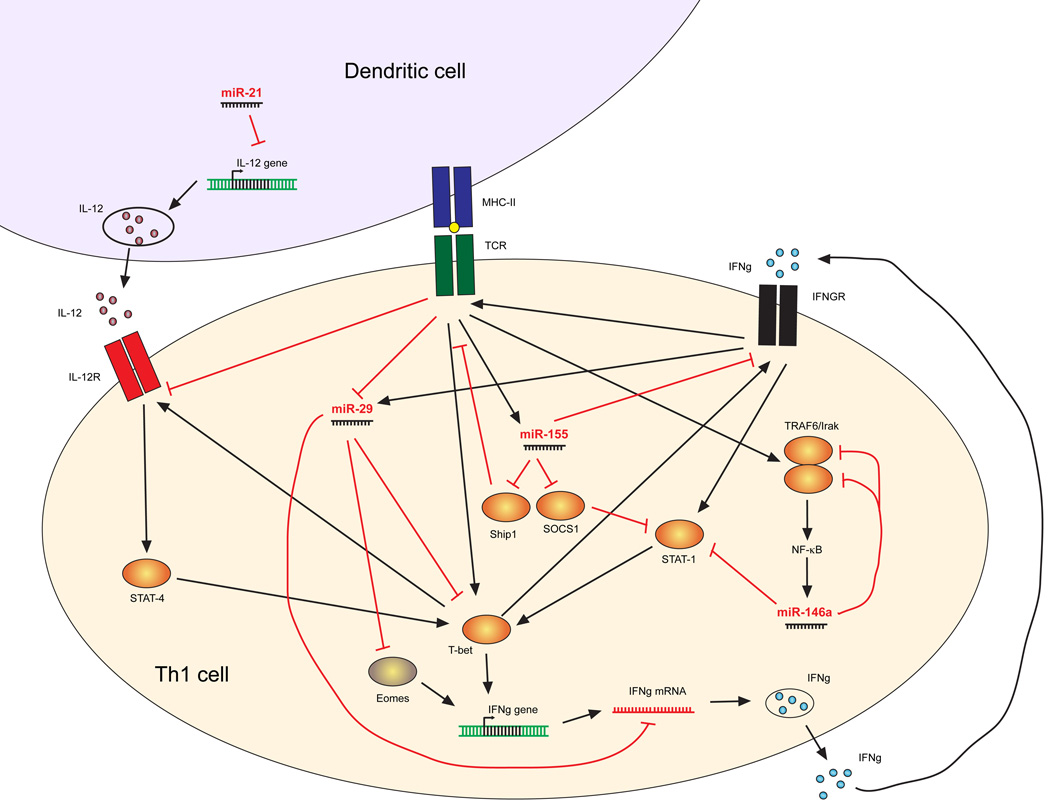
Figure 2. miRNA regulation of IFNγ production
IFN-γ production and signaling in Th1 cells is regulated by several miRNAs at distinct levels. The lineage determining transcription factor T-bet induces expression of the Th1 hallmark cytokine IFN-γ. T-bet is induced by TCR signaling, by IL-12 via STAT4 signaling, and by IFN-γ itself in a positive feedback loop via STAT1. miR-146a directly targets STAT1 and the NFκB signaling molecules TRAF6 and IRAK1. TCR activation induces miR-155, which in turn downregulates negative regulators of cytokine signaling SHIP1 and SOCS1. However, miR-155 has also been proposed to induce downregulation of IFNγR1. miR-29 limits Th1 cell differentiation and IFN-γ production by targeting the mRNAs encoding T-bet, Eomes, and IFN-γ itself.
Figure 3
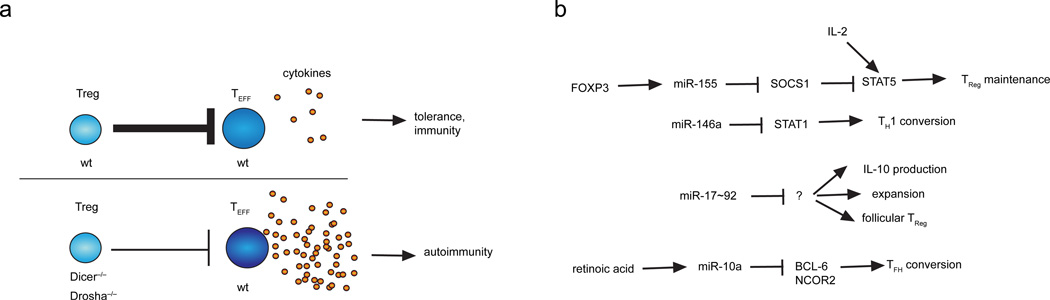
Figure 3. miRNA regulation of TReg function and plasticity
a | Treg-specific miRNA expression is required to restrain effector T cell responses. In the absence of miRNA expression in TReg cells, for example due to deletion of essential components of the miRNA biogenesis pathway, such as DICER or DROSHA, TReg cells fail to maintain tolerance, which might result in autoimmunity. b | Examples of miRNA pathways that contribute to the regulation of TReg cell function and plasticity. TEFF, effector T cell; TReg, regulatory T cell.

References

    1. Mosmann TR, Cherwinski H, Bond MW, Giedlin MA, Coffman RL. Two types of murine helper T cell clone. I. Definition according to profiles of lymphokine activities and secreted proteins. J Immunol. 1986;136:2348–2357. - PubMed
    1. Zhou L, Chong MM, Littman DR. Plasticity of CD4+ T cell lineage differentiation. Immunity. 2009;30:646–655. - PubMed
    1. Locksley RM. Nine lives: plasticity among T helper cell subsets. J Exp Med. 2009;206:1643–1646. - PMC - PubMed
    1. Murphy KM, Stockinger B. Effector T cell plasticity: flexibility in the face of changing circumstances. Nat Immunol. 2010;11:674–680. - PMC - PubMed
    1. O'Shea JJ, Paul WE. Mechanisms underlying lineage commitment and plasticity of helper CD4+ T cells. Science. 2010;327:1098–1102. - PMC - PubMed

Publication types

MeSH terms