


Sociooccupational and physical outcomes more than 20 years after the diagnosis of osteosarcoma in children and adolescents: limb salvage versus amputation
- PMID: 23907996
- PMCID: PMC3842284
- DOI: 10.1002/cncr.28277
Sociooccupational and physical outcomes more than 20 years after the diagnosis of osteosarcoma in children and adolescents: limb salvage versus amputation
Abstract
Background: To the best of the authors' knowledge, there has been relatively little research published to date regarding very long-term survivors of childhood and adolescent osteosarcoma. In the current study, the authors compared the very long-term survival outcomes of patients with osteosarcoma who were treated with either limb salvage procedures or amputation.
Methods: A total of 38 patients with osteosarcoma who survived ≥ 20 years from the time of diagnosis were divided into 2 groups according to whether they underwent amputation or limb salvage. Participants were asked to complete a questionnaire concerning their education, employment, annual income, marital status, health insurance, lifestyle, siblings, and all current and past health issues.
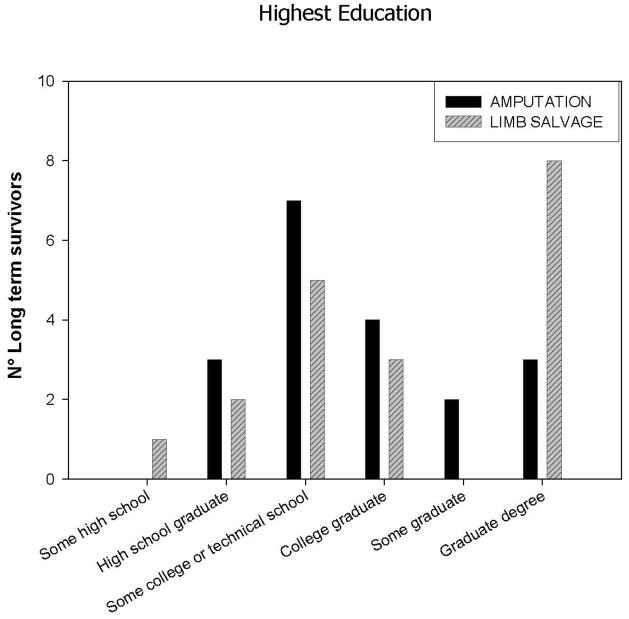
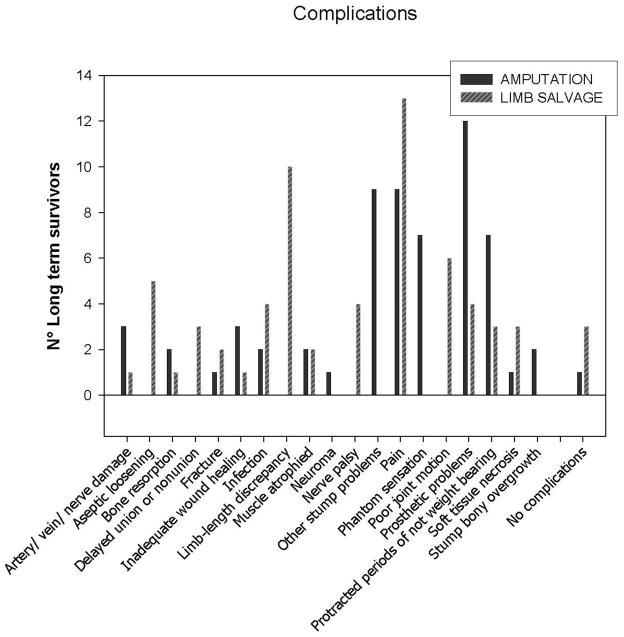
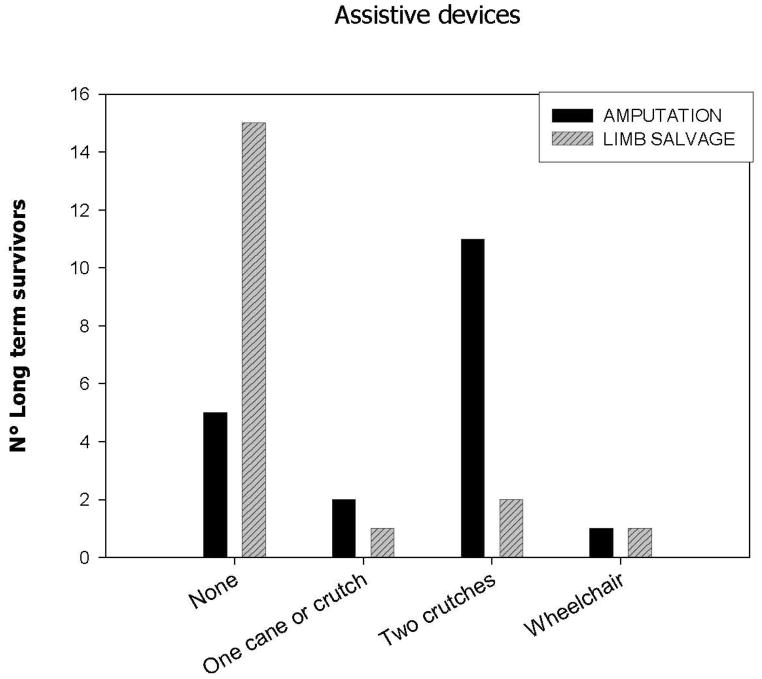
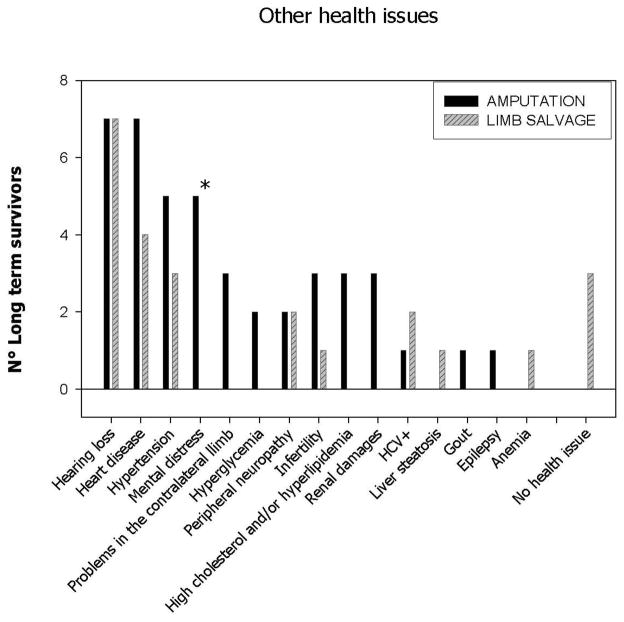
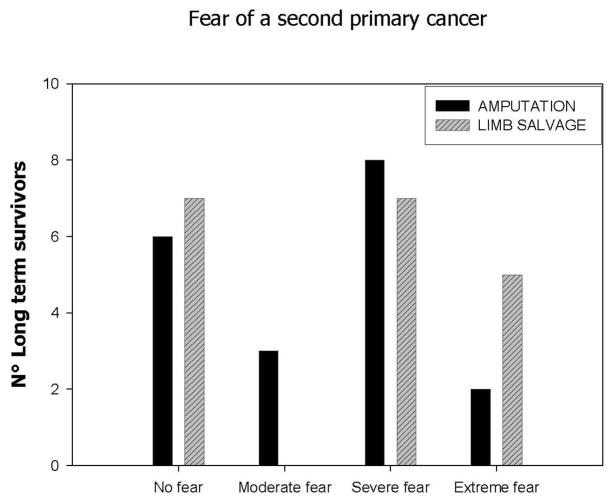
Results: Education, employment, marital status, and health insurance were not found to differ significantly between the 2 groups of survivors, who described themselves as being similar to their siblings. Eight percent of survivors underwent secondary amputation because of complications with an endoprosthesis. The cumulative incidence of second primary neoplasms was 13%, and this finding was significantly higher in females and in survivors who underwent radiotherapy and had a genetic predisposition. The second primary malignancies were breast cancer (ductal invasive carcinoma, ductal in situ carcinoma, and leiomyosarcoma), mediastinal leiomyosarcoma, and squamocellular carcinoma of the oral cavity and the uterine cervix. Amputees required more assistive walking support than survivors who received limb salvage treatment (P<.05, chi-square test).
Conclusions: Despite the many challenges that osteosarcoma survivors face, patients who survived ≥ 20 years after their initial diagnosis reported having overall adjusted well to their physical limitations and were productive individuals.
Keywords: amputation; education; employment; limb salvage; long-term survivors; marital status; osteosarcoma survival; reoperation; second primary cancer; secondary amputation.
Copyright © 2013 American Cancer Society.
Conflict of interest statement
CONFLICT OF INTEREST DISCLOSURES: The authors made no disclosures.
Figures
References
-
- Ottaviani G, Jaffe N. The epidemiology of osteosarcoma. In: Jaffe N, Bruland ØS, Bielack S, editors. Pediatric and Adolescent Osteosarcoma. New York: Springer; 2009.
- Cancer Treat Res. 2009;152:3–13. - PubMed
-
- Huh WW, Jaffe N, Ottaviani G. Adult survivors of childhood cancer and unemployment: a metaanalysis. Cancer. 2006;107:2958–2959. - PubMed
-
- Ottaviani G, Robert RS, Huh WW, Jaffe N. Functional, psychological and professional outcomes in long term survivors of lower extremity osteosarcomas: amputation versus limb salvage. In: Jaffe N, Bruland ØS, Bielack S, editors. Pediatric and Adolescent Osteosarcoma. New York: Springer; 2009. - PubMed
- Cancer Treat Res. 2009;152:421–436. - PubMed
Publication types
MeSH terms
Grants and funding
LinkOut - more resources
Full Text Sources
Other Literature Sources
Medical
Miscellaneous
