


Epidemiologic characteristics of haemorrhagic fever with renal syndrome in Mainland China from 2006 to 2010
- PMID: 23908902
- PMCID: PMC3729070
- DOI: 10.5365/WPSAR.2011.2.2.007
Epidemiologic characteristics of haemorrhagic fever with renal syndrome in Mainland China from 2006 to 2010
Abstract
Objective: To design effective prevention and control strategies for haemorrhagic fever with renal syndrome (HFRS) in Mainland China, we evaluated the epidemiologic characteristics and trends of HFRS cases reported between 2006 and 2010.
Methods: HFRS data from 1970 to 2010 were obtained from the China Notifiable Disease Reporting System (CNDRS). The cases analysed included clinical cases and laboratory-confirmed cases. Data was extracted for statistical analysis by time, region and profession; the incidence rate was obtained directly from CNDRS. In this study, we analysed the morbidity and mortality data of HFRS from 2006 to 2010.
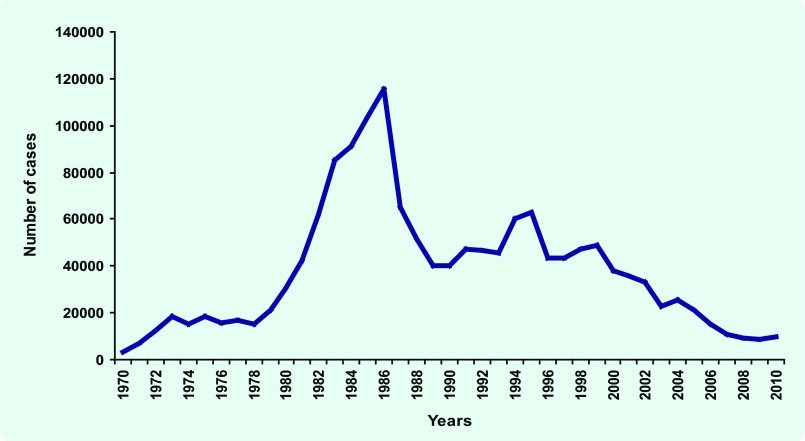
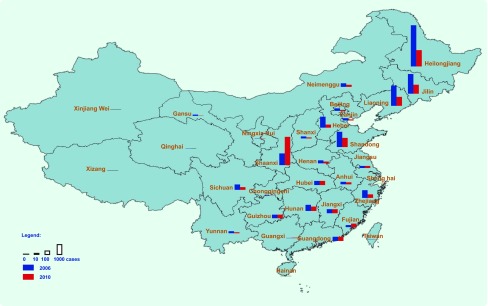
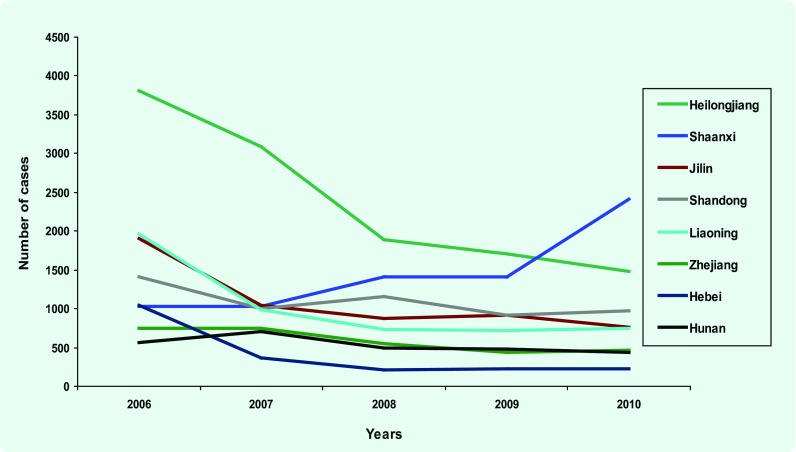
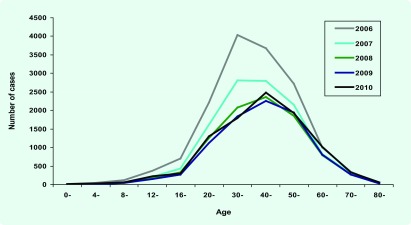
Results: HFRS cases trended downward from 2006 (15 098) to 2009 (8745), but exhibited a slight increase in 2010 (9526). Twenty-nine of 31 provinces reported HFRS cases between 2006 and 2010. Five provinces, namely, Heilongjiang, Jilin and Liaoning in the North-eastern, Shandong in the east, and Shaanxi in the central part of China, were characterized as high-endemic areas. Seasonal case distribution was bimodal, with peaks of cases in spring and winter. Young male farmers were the most susceptible population to HFRS. Early- to middle-aged adults (20-50 years old) represented the largest groups of HFRS cases.
Conclusion: The overall number of cases of HFRS in China has trended downward possibly due to national vaccine and rodent vector control programmes implemented in the past 25 years. However, this trend slowed down in the last five years. High-endemic regions and at-risk population groups still exist and will benefit from further targeted prevention strategies.
Figures

References
-
- Fang LQ, et al. [Using geographic information system to study on the association between epidemic areas and main animal hosts of hemorrhagic fever with renal syndrome in China] [in Chinese] Zhonghua Liu Xing Bing Xue Za Zhi. 2004;25:929–33. - PubMed
-
- Chen HX, et al. HFRS surveillance in China. Zhonghua Liu Xing Bing Xue Za Zhi. 2002;23:63–6.
-
- Wu GH. [Study on transmission routes of EHF in recent years] [in Chinese] Chinese Journal of Insect & Equipment. 2008;14:242–5.
LinkOut - more resources
Full Text Sources
Miscellaneous